Ha Giang without a motorbike — walking the province on foot
Can you experience Ha Giang without riding the Loop? Yes — walk Hoang Su Phi, village routes and Chieu Lau Thi with local guides.
Can you experience Ha Giang without a motorbike?
Yes. You can experience Ha Giang without riding a motorbike. Riding the famous Ha Giang Loop is one way to move through the province — a road circuit linking viewpoints, markets and guesthouses by bike or car. It is not the only way to see the ground.
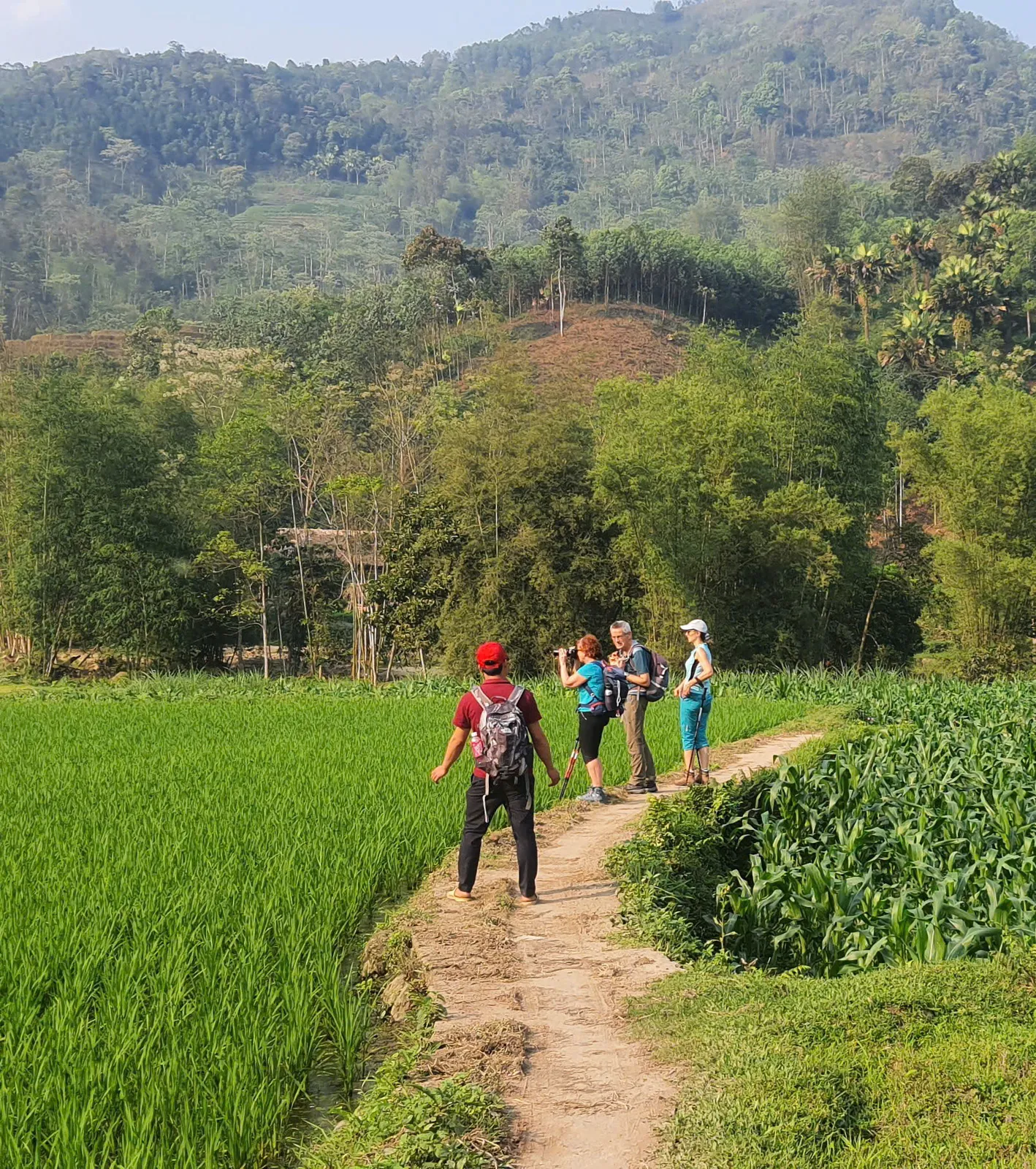
Guide-led walking programmes reach village paths, rice terraces, farm tracks, forest trails and high-mountain ridges that the loop road passes near but rarely lets you walk at length. On this site, trekking means hosted meals, local guides and overnight rhythm on programme pages — transfers reach trailheads; the walking is the product.
Ha Giang Trekking does not run motorbike Loop packages. We organise walking programmes and extended journeys where feet suit the terrain better than tyres. A walking-first trip can be your main Ha Giang experience — not a short add-on squeezed between loop stops.
Walking does not reproduce every loop viewpoint in one booking. Ma Pi Leng pullouts, Sunday-market timing by road and fast geographic coverage belong to loop travel. What walking adds is household pace inside terraces, homestay evenings and ridge days you cannot reach from a roadside stop alone.
Travellers who ask whether they can hike Ha Giang instead of doing the Loop usually mean one of two things: whether feet can replace tyres entirely for their trip, or whether walking programmes cover the same ground as the famous road circuit. The first is yes on this site; the second is only partly — village paths and terrace days overlap loop geography, but purpose-built walking uses different corridors than tracing every loop kilometre.
- Hoang Su Phi programmes
Terrace and village walking west of the massif.
- The Ha Giang loop on foot: trekking vs motorbike
How walking programmes relate to the road circuit — not this page's full comparison.
What changes when you walk instead of ride?
Riding the loop compresses geography. You cover long road distances in a day, stop at famous viewpoints quickly and sleep in guesthouses along the circuit. For travellers whose main goal is seeing many road panoramas and market towns in minimal time, that rhythm has a clear logic.
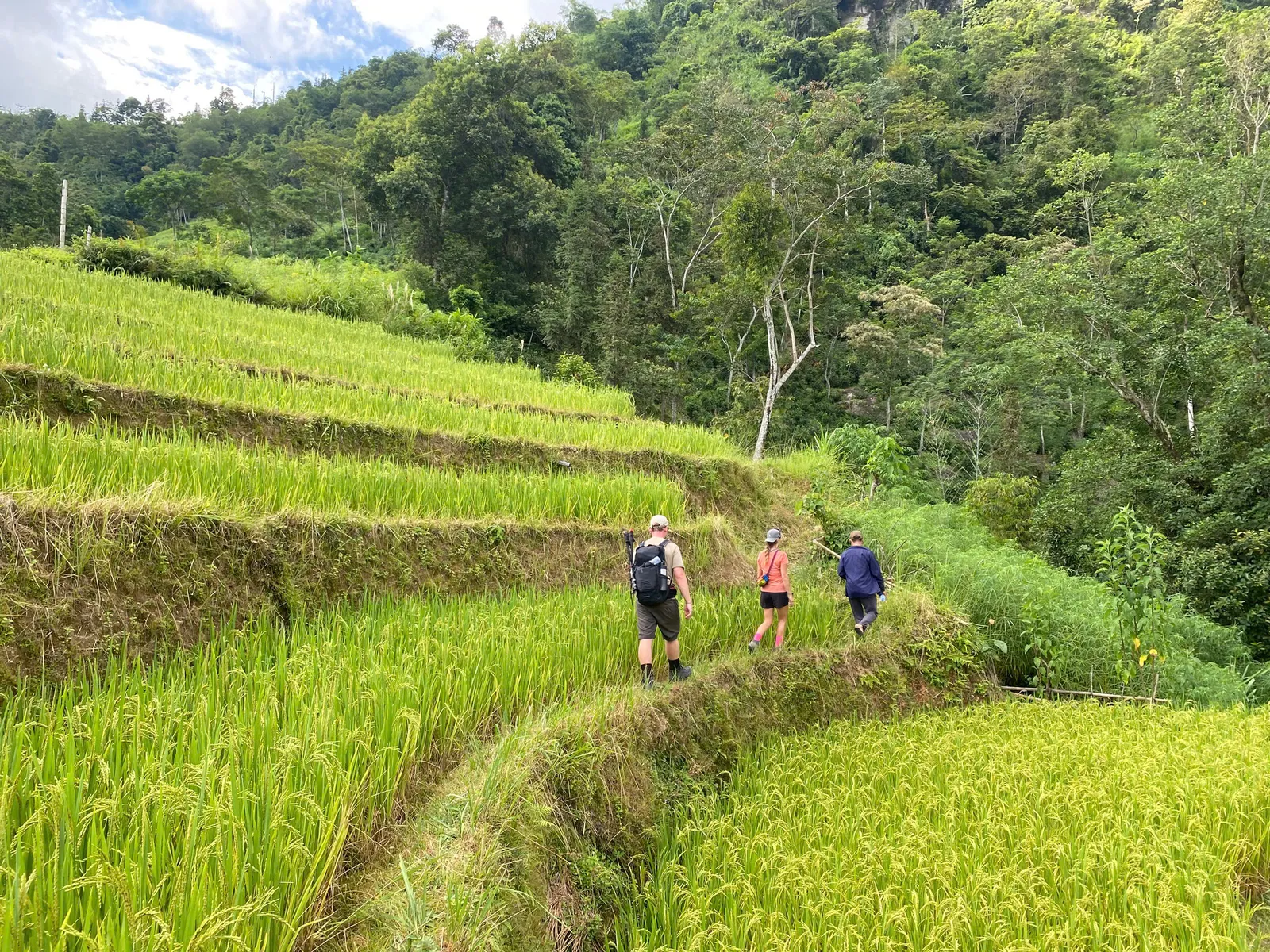
Walking changes the unit of experience. Distances shrink to what feet cover between villages — terrace walls climbed step by step, stream crossings on farm paths, conversations with a Red Dao guide who sets pace for mud and heat, and overnight rhythm at a homestay or at Chieu Lau Thi 2402m Lodge on high-mountain programmes.
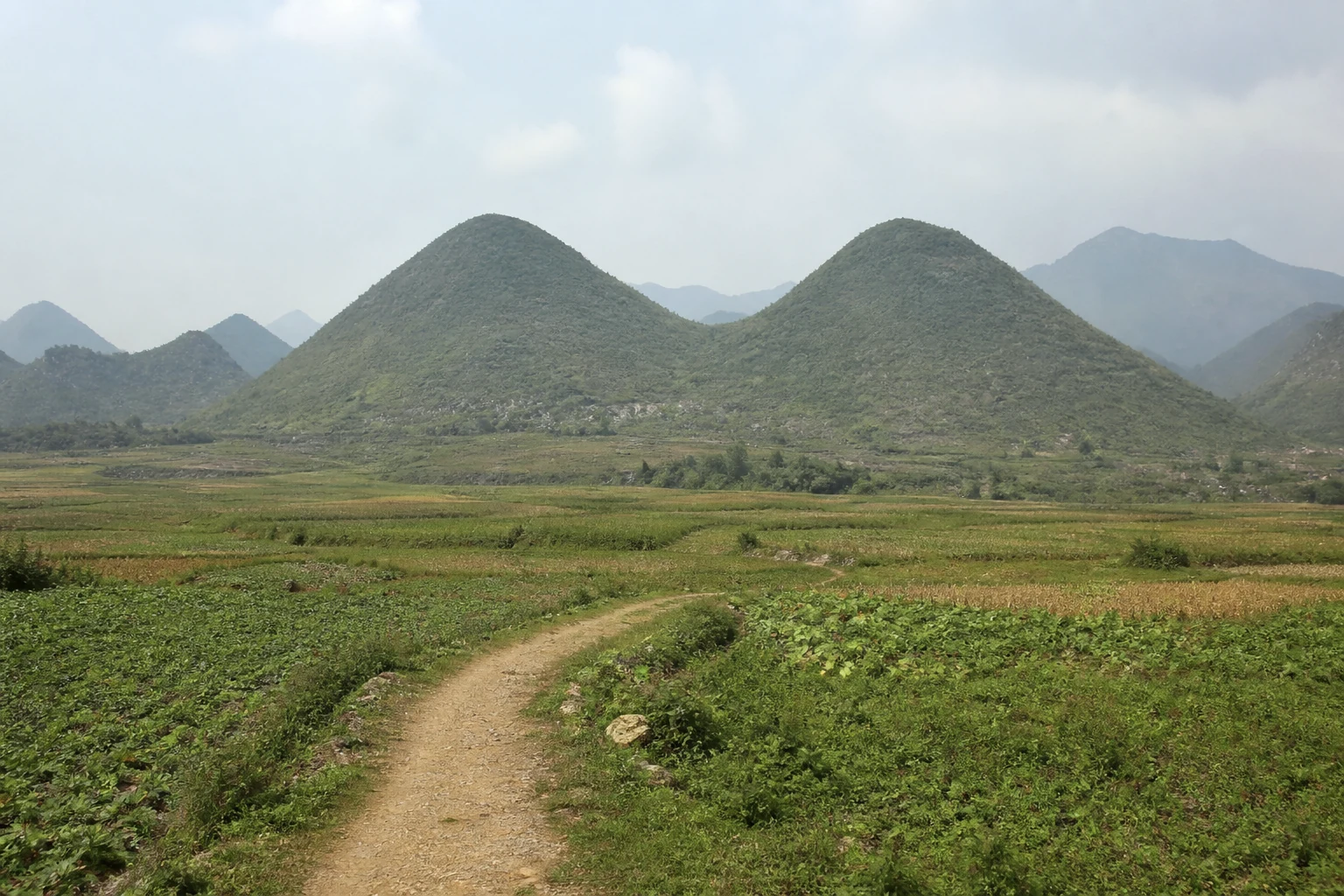
Neither mode sees everything the other sees. Loop travel reaches canyon pullouts and plateau passes efficiently; walking reaches terrace depth inside Hoang Su Phi, multi-day village progression and pre-dawn ridge time that a same-day road itinerary rarely allows.
If you are deciding between them, read the dedicated loop comparison guide for day segments and sequencing — this page focuses on walking-first discovery, not a full loop-versus-trekking table.
- The Ha Giang loop on foot: trekking vs motorbike
Loop vs walking comparison owner — day segments and multi-day sequences.
Where can you trek in Ha Giang?
Published walking on this site clusters into three collections plus extended journeys. Each answers a different landscape question — terraces, village homestays or high-mountain ridge walking.
Extended journeys on /tours link several regions over four to seven published days when geography defines the whole trip — Dong Van Karst Traverse, Hoang Su Phi Rice Terraces journey and Ma Pi Leng canyon routes among them.
Things to do in Ha Giang besides the Loop — on this site — mean choosing a published walking programme or extended journey rather than assembling roadside stops. Du Gia forest villages suit an Easy valley day; Lo Lo Chai to Then Pa adds northern-plateau homestays; the Nam Dam to Lung Tam crossing is a three-day Quan Ba line with Dao herbal culture.
We do not recommend frozen or currently unavailable ridge research routes as bookable products. Chieu Lau Thi bookable programmes are the two-day cloud-sea line from Hoang Su Phi and the one-day sunrise ridge under Ridge & Cloud — both reach the same 2,402 m summit with different overnight rhythm.
- Hoang Su Phi programmes
- Nam Hong to Ho Thau
Two-day Red Dao homestay ridge.
- Ban Luoc long traverse
Three-day multi-valley traverse.
- Ban Phung highest terraces
One-day La Chi terrace walk.
- Chieu Lau Thi cloud-sea programme
Two-day lodge and summit approach.
- Chieu Lau Thi sunrise ridge
One-day same-day summit return.
- Village treks
Compare routes, difficulty and seasons at this collection hub.
- Ridge & Cloud programmes
Compare routes, difficulty and seasons at this collection hub.
How many days do you need?
Start with walking days on the ground — transport from Hanoi is separate unless a tour page includes it.
One calendar day suits a focused terrace walk or a single high-mountain ridge push. Ban Phung highest terraces concentrates Hoang Su Phi terrace depth without an overnight. The Chieu Lau Thi sunrise ridge suits walkers who want the 2,402 m summit in one day and prefer returning to town the same evening.
Two days add an overnight rhythm — the decision is village homestay versus high mountain. Our two-day Nam Hong to Ho Thau trek suits Red Dao ridge walking, herbal bath and a pre-dawn cloud viewpoint. The two-day Chieu Lau Thi cloud-sea programme suits walkers who want Chieu Lau Thi 2402m Lodge and a short pre-dawn section on Day 2.
Three days suit a deeper district traverse: Ban Luoc long traverse crosses several valleys and ethnic communities with luggage handoffs between homestays.
Four or more days open packaged Hoang Su Phi journeys and extended plateau tours — the four-day Hoang Su Phi Rice Terraces journey for a broader first visit in one booking, or Dong Van Karst Traverse and other /tours inventory when geography defines the whole trip.
Fitness, season and room expectations still matter after you pick a duration band. Read the itinerary guide for published duration labels and programme-page detail — this section is discovery-level only.
- Ha Giang trekking itineraries
Choose a trek by the number of days you have — full duration map.
- Hoang Su Phi Rice Terraces journey
Four-day packaged Hoang Su Phi product.
- Extended journeys
Published four- to seven-day inventory.
Who is a walking-first Ha Giang trip best for?
Walking-first Ha Giang suits travellers who prefer moving on foot to riding between viewpoints — people interested in villages, terraces, farm paths and terrain detail rather than maximum road coverage in minimum time.
Couples and small groups often book when homestay evenings, hosted meals and guide-set pace matter as much as distance. Photographers choose walking when hours inside terrace walls or side-light on harvest gold matter more than a single roadside frame.
Walking-first also suits travellers willing to move slower — accepting that transfers handle road sections while the experience lives on the trail. Programme pages publish Moderate and Demanding tiers; tell us at enquiry if you are unsure whether a published length fits your usual walking comfort.
Road-based loop travel may suit better if your main goal is covering many famous viewpoints quickly by bike or car, or if you want maximum geographic breadth in a short calendar window without consecutive walking days.
- Ha Giang trekking for beginners
First trek fit and Easy or Moderate shortlist.
- Ha Giang trekking fitness and difficulty
Effort tiers before you book.
- Solo trekking in Ha Giang
One-person bookings on guided routes.
- Family trekking in Ha Giang
Multi-generation planning — not this owner.
What happens to your luggage?
Luggage handling differs by programme — read the specific trek page before you generalise.
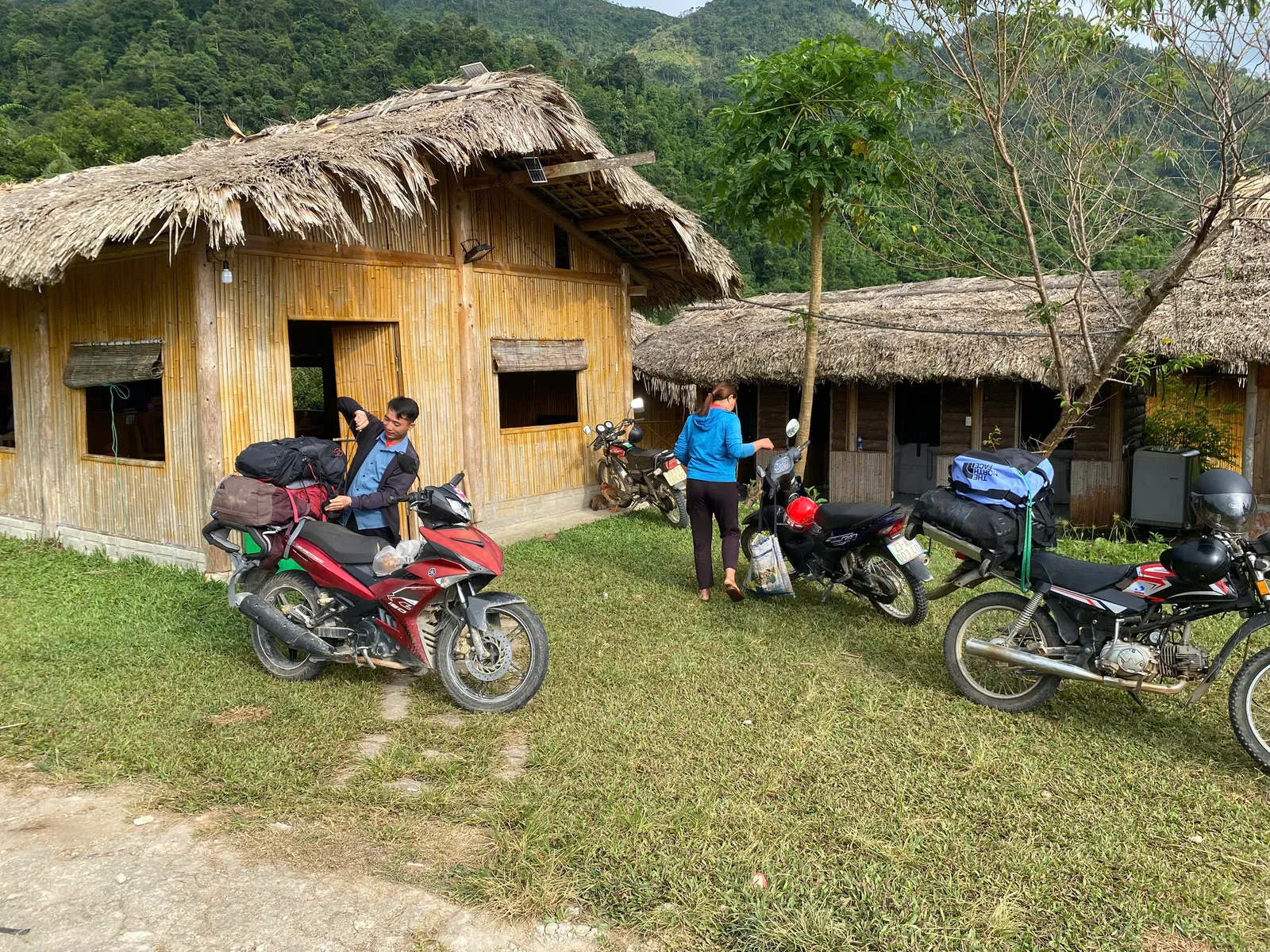
On multi-day Hoang Su Phi programmes you walk with a daypack only: water, camera, rain shell, warm layer and personal essentials. Where overnight transfers apply, main luggage moves to the next stop — on Nam Hong and Ban Luoc specifically, bags are handed to a driver and move by motorbike between homestays each morning. On the two-day Chieu Lau Thi cloud-sea programme, main luggage stays in Hoang Su Phi with the driver while you carry a daypack to the lodge.
One-day walks such as Ban Phung have no overnight luggage transfer — guests normally carry only what they need for the walking day unless you are changing accommodation and confirm otherwise at enquiry.
Softer duffels suit village handoffs better than large rigid suitcases. Passport, medication and valuables stay in your daypack. Exact pickup points, handoff timing and any weather-related adjustments are confirmed for your departure after enquiry — not at booking on this site.
- Luggage on Ha Giang treks
Where main bags go while you walk — full route-specific owner.
- Packing for Ha Giang trekking
Daypack size and multi-day kit by programme type.
- Ban Luoc long traverse
Three-day luggage handoff rhythm.
Where do you sleep on a multi-day trek?
Overnight type depends on the programme — not one uniform standard across the province.
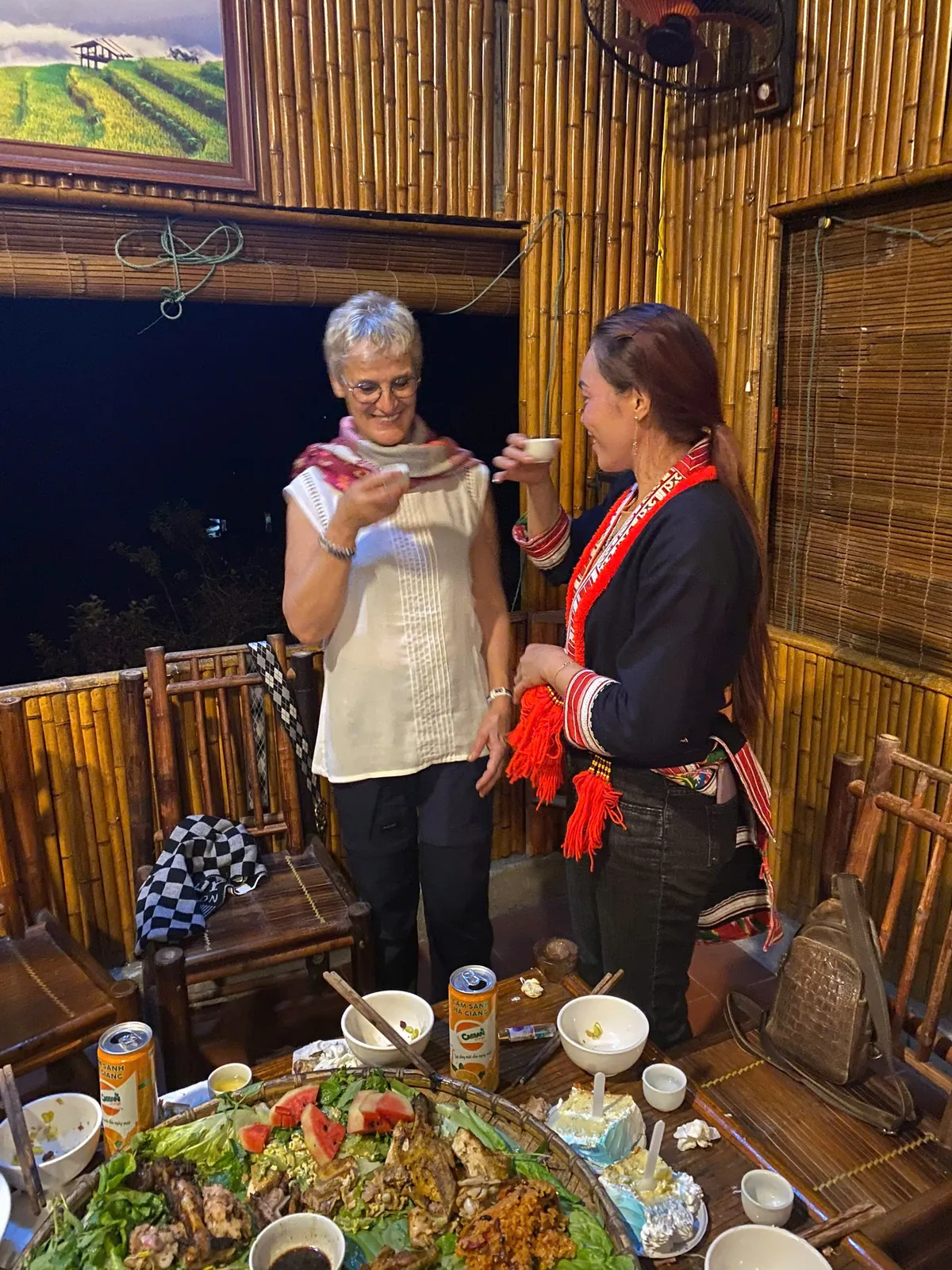
Village homestays on Nam Hong, Ban Luoc and Village Treks routes use working farm households: shared mattress rooms with bedding are typical unless a private room is confirmed for your departure. Toilet type, hot water and charging vary by household — tell us at enquiry if a specific facility matters.
The two-day Chieu Lau Thi cloud-sea programme sleeps at Chieu Lau Thi 2402m Lodge on the approach route near the summit. The property offers private rooms and dorm-style accommodation; room type is confirmed when the departure is booked. Electricity for charging, bathroom facilities and meals are part of the programme — not a hotel.
Extended journeys on /tours publish their own overnight rhythm on each tour page — homestay, guesthouse or lodge nights as listed there.
Do not assume ensuite bathrooms or hotel Wi-Fi speed on village routes. Exact household, lodge room type and facilities are reconfirmed for your travel dates before departure.
- Homestay trekking in Ha Giang
What homestay nights involve across village routes.
- Homestay etiquette
Guest behaviour before you pack.
- Nam Hong to Ho Thau
Red Dao homestay overnight.
- Chieu Lau Thi cloud-sea programme
Lodge night on the mountain.
What are the trails actually like?
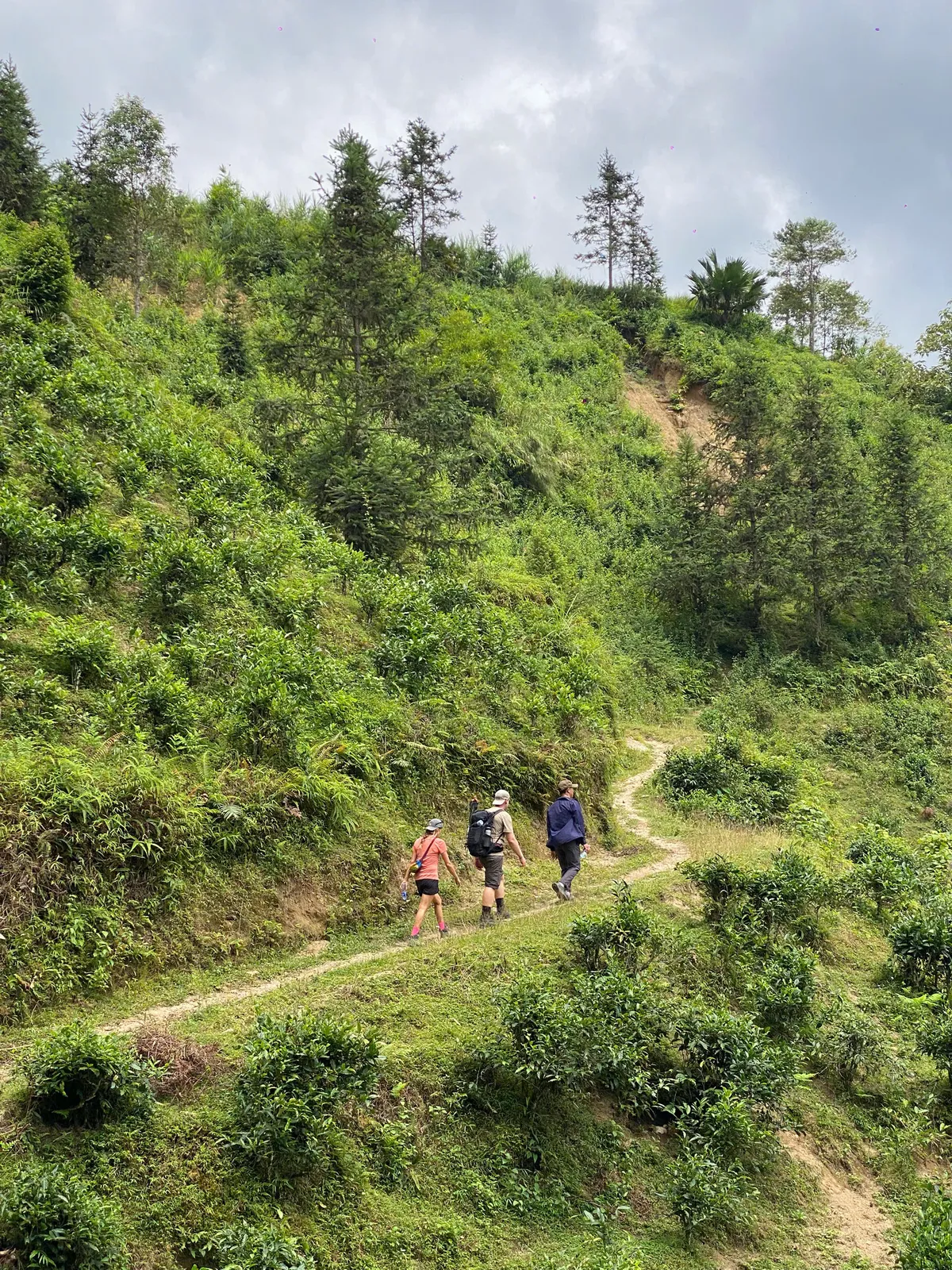
Ha Giang trekking paths are working farm tracks, terrace walls, forest understorey and ridge crests — not a signed national-park network.
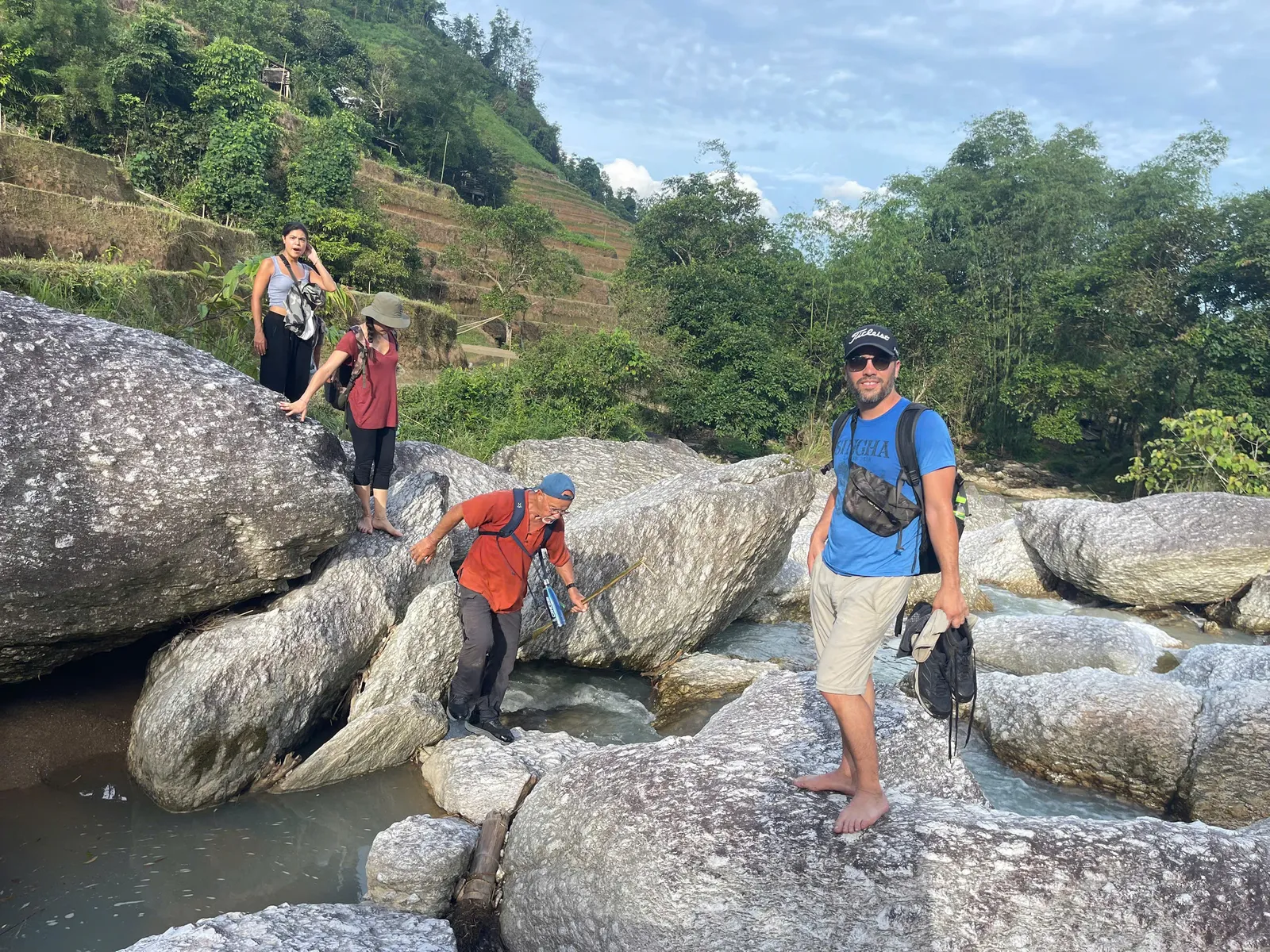
Expect dirt, stone steps, narrow terrace banks and rooty forest sections. Hoang Su Phi terrace days mix open-wall exposure with humid valley descents. Ridge programmes add cold, wind and sustained ascent. After rain, clay on terrace walls and leaf litter in forest can be slick — guides adjust pace and may skip sections when safety requires it.
Season changes the feel more than the map: harvest weeks add basket traffic on walls; green-season rain softens paths; cold months on Chieu Lau Thi ask for full warm layers at the lodge. We do not publish live trail-condition reports on this page — your guide confirms pacing for your departure week.
Explore Ha Giang on foot at the pace your programme publishes — rest stops on lee slopes during ridge days, slower descent when cardamom forest is slick after rain, and photography pauses on terrace returns when you book a private departure. The trail is the experience; the road handles what feet should not.
Match footwear and kit to the programme type on the packing guide and fitness page before you shortlist a route.
- Ha Giang trekking fitness and difficulty
Easy, Moderate and Demanding tiers.
- Packing for Ha Giang trekking
Footwear and wet-trail kit.
- Best time to trek Ha Giang
Season window after route shortlist.
Which trek should a first-time visitor choose?
There is no single best trek — the fit depends on what you want from the walking days.
For terraces plus a village overnight, our two-day Nam Hong to Ho Thau trek is the common starting point — Red Dao ridge walking, homestay evening and moderate rhythm without a three-day commitment.
For longer progression through several valleys in one booking, Ban Luoc long traverse adds a third walking day and two homestay nights across changing terrain.
For one concentrated terrace day without overnight kit, Ban Phung highest terraces walks inside La Chi walls and returns to town the same evening.
For high mountain and cold ridge exposure, choose between the two-day Chieu Lau Thi cloud-sea lodge programme and the one-day sunrise ridge depending on whether the overnight on the mountain matters to you.
For village-to-village rhythm outside Hoang Su Phi terraces, open the Village Treks hub — Du Gia for an Easy forest day, Lo Lo Chai to Then Pa for northern-plateau homestays, Nam Dam to Lung Tam for a three-day Quan Ba crossing.
Open each programme page for day-by-day schedule, includes and enquiry — this section shortlists intent only.
- Nam Hong to Ho Thau
Terraces and village — two days.
- Ban Luoc long traverse
Longer progression — three days.
- Ban Phung highest terraces
One-day terrace introduction.
- Chieu Lau Thi cloud-sea programme
Two-day high mountain.
- Chieu Lau Thi sunrise ridge
One-day summit return.
- Village treks
Compare routes, difficulty and seasons at this collection hub.
- One-day vs two-day Chieu Lau Thi
Compare ridge return vs lodge overnight.
Tell us how you want to walk Ha Giang
When you enquire, send your travel dates, group size, how many walking days you have, your walking comfort or preferred difficulty band, and any room preference if it matters for overnight programmes. Mention if you are comparing terrace walking with high-mountain routes, or if you want slower pacing for photography rather than maximum distance.
We read what you send and suggest the most suitable published route and overnight rhythm for your party — village homestay, terrace day or lodge night as the programme fits. We reply on WhatsApp with what is confirmed for your specific departure: household, lodge room type and pickup timing where relevant. This site does not take payment at enquiry.
- Contact — share your dates and walking questions
WhatsApp enquiry.
Common questions.
Can I visit Ha Giang without a motorcycle?
Yes. Guide-led walking programmes across Hoang Su Phi, Village Treks and Ridge & Cloud let you experience Ha Giang on foot without riding the loop road yourself. Read this page for discovery; read The Ha Giang loop on foot for how walking relates to the road circuit.
Do I need to ride a motorbike between trekking routes?
You do not ride on our programmes. Private transfers reach trailheads; on some multi-day routes main luggage moves by vehicle or motorbike between overnight points while you walk with a daypack. Exact handling is on each programme page and confirmed for your departure.
How many days do I need for a walking trip?
One day suits Ban Phung or the one-day Chieu Lau Thi ridge; two days suit Nam Hong or the cloud-sea lodge programme; three days suit Ban Luoc; four or more open packaged journeys on /tours. Read Ha Giang trekking itineraries for the duration map.
Can my main luggage be transferred?
On overnight Hoang Su Phi programmes such as Nam Hong and Ban Luoc, main luggage is transferred between homestays while you carry a daypack. On the Chieu Lau Thi cloud-sea programme, main luggage stays in Hoang Su Phi with the driver. One-day walks have no overnight transfer.
Where do I sleep on a multi-day trek?
Village homestays on terrace and village routes; Chieu Lau Thi 2402m Lodge on the two-day cloud-sea programme. Room type and facilities vary by programme and are confirmed for your dates before departure.
Is Ha Giang trekking suitable for beginners?
Some published programmes are Moderate rather than Demanding — Ban Phung and Nam Hong are common first walks in Hoang Su Phi. Read Ha Giang trekking for beginners and the fitness guide before you shortlist.
Published by Ha Giang Trekking — field knowledge from local trail guides on the routes described, checked against programme schedules and operating notes.
Journal pages are for route research and planning. Dates, prices, day-by-day schedules and enquiry sit on programme and tour pages.
Articles are published under Ha Giang Trekking. Named writer and guide bylines will be added when verified bios and consent are on file.
Operational details on programme and tour pages are published only after being checked against current operating information.
Compare published routes and open the programme or journey page when you are ready to enquire.
- Hoang Su Phi — compare terrace programmes
One- to three-day terrace and homestay routes in the west of the province.
- Village treks — compare valley routes
Valley and plateau village circuits with homestay nights.
- Ridge & Cloud — compare summit programmes
Summit ridges and cloud-forest massifs above the terrace country.
- Extended journeys — multi-day loops
Four- to seven-day journeys across Dong Van, Ma Pi Leng and the northern plateau.
- Ban Phung — highest terraces (1 day)
Ban Phung — highest terraces (1 day) — dates, pricing and enquiry.
- Du Gia forest villages (1 day)
Du Gia forest villages (1 day) — dates, pricing and enquiry.
- Chieu Lau Thi — sunrise ridge (1 day)
Chieu Lau Thi — sunrise ridge (1 day) — dates, pricing and enquiry.
- Dong Van Karst Traverse
Dong Van Karst Traverse — full itinerary and enquiry.
- Hidden Valleys Slow Trek
Hidden Valleys Slow Trek — full itinerary and enquiry.
- The complete guide to trekking Ha Giang
Province-wide planning and route sequencing.