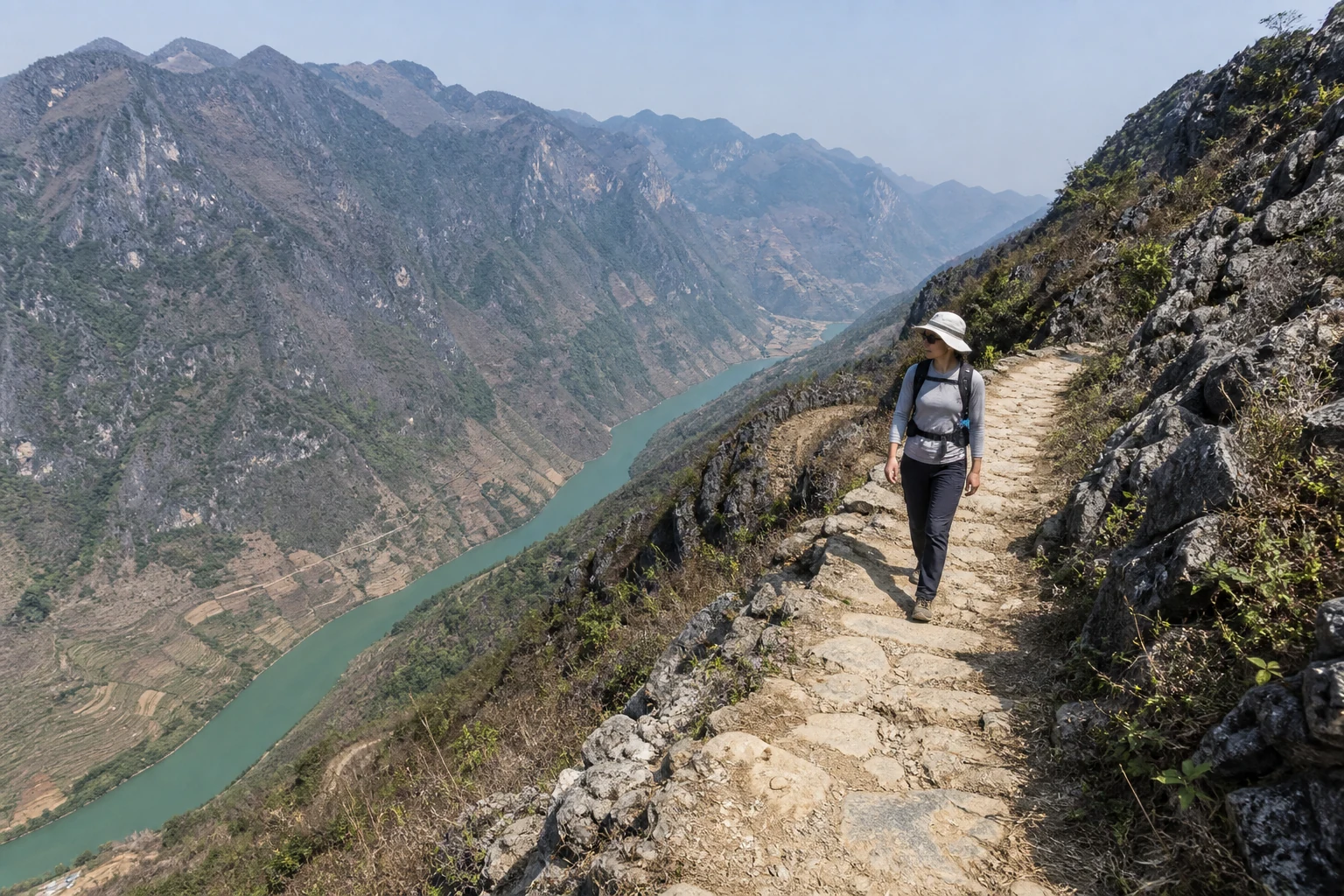
A short, useful guide to homestay etiquette
Small gestures that make a big difference when you're a guest in a stilt house.
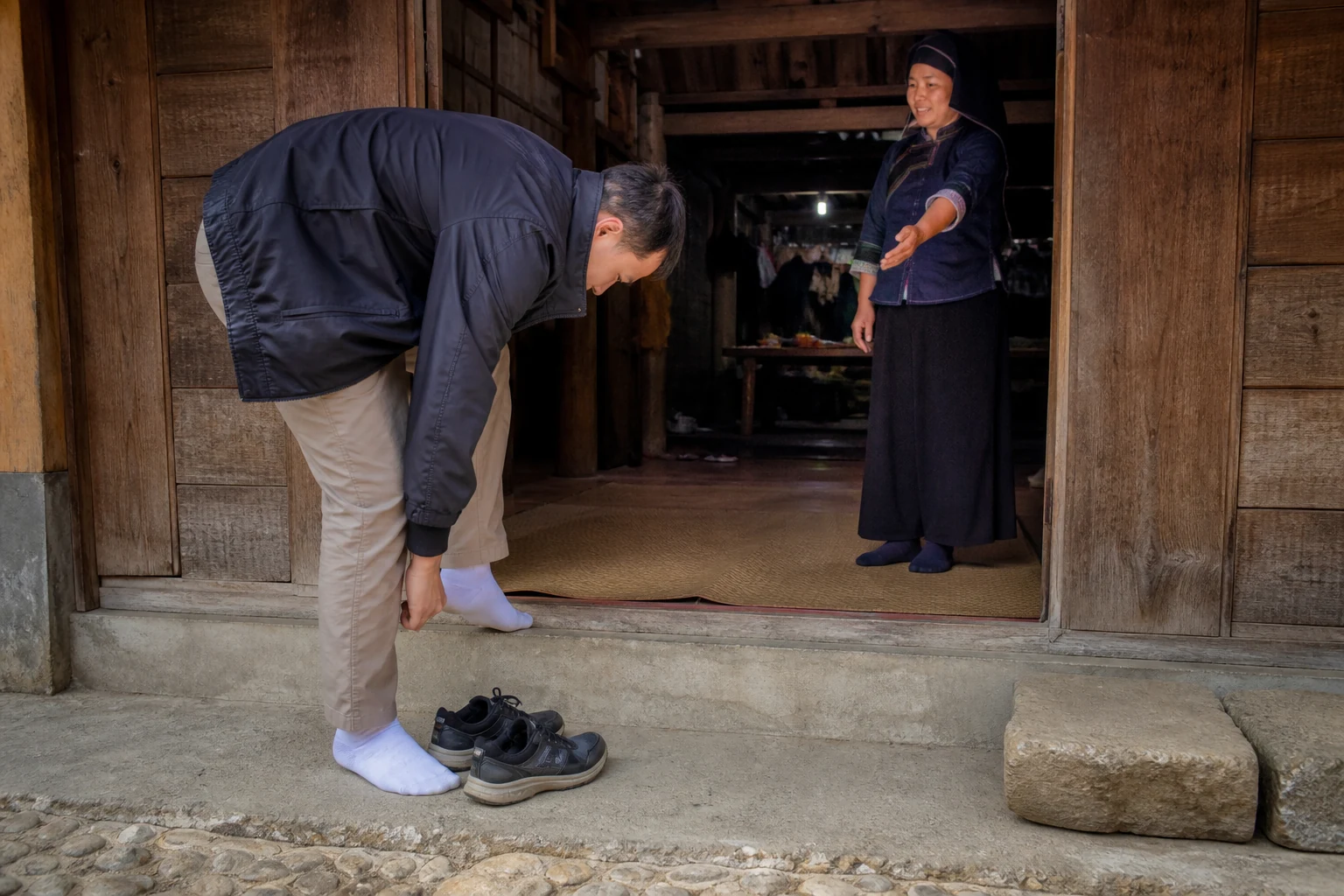
Homestay etiquette in the north.
A homestay is someone's home first and a bed second. Meals, seating and sleep follow the household, not a hotel schedule.
Our village and Hoang Su Phi programmes use Red Dao, White Hmong, Lo Lo, Dao Cham and Tay households. Architecture shifts from mud-walled Lo Lo houses to raised Dao stilt houses, but the guest contract remains the same: quiet respect, eat what is offered and let the guide bridge language.
Small gestures matter more than gifts. This guide covers threshold, hearth, table, bath and sleep — what hosts notice even when they say little.
- Village treks hub
Compare routes, difficulty and seasons at this collection hub.
- Hoang Su Phi programmes
Compare routes, difficulty and seasons at this collection hub.
- Eating with the Hmong
Shoes off at the door.
Shoes off at the threshold. Always. The raised wooden floor of a stilt house is a clean space.
Du Gia lunch and Ban Phung hamlet meals follow the same rule — wait at the threshold until the host or guide invites you up. Sandals left outside are fine; muddy trail shoes stay wide of the sleeping area.
Lo Lo mud-walled houses in Chai village use the same logic — different architecture, same separation between outside mud and inside floor.
The central fire and feet.
Do not step over the central hearth or point your feet toward it. Small gestures; the household notices.
Evening heat gathers near the hearth in cold months — guests sit where directed, usually along the wall, not sprawled toward the flame. On Lo Lo routes, woodsmoke and frost nights mean longer hours by the fire.
Photography of shrine corners and ancestor spaces needs explicit permission — your guide will say when a room is private.
Eating slowly, drinking slowly.
Eat what is offered, drink slowly, and let your guide handle the toasts. A small gift from home — tea, a postcard — is welcomed but not expected.
Dishes arrive in sequence — soup first, then meat and rice on Red Dao and La Chi tables. Wait for the host to begin. Vegetarian and allergy requests need advance notice; kitchens are home-scale.
Du Gia guide note: allow 90 minutes for the Dao hamlet lunch — rushing signals you treat the household like a service station.
Shared rooms and modesty.
Homestay sleep is a shared mattress on a wooden floor, with bedding and mosquito net provided. Some Hmong nights have up to six guests in one room. Bring modest sleepwear and stay quiet after the household sleeps.
Power can be intermittent, so bring a headlamp for toilet trips. The squat toilet is often in a separate building; put shoes on for the walk there.
Main bag on motorbike routes arrives before dinner when logistics align — keep passport and valuables in daypack overnight.
- Lo Lo Chai to Then Pa
White Hmong homestay — shared room, cold Oct – Mar.
Dao herbal bath and hot water.
Nam Dam Night 1 includes a traditional herbal bath — the host family's dried roots, wood-fired, optional but part of Dao Cham routine. Red Dao Nam Hong programmes feature the evening bath drawn from forest leaves.
Bath is usually single-sex or sequential by household schedule — your guide explains order. Towel from your pack; privacy is rustic, not spa.
Hot water is finite — shower before dinner when the fire is strong, not after everyone has washed dishes.
- Nam Dam to Lung Tam
Dao Cham herbal homestay Night 1.
- Nam Hong to Ho Thau
Red Dao herbal bath above the ridge.
Photos, children and gifts.
Do not photograph people without asking, especially elders and children. Wave if they wave first at the stairwell — Ban Phung and homestay alike.
Gift-giving is discouraged on terrace days — fair exchange is the hosted meal and guide wages. A postcard or tea from your country is enough if you wish.
Indigo purchases at Lung Tam go directly to weavers — that supports the cooperative; trinkets handed random children do not.
Two nights, two households.
Nam Dam to Lung Tam: Dao Cham Night 1, White Hmong Night 2 — different customs, same guest manners. Main bag moves by motorbike; greet Night 2 hosts without expecting identical layout to Night 1.
Ban Luoc traverse begins in Black Dao country, then uses bungalow accommodation in Ho Thau on Night 1 and local village accommodation in the Nam Ai area on Night 2. Shrine calendars and meal times shift with ethnicity; your guide narrates, you listen.
Luggage porters are not part of village pricing — you carry daypack; respect that porter culture on ridge programmes differs from homestay valleys.
- Ban Luoc long traverse
Night 1 Ho Thau bungalow, Night 2 Nam Ai village stay.
Fire, lamps and night walks.
Wood stoves and open hearths need clearance — dry socks drying too close catch embers. Headlamp for outdoor toilets; watch for loose floor boards on old stilt houses.
Guides know motorbike access if someone needs descent — basic medical kit on trail. Homestay dogs are usually familiar with the household; ask before petting.
Quiet hours matter — early ridge departures mean the house wakes before dawn. Pack the night before, not at 05:00 with a headlamp in everyone's face.
Language, children and household rhythm.
Most hosts speak limited English, so your guide translates meals, bath order and morning departure times. Learn one greeting in the local language if you wish; hosts notice effort even when pronunciation is wrong. A guide explaining dietary needs in advance works better than pointing at food to refuse politely.
Children in homestay households are curious about foreign guests. Wave if they wave first, do not pick up toddlers without parent permission and avoid close-range flash photography indoors. School-age children may practise script at the table on Lo Lo routes; treat that as domestic life, not a performance for your camera.
Household rhythm beats hotel timing: dinner when the pot is ready, sleep when the fire dies, and departure when the guide and host agree on light and weather. Asking to rush lunch before a ridge day suggests that you treat the kitchen like room service; guides buffer that conversation.
Dogs and livestock belong to the household, so ask before petting. Pigs and poultry under stilt houses are working animals, not photo props. The same respect applies at Sunday markets and on terrace paths where buffalo share narrow lanes.
Common questions.
How basic are homestays?
Simple and clean — mattress, bedding, net, shared room, squat toilet often outside. Wood-fired hot water where available.
Can couples share a private room?
Usually shared with other guests or family space — privacy is limited. Tell us at booking if you need arrangement notes.
Should I tip the host family?
Community fees are in your booking. Tips to guides at your discretion — direct cash to hosts is not required and can confuse household economics.
Are homestays suitable for children?
Du Gia suits families from about ten. Multi-day homestays better for teenagers comfortable with shared accommodation and early starts.
What if I am ill at night?
Tell your guide immediately. Homestays are not clinics; descent to town is the protocol for anything beyond minor stomach upset.
Guest well, leave lightly.
The homestay memory guests repeat is rarely the mattress — it is the bath steam, the toast you barely understood, the child who stared then waved.
Read packing and food guides, choose a route with the homestay culture you want — Dao herbal, Red Dao ridge, Hmong plateau — and tell us dietary and privacy needs at enquiry.
Published by Ha Giang Trekking — field knowledge from local trail guides on the routes described, checked against programme schedules and operating notes.
Journal pages are for route research and planning. Dates, prices, day-by-day schedules and enquiry sit on programme and tour pages.
Articles are published under Ha Giang Trekking. Named writer and guide bylines will be added when verified bios and consent are on file.
Operational details on programme and tour pages are published only after being checked against current operating information.