Luggage on Ha Giang treks — what happens to your bags while you walk
Do you carry your main bag while trekking Ha Giang? Usually not on supported multi-day routes, but luggage handling varies by trek. See how it works.
Do you carry all your luggage while trekking Ha Giang?
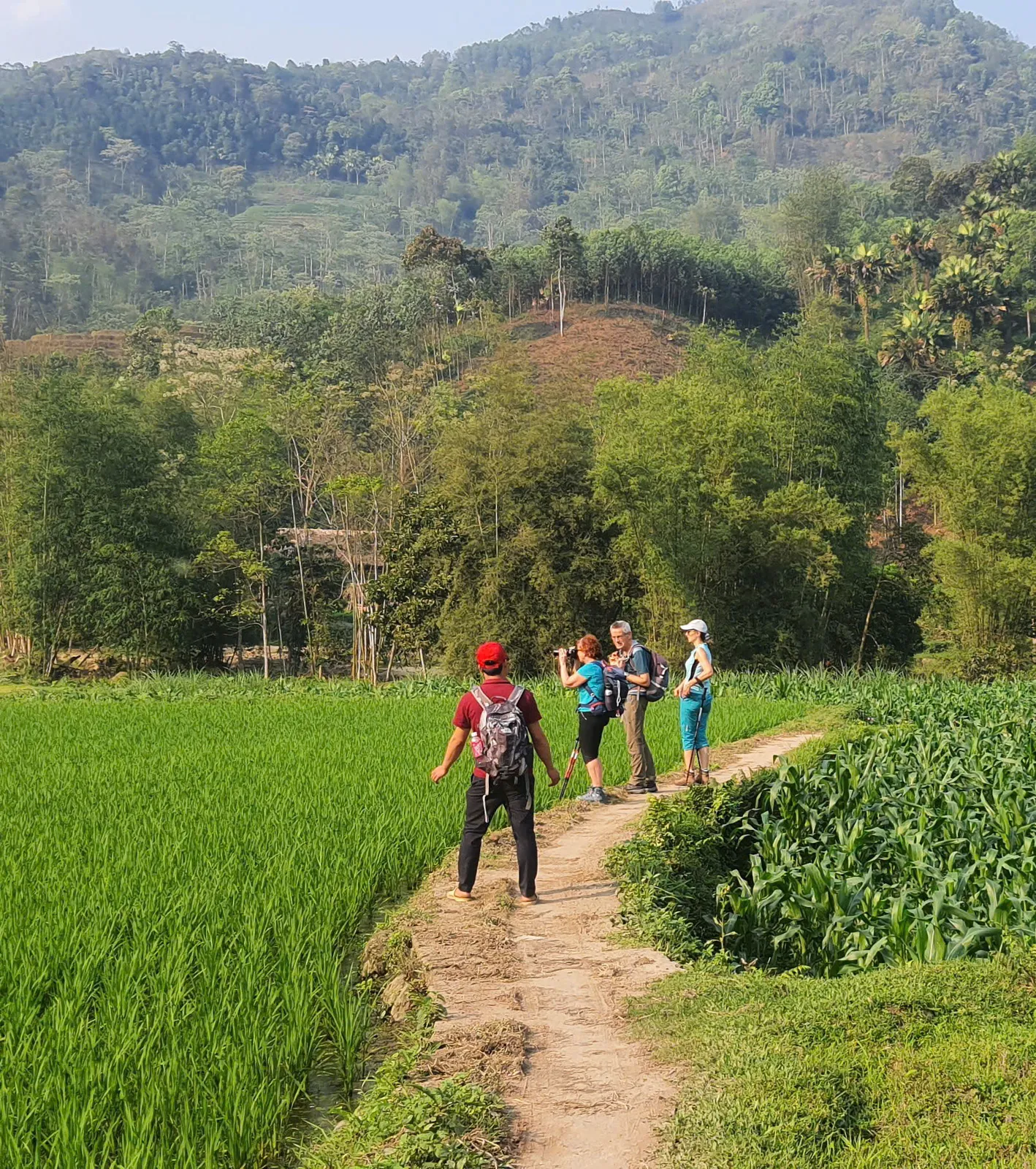
On supported multi-day programmes on this site, you normally walk with a daypack — not your full travel luggage all day. Water, rain layer, phone or camera, passport and personal essentials stay on your back while feet cover village paths, terrace walls or ridge sections.
Your main bag — clothing, toiletries and overnight items you do not need on the trail — is handled according to the programme you book. On some routes it is transferred between overnight points; on others it stays with transport in town; on one-day walks there is no overnight transfer at all.
There is not one universal luggage model across Ha Giang. Handling varies by route, access and overnight type. Exact pickup points, handoff method and any weather-related adjustments are reconfirmed for your specific departure after enquiry — not implied by a photograph from one valley or one programme page alone.
This page explains how bag handling typically works and where it differs. Your booked programme page holds route-specific detail; the packing guide holds what to put inside each bag.
- Packing for Ha Giang trekking
What goes in your daypack and main bag — not where bags move.
- Nam Hong to Ho Thau
Two-day homestay — programme luggage notes.
- Ban Luoc long traverse
Three-day traverse — programme luggage notes.
- Chieu Lau Thi cloud-sea programme
Two-day lodge — programme luggage notes.
What should stay in your daypack?
Think in two bags, not one overloaded pack for the whole trip.
The daypack holds what you need while walking: water, sun protection, a rain or wind shell, phone or camera, passport and essential documents, medication, snacks if you use them, and a small warm layer on routes where evenings or ridges cool down. Valuables stay here — not in a bag that may move separately.
The main bag holds spare clothing, toiletries, modest sleepwear for homestay nights and anything you will not need until you reach the next overnight point. On multi-day programmes where transfers apply, that main bag is normally off your shoulders during walking hours.
Published daypack sizes differ by programme — 15 – 20 L on one-day Du Gia and Ban Phung, 20 – 25 L on two-day Nam Hong and Lo Lo Chai, larger packs on three-day traverses. Match capacity to your booked page; do not treat one programme’s litre figure as site-wide.
- Packing for Ha Giang trekking
Full kit lists and daypack checklists by programme type.
Do you need a porter for a Ha Giang trek?
Probably not in the Nepal sense of a dedicated porter line carrying your pack all day on every step.
Ha Giang Trekking is not presented as a porter-service operation. On published programmes, luggage is usually solved through route logistics — a daypack on the trail and main-bag handling between overnight points where the itinerary supports it — rather than hiring a person to walk behind you with a load.
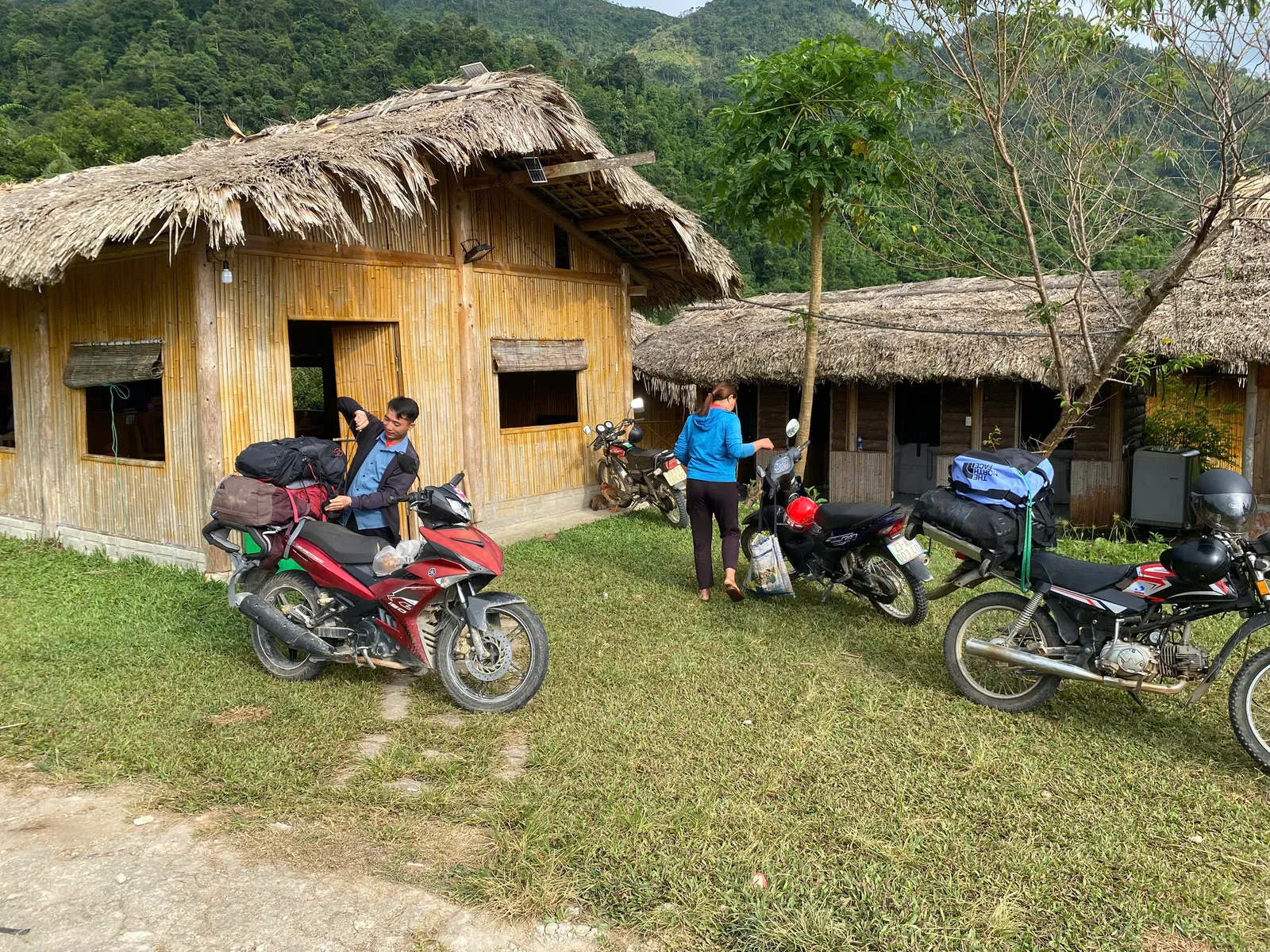
Access roads, homestay locations and lodge nights determine what is practical. A terrace village may receive bags by motorbike between houses; a one-day return walk has no overnight transfer; the two-day Chieu Lau Thi cloud-sea programme keeps main luggage in Hoang Su Phi with the driver while you carry a daypack to the lodge.
If you have unusual baggage — oversized hard-shell cases, heavy camera cases or mobility concerns — say so at enquiry. We confirm what the specific route can handle. Do not assume a porter can be added to any published departure unless confirmed for your dates.
- Custom expeditions
Dates or geography that do not match a published route.
- Ha Giang without a motorbike
Walking-first discovery — transfers reach trailheads; you do not ride the Loop.
How luggage handling changes from trek to trek
Read your programme page first. This section summarises published differences — not a guarantee for every future departure.
Extended journeys on /tours and one-day Ridge & Cloud programmes follow the Includes and good-to-know blocks on each tour or programme page. Frozen ridge research routes are not bookable products on this site.
- Nam Hong to Ho Thau
- Ban Luoc long traverse
- Chieu Lau Thi cloud-sea programme
- Ban Phung highest terraces
- Nam Dam to Lung Tam
Verified Village Treks luggage notes.
- Village treks
Compare routes, difficulty and seasons at this collection hub.
- Hoang Su Phi programmes
Compare routes, difficulty and seasons at this collection hub.
Can you bring a suitcase to a Ha Giang trek?
Many travellers arrive in Vietnam with wheeled luggage or hard-shell suitcases. That is normal. The relevant question is not whether you own a suitcase — it is what portion needs to come onto the walking route and whether your main bag can reach the next overnight point on the programme you book.
Village lanes, terrace paths and homestay yards are not hotel lobbies. Large rigid cases can be awkward where bags are handed to drivers or moved between houses. Softer duffels or foldable travel bags often work better on multi-day routes that publish transfers.
We do not promise that every accommodation or handoff point can accept oversized luggage. Share approximate bag size and type at enquiry if yours is unusually large so we can confirm the route you are considering.
Will my main bag be waiting at the homestay or lodge?
When a programme publishes main-bag transfer or driver-held luggage, the intent is that your walking daypack is enough on the trail and your main bag meets you at the overnight stop — homestay, lodge or guesthouse as listed on the programme page.
On Nam Hong and Ban Luoc, programme copy describes transfer to the next overnight point; exact household or handoff timing is confirmed for your departure. On the Chieu Lau Thi cloud-sea programme, main luggage remains in Hoang Su Phi with the driver — your daypack carries what you need at the lodge.
Do not assume room-to-room bell service or hotel-style bag delivery. Village homestays are working households; Chieu Lau Thi 2402m Lodge is a mountain property with its own room types. If you need a specific room arrangement, say so at enquiry.
- Homestay trekking in Ha Giang
Room, bathroom and lodge-vs-homestay comfort — separate from bag movement.
- Nam Hong to Ho Thau
- Chieu Lau Thi cloud-sea programme
How should you protect your belongings in wet conditions?
Rain and mud change how your pack feels — not necessarily whether a programme runs. Guides adjust pace when terrace walls or forest paths are slick; operators assess safety before you travel.
Keep electronics and documents in dry bags or waterproof pouches inside your daypack. A pack rain cover helps but is not a substitute for internal protection on long wet descents. Spare clothing in your main bag benefits from a liner or dry sack when transfers happen in damp weather.
We do not publish live trail-condition or weather reports on this page. Match wet-weather kit to the packing guide and season window for your route, then confirm pacing for your departure week with your guide.
- Packing for Ha Giang trekking
Rain shell, gaiters and dry-bag kit.
- Best time to trek Ha Giang
Season choice after route shortlist.
- Green season trekking in Ha Giang
Rain-day operations — not luggage policy.
- Ha Giang trekking fitness and difficulty
Pace on slick descent days.
What if you carry camera gear or unusual luggage?
Photographers, drone operators and travellers with laptops or fragile kit should say so before booking. Daypack space, handoff handling and homestay storage differ from a light weekend bag.
There is no site-wide specialist porter or gear-carry service unless confirmed for your specific departure. Custom geography or pacing may start on Custom Expeditions when a published route does not fit.
Disclose approximate weight, case dimensions and anything that cannot get wet. We reply with whether the programme you want can accommodate it — or which published route is a better fit.
- Custom expeditions
Non-standard dates, geography or kit.
- Contact — describe your equipment
Five things to confirm about luggage before your trek
- What should I carry while walking — daypack size and essentials for this programme?
- Where does my main bag stay on each night — homestay, lodge or with the driver in town?
- Does my main bag move between overnight points, and if so how is that described on the programme page?
- What happens if road access or weather changes the usual handoff — who confirms the plan?
- Do I have oversized, rigid or fragile luggage that the route needs to know about before I book?
Send these with your dates and group size on the contact page. We confirm the luggage plan for the route you are considering — not a generic guarantee across every trek in the province.
- Contact — share your route and bag questions
- Packing for Ha Giang trekking
After luggage plan is clear, pack to the programme list.
Tell us what you are travelling with
When you enquire, share your preferred trek or collection, travel dates, group size, main luggage type and approximate bag size if it is unusually large. Mention camera bodies, laptops or anything fragile that must not go in a transferred bag.
We read what you send and confirm the luggage plan published for that specific route — daypack expectations, whether main bags move between nights and what stays in town. This site does not take payment at enquiry.
- Contact — share your route and luggage details
WhatsApp enquiry.
Common questions.
Do I carry my suitcase while trekking Ha Giang?
On supported multi-day programmes you normally walk with a daypack, not your full suitcase. One-day walks such as Ban Phung have no overnight transfer — carry only what you need for the day unless you confirm otherwise at enquiry. Read this page for how handling differs; read your programme page for your route.
Do I need a porter on a Ha Giang trek?
Not in the usual sense. Published programmes solve luggage through daypack walking and route-specific main-bag handling — not a dedicated porter product on every trek. Disclose unusual loads at enquiry.
Can my main luggage be transferred?
On some overnight programmes — Nam Hong, Ban Luoc and Nam Dam to Lung Tam among them — main luggage moves between stops while you walk with a daypack. On the Chieu Lau Thi cloud-sea programme main luggage stays in Hoang Su Phi with the driver. One-day walks have no overnight transfer. Confirm on your programme page.
What size daypack should I use?
Match your booked programme page — typically 15 – 20 L on one-day walks, 20 – 25 L on two-day homestay routes, larger on three-day traverses. The packing guide lists sizes by programme type.
Can I bring camera equipment?
Yes — keep fragile bodies and lenses in your daypack with dry protection. Tell us at enquiry if you carry unusually large or heavy cases so we can confirm the route.
Will my bag be at the homestay when I arrive?
When a programme publishes transfer between overnight points, the intent is that your main bag meets you at the stop while you walk with a daypack. Exact timing and household are confirmed for your departure — not guaranteed identically on every route.
Published by Ha Giang Trekking — field knowledge from local trail guides on the routes described, checked against programme schedules and operating notes.
Journal pages are for route research and planning. Dates, prices, day-by-day schedules and enquiry sit on programme and tour pages.
Articles are published under Ha Giang Trekking. Named writer and guide bylines will be added when verified bios and consent are on file.
Operational details on programme and tour pages are published only after being checked against current operating information.