
Homestay trekking in Ha Giang: overnight village walks
Homestay trekking in Ha Giang — what overnight village and terrace programmes involve, who they suit and how to choose a published route before you book.
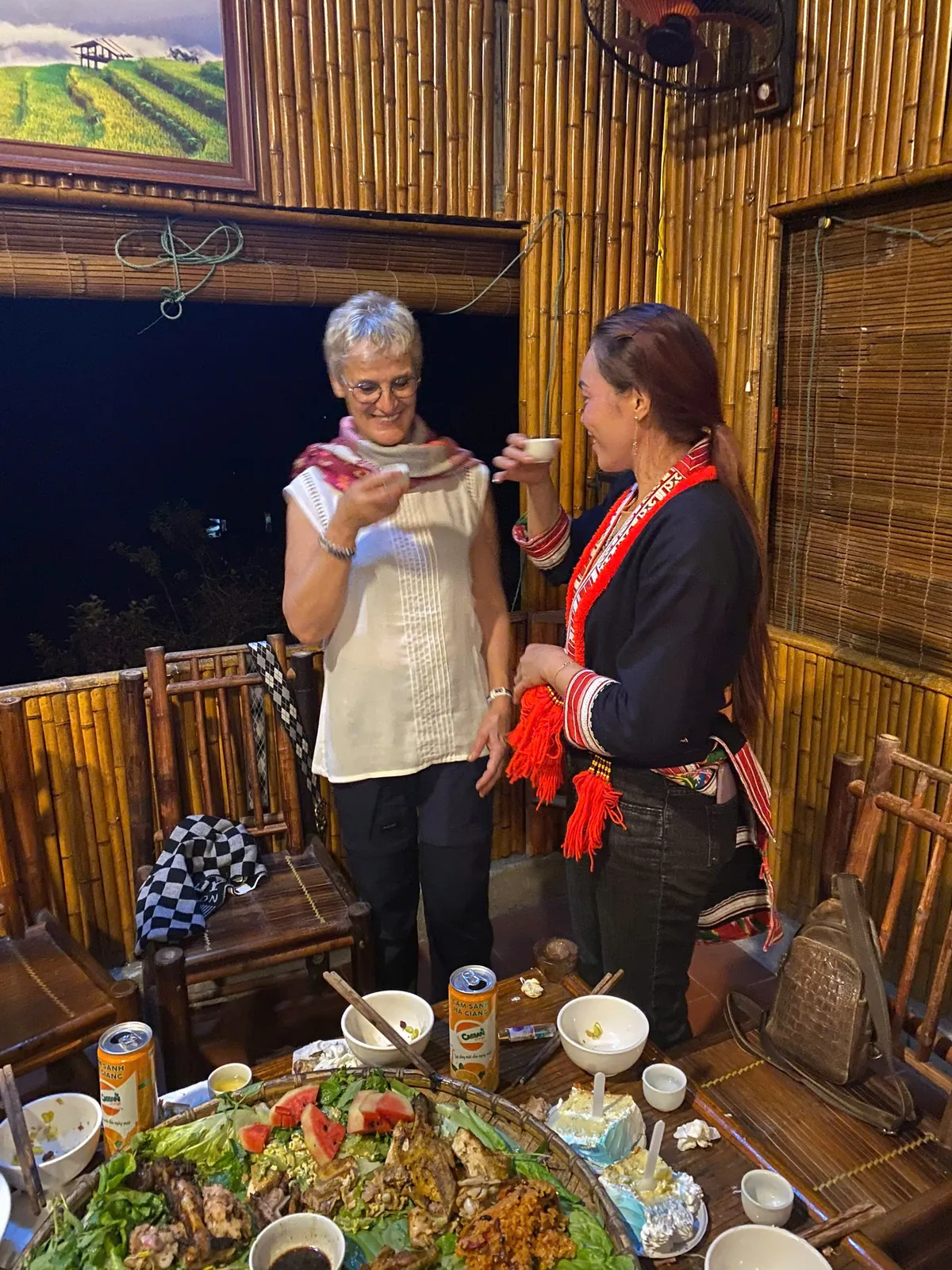
Homestay trekking in Ha Giang.
This guide focuses specifically on homestay trekking ha giang — deciding whether an overnight walking programme with family hosting matches your travel style — not accommodation reviews, not hotel comparisons and not day-by-day programme schedules.
On this site, a ha giang homestay trek means a guide-led published programme that includes one or more nights in a host household as listed on the product page — Village Treks multi-day lines, Hoang Su Phi overnight programmes such as Nam Hong to Ho Thau and Ban Luoc, and longer extended journeys when tour Includes list homestay nights.
This guide covers the homestay-trekking product choice — what the overnight trek feels like, who it suits, meals, sleeping, facilities, privacy, etiquette, packing, regions and seasons. Village collection depth, remote-village route choice, guest-behaviour detail and terrace landscape choice have their own guides.
We describe only what published programme pages and existing guides on this site already state — without inventing facility grades, cultural rituals or guest statistics.
- Village trekking in Ha Giang
Village collection depth — parent topic.
- Remote village trekking in Ha Giang
Remote village product choice — related, not this owner.
- Homestay etiquette
Guest behaviour before Night 1.
- Village treks
Compare routes, difficulty and seasons at this collection hub.
- Hoang Su Phi programmes
Compare routes, difficulty and seasons at this collection hub.
What is a homestay trek?
A homestay trek on Ha Giang Trekking is overnight trekking ha giang organised as a published walking product: you walk with local guides by day, eat hosted meals where listed, and sleep in a family house or communal room listed on that programme’s Includes.
It is not a separate hotel booking you arrange yourself, and it is not a ridge shelter night on Ridge & Cloud — those overnight styles are different products. Homestay trekking here means household hosting tied to the walking day.
village homestay trekking on this site includes Red Dao nights on Nam Hong to Ho Thau, multi-valley nights on Ban Luoc, Lo Lo Chai and Nam Dam Village Treks overnights, and plateau homestays on extended journeys when the tour page lists them.
- Nam Hong to Ho Thau
Two-day Red Dao ridge with one homestay night.
- Lo Lo Chai to Then Pa
Two-day northern village programme with homestay night.
Who is it for?
Homestay trekking suits walkers who want overnight village contact as part of the trek — shared table, household rhythm and a night away from tourist-town lodging — and who accept basic facilities listed on the programme page.
It suits first-time overnight trekkers on Moderate lines when regular walking at home is already comfortable — Ha Giang trekking for beginners owns first-trek shortlisting. It suits culture-focused travellers when ethnic minority and village guides match the route.
It is a weaker fit if you need private ensuite rooms, quiet hotel sleep every night, or unrestricted photography indoors. Day programmes that return to town remain available when overnight hosting is not the goal.
- Ha Giang trekking for beginners
First-trek Easy or Moderate shortlist.
- Ethnic minority trekking in Ha Giang
Cultural route choice on published programmes.
Typical trekking experience.
A typical overnight day starts with a walking section on farm paths or ridge trails, a hosted lunch or picnic as the programme lists, and arrival at the homestay in the afternoon before the evening meal.
On Nam Hong to Ho Thau, Day 1 ends with a wood-fired herbal bath before the family table when guests take it; Day 2 opens with a pre-dawn viewpoint walk before breakfast and descent. On Lo Lo Chai to Then Pa, you walk into the northern village toward dusk and sleep before day-visitor traffic at the flagpole area the next morning.
Exact distances, hours and Includes live on each programme page — this article describes the shared overnight rhythm, not a substitute itinerary.
- Village treks hub
Compare routes, difficulty and seasons at this collection hub.
- Hoang Su Phi programmes
Compare routes, difficulty and seasons at this collection hub.
Village life on the route.
Homestay nights sit inside working highland households — drying racks, kitchen smoke, children and farm animals are part of the evening, not a staged show. Guides translate at the table and sequence arrival so hosting remains a family decision.
Village life on foot is slower than a viewpoint stop from the road. Irrigation channels, schoolyards and courtyard work appear on the path before you reach the house.
Remote village trekking in Ha Giang covers the quieter off-loop village product angle; this page asks whether overnight hosting itself fits your style.
- Remote village trekking in Ha Giang
Quieter village route choice.
- Village trekking in Ha Giang
Village pace across the collection.
Meals on a homestay trek.
Published overnight programmes list meals on walking days in their Includes — typically breakfast, lunch and dinner on full trek days, with hosted household cooking rather than restaurant menus.
Tables are shared. Dishes follow what the household cooks — rice or corn staples, mountain greens, soups and meat or tofu as available. Vegetarian tables are prepared with advance notice on programmes that state so; allergies beyond vegetarian need clear notice before departure because kitchens are home-scale.
Rice wine may be offered in small cups — one polite sip is enough if you are walking again the next morning. Eating with the Hmong and related food guides on this site give broader table context; they do not replace programme meal lists.
- Eating with the Hmong
Highland table context on plateau routes.
Sleeping arrangements.
Homestay sleeping on published programmes is usually a shared room with mattresses, bedding and mosquito nets on a wooden floor — Nam Hong programme copy describes shared mattress lodging with up to several guests in one room.
Ridge & Cloud shelter nights are a different overnight type — communal mountain shelters, not village homestays. Do not assume the same bedding or privacy rules across product lines; read the programme page for the route you book.
Modest sleepwear is practical in shared rooms. Earplugs help if household sounds or early kitchen activity start before you prefer to wake.
What are the toilets and showers actually like?
Village homestay facilities are basic and vary by household and route — not one standard across Ha Giang trekking programmes.
On Nam Hong to Ho Thau, published programme copy describes a squat toilet outside as typical when a shared room is used, and wood-fired hot water for the herbal bath when the household runs it — not an ensuite hotel bathroom. Exact household and facilities are confirmed for your travel dates before departure. Ban Luoc lists wood-fired hot water when available across two homestay nights, with toilet type confirmed for your dates. Other Village Treks lines publish their own notes on the programme page.
Shared bathroom arrangements may be normal. Hot-water availability, toilet type and whether facilities sit inside or outside the house depend on the confirmed accommodation — not on whether you requested a private sleeping room.
Expect to bring your own toilet paper and wet wipes in a dry bag. Standards for your specific departure live on the programme FAQ and Includes block — this page describes the general pattern, not a guarantee for every household.
- Nam Hong to Ho Thau
Published homestay facility notes.
- Ban Luoc long traverse
Two homestay nights — facility notes on the programme page.
- Packing for Ha Giang trekking
Toilet paper, dry bag and overnight kit.
Can you have a private room on a Ha Giang trek?
Do not assume a private room unless your programme page or booking confirmation says so. Shared mattress rooms with bedding and mosquito nets are the default on many village homestay nights.
On selected Hoang Su Phi programmes — including Nam Hong to Ho Thau and Ban Luoc long traverse — a private room can be arranged or requested, subject to the specific accommodation confirmed for your departure. Tell us your room preference when you enquire. This is not a site-wide guaranteed private-room policy and property standards vary by household.
A private sleeping room does not automatically mean a private bathroom. Programme copy on Nam Hong and Ban Luoc explicitly states that a private room is not a private-bathroom guarantee. Couples, light sleepers and travellers used to hotel privacy should state room and bathroom expectations before booking, not on arrival at the house.
Solo travellers on small-group departures often share rooms with other guests — Solo trekking in Ha Giang covers join-in mechanics. Ask your guide before photographing people indoors; Homestay etiquette covers shoes, gifts and quiet hours.
- Nam Hong to Ho Thau
Private room can be arranged — programme FAQ.
- Ban Luoc long traverse
Private-room arrangements on the programme page.
- Solo trekking in Ha Giang
Join-in groups and shared homestay nights.
- Homestay etiquette
Indoor behaviour and photography consent.
Homestay or lodge — they are not the same overnight.
Village homestay nights on published programmes mean sleeping in a working farm household — shared or private mattress rooms, household meal times, courtyard traffic and facilities that vary by route. That is the product on Nam Hong, Ban Luoc and Village Treks multi-day lines unless your booking confirmation states otherwise.
Chieu Lau Thi 2402m Lodge on the two-day cloud-sea programme is a different high-mountain accommodation type — not a village homestay. Published programme copy lists private rooms and dorm-style accommodation, beds and blankets, bathroom facilities at the lodge, electricity for charging and usable phone signal and internet at the lodge — not on the trail or summit. Room type is confirmed when the departure is booked.
Do not treat lodge ensuite facilities as the village-homestay standard, and do not assume every mountain route uses the lodge. Ridge & Cloud shelter nights on frozen research routes are a third pattern again — read each programme page for the overnight type you are booking.
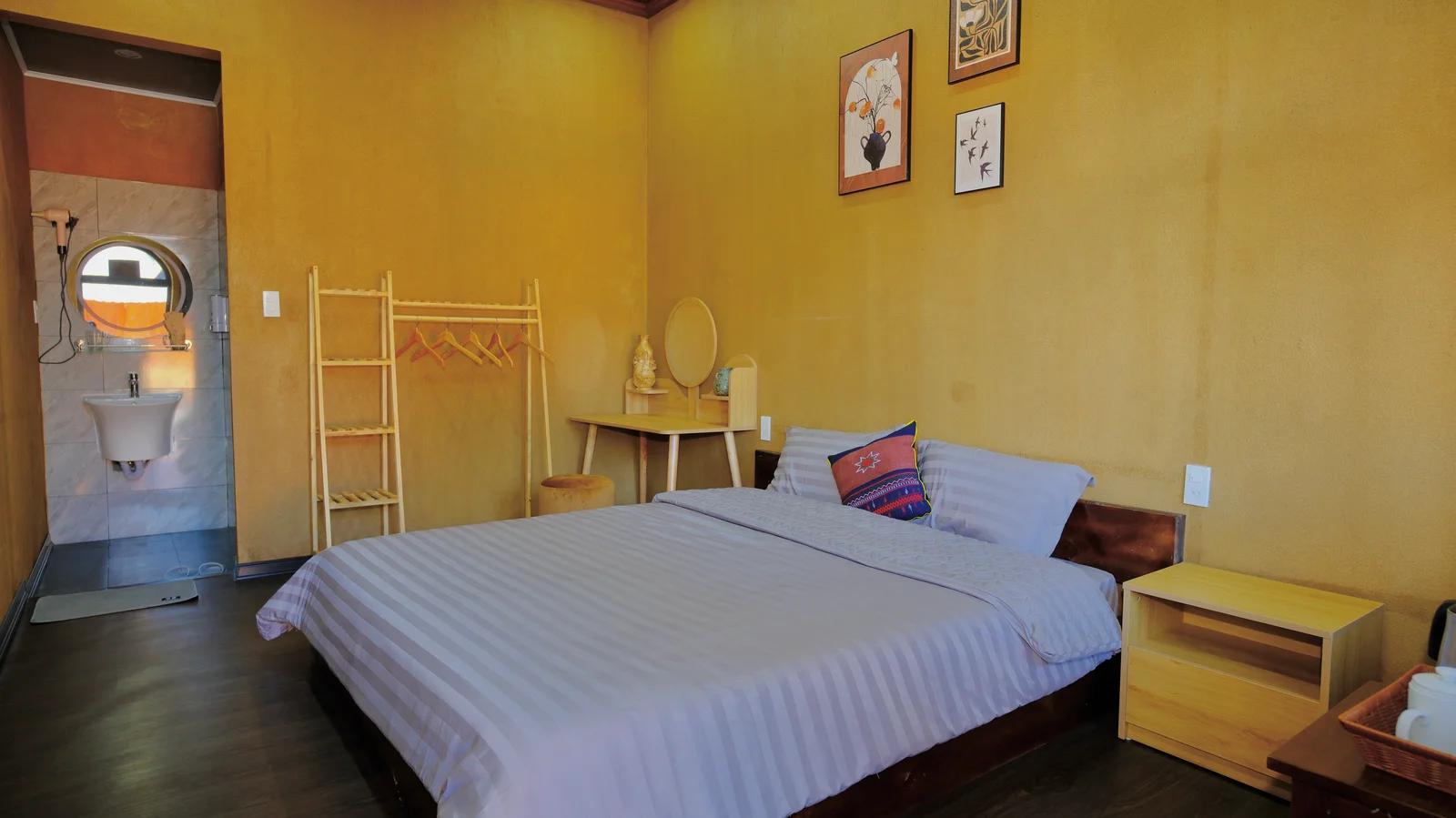
- Chieu Lau Thi cloud-sea programme
Lodge overnight — verified programme facts.
- Nam Hong to Ho Thau
Village homestay overnight.
- Luggage on Ha Giang treks
Where main bags go — separate from room type.
Charging, electricity and phone signal.
Electricity and charging access differ by overnight type. Do not treat trekking accommodation like a connected city hotel.
Village homestays on Nam Hong and Ban Luoc programme pages warn not to assume charging or connectivity — tell us at enquiry if a specific facility matters and we confirm what is available at the accommodation selected for your departure. Nam Hong lists patchy signal in the area and none at the homestay; guides carry emergency contact details.
Chieu Lau Thi 2402m Lodge publishes charging, bathroom facilities and usable phone signal and internet at the lodge — not as a substitute for coverage on the trail or summit, and not at hotel Wi-Fi speed.
A charged power bank is sensible on village homestay routes where outlet access may be limited. Keep passport, medication and anything you need the next walking day in your daypack — read the luggage guide for bag handling on your route.
- Luggage on Ha Giang treks
Daypack vs main bag on overnight programmes.
- Packing for Ha Giang trekking
Power bank and headlamp on overnight routes.
- Chieu Lau Thi cloud-sea programme
Lodge charging and signal facts.
Couples, light sleepers and hotel habits.
Homestay trekking can work for couples when you accept household rhythm and basic facilities — and when you tell us at enquiry if a private room, quieter sleep or a specific bathroom arrangement matters.
Travellers accustomed to hotel ensuite standards should confirm overnight type before paying: village homestay programmes differ from the Chieu Lau Thi lodge programme and from day walks that return to town lodging. Light sleepers may want earplugs, a private-room request where the programme allows it, or a one-day return route instead of forcing a shared mattress night.
What to confirm about overnight comfort.
- Is the room private or shared for your departure?
- Is the bathroom private or shared — and where is the toilet?
- Is hot water available that night, and how is it heated?
- Can you charge phones or camera batteries at this stop?
- What phone signal should you expect at the homestay or lodge?
- Is this night a village homestay, Chieu Lau Thi 2402m Lodge, or another type on the programme page?
Send these with your dates and group size when you enquire. Programme pages hold route-specific answers; booking confirmation is the authority for household, room type and facilities.
Cultural etiquette.
Shoes off at the threshold, wait for hosts or your guide to begin at the table, and keep voices low after household quiet hours. Gifts are modest when you bring them — practical items your guide suggests, not cash pressed into children’s hands.
Photography of people needs a clear yes. Mourning days, festival preparation and private household moments are times to keep the camera down.
Homestay etiquette owns the full guest-behaviour guide. Ethnic minority trekking in Ha Giang owns cultural route choice. This page only covers etiquette as it affects whether overnight hosting fits you.
- Homestay etiquette
Full guest-behaviour owner.
- Ethnic minority trekking in Ha Giang
Cultural encounters on published routes.
Packing tips for overnight treks.
Follow the programme what-to-bring list first. For overnight trekking ha giang, add a warm layer for cool nights above 1,500 m, modest sleepwear for shared rooms, a headlamp, and a dry bag for wet clothes or toilet paper.
Daypack only on routes with luggage transfer — Ban Luoc moves the main bag by motorbike each morning on its programme page. On other lines, confirm bag handling before you pack a heavy main pack.
Packing for Ha Giang trekking owns kit stacks by collection and season. This page only flags overnight-specific extras.
- Packing for Ha Giang trekking
Full kit lists by collection and season.
Best regions for homestay treks.
Village Treks — Lo Lo Chai to Then Pa and Nam Dam to Lung Tam for northern and Quan Ba homestay nights; Du Gia is a one-day return with hosted lunch, not an overnight homestay programme unless arranged separately when you enquire.
Hoang Su Phi — Nam Hong to Ho Thau for a classic Red Dao homestay night; Ban Luoc for two homestay nights on the three-day traverse. Ban Phung is a one-day terrace return to town without a homestay night.
Extended journeys on /tours list their own overnight pattern — Dong Van Karst Traverse and related plateau lines include plateau homestays where the tour page says so. Rice terrace trekking in Ha Giang helps when terrace landscape is the draw alongside overnight hosting.
- Lo Lo Chai — 2 days · 1 night · Moderate
- Nam Hong — 2 days · 1 night · Moderate
- Nam Dam — 3 days · 2 nights · Moderate
- Ban Luoc — 3 days · 2 nights · Demanding
- Village treks
Compare routes, difficulty and seasons at this collection hub.
- Hoang Su Phi programmes
Compare routes, difficulty and seasons at this collection hub.
- Rice terrace trekking in Ha Giang
Terrace landscape choice with overnight options.
- Dong Van Karst Traverse
Multi-day plateau journey with homestay nights.
Best seasons for homestay trekking.
Homestay trekking runs across seasons on Village Treks and Hoang Su Phi programmes, with different ground underfoot — harvest terraces, cooler dry nights, green-season mud and northern flower windows each change the overnight feel.
Cold months need warmer sleep layers even when day walking felt mild. Harvest weekends can fill popular homestay beds faster — Nam Hong programme notes flag September–October pressure on beds.
Best time for Ha Giang trekking owns the month-by-month calendar. Match season to landscape before you fix an overnight programme.
- Best time for Ha Giang trekking
Season calendar before booking overnight dates.
Advantages of homestay trekking.
Overnight hosting puts village contact inside the trek — evening table, morning kitchen rhythm and a night away from tourist-town lodging that day walks cannot offer.
Published programmes bundle guides, meals and homestay allocation so you are not negotiating household stays alone on unmarked paths.
Multi-day lines let you wake already on the route — ridge viewpoints and village departures start from the house, not from a distant hotel transfer every morning.
Possible drawbacks.
Facilities are basic — shared rooms, squat toilets and limited hot water are normal on many published nights. Hotel comfort is not the product.
Privacy and sleep quality vary. Household noise, early starts and shared rooms can frustrate travellers who need guaranteed quiet or private space.
Cultural etiquette and photography limits apply. Homestay trekking asks for guest manners; it is not an unrestricted “village experience” ticket.
Weather and season affect comfort — cold nights, wet paths and busy harvest weeks change the overnight more than a town hotel would.
Common questions.
What is homestay trekking in Ha Giang?
On this site it means a guide-led published walking programme with overnight stays in host households listed on the programme Includes — not a separate hotel booking and not a Ridge & Cloud shelter night.
Is a Ha Giang homestay trek suitable for beginners?
Often yes on Moderate overnight lines if you already walk regularly at home — Nam Hong to Ho Thau and Lo Lo Chai to Then Pa are common first overnights. Read Ha Giang trekking for beginners and each programme difficulty label.
Are bathrooms private?
Usually not on village homestay programmes. Toilet type, hot-water arrangements and whether facilities are shared vary by household and route — confirm on the programme page you book. A private sleeping room does not automatically mean a private bathroom.
Do I sleep in a private room?
Do not assume a private room unless the programme or booking confirmation says so. On some routes, including selected Hoang Su Phi programmes such as Nam Hong and Ban Luoc, a private room can be arranged or requested subject to the accommodation confirmed for your departure. That does not automatically mean a private bathroom.
Is a homestay the same as Chieu Lau Thi 2402m Lodge?
No. Village homestays use working households with simpler, variable facilities. The two-day Chieu Lau Thi cloud-sea programme sleeps at Chieu Lau Thi 2402m Lodge — a different high-mountain accommodation type with its own published room, bathroom and charging facts on the programme page.
Can I charge my phone on a homestay trek?
Do not assume charging at village homestays — programme pages ask you to confirm at enquiry. Chieu Lau Thi 2402m Lodge publishes charging at the lodge. A power bank is sensible on village routes where outlet access may be limited.
What should I pack for overnight trekking?
Warm layer, modest sleepwear, headlamp, dry bag for wet items, and the kit on the programme what-to-bring list. Packing for Ha Giang trekking owns the full stack.
Which programmes include homestay nights?
Village Treks multi-day lines (Lo Lo Chai, Nam Dam), Hoang Su Phi overnight programmes (Nam Hong, Ban Luoc) and extended journeys when the tour Includes list homestays. Ban Phung and Du Gia are day returns without a programme homestay night.
Does this page replace Homestay etiquette?
No. Homestay etiquette covers guest behaviour. This page asks whether a homestay-based trek fits your travel style before you book.
Choose overnight, then book.
Homestay trekking in Ha Giang fits when you want overnight village hosting as part of a published walking programme — and when basic shared facilities and household rhythm are acceptable.
If that matches your trip, open the Village Treks or Hoang Su Phi hub, confirm season on the best-time guide, then enquire from the programme page. Contact when your dates and group needs are ready.
- Luggage on Ha Giang treks
Bag handling on overnight programmes.
- Village trekking in Ha Giang
Village collection depth after overnight fit.
- Remote village trekking in Ha Giang
Quieter village route shortlist.
- Best time for Ha Giang trekking
Season before fixing overnight dates.
- Homestay etiquette
Guest behaviour before Night 1.
- Village treks
Compare routes, difficulty and seasons at this collection hub.
- Hoang Su Phi programmes
Compare routes, difficulty and seasons at this collection hub.
- Lo Lo Chai to Then Pa
- Nam Hong to Ho Thau
- Contact — enquire with your dates
Published by Ha Giang Trekking — field knowledge from local trail guides on the routes described, checked against programme schedules and operating notes.
Journal pages are for route research and planning. Dates, prices, day-by-day schedules and enquiry sit on programme and tour pages.
Articles are published under Ha Giang Trekking. Named writer and guide bylines will be added when verified bios and consent are on file.
Operational details on programme and tour pages are published only after being checked against current operating information.
Compare published routes and open the programme or journey page when you are ready to enquire.
- Hoang Su Phi — compare terrace programmes
One- to three-day terrace and homestay routes in the west of the province.
- Village treks — compare valley routes
Valley and plateau village circuits with homestay nights.
- Ridge & Cloud — compare summit programmes
Summit ridges and cloud-forest massifs above the terrace country.
- Extended journeys — multi-day loops
Four- to seven-day journeys across Dong Van, Ma Pi Leng and the northern plateau.
- Ban Phung — highest terraces (1 day)
Ban Phung — highest terraces (1 day) — dates, pricing and enquiry.
- Du Gia forest villages (1 day)
Du Gia forest villages (1 day) — dates, pricing and enquiry.
- Chieu Lau Thi — sunrise ridge (1 day)
Chieu Lau Thi — sunrise ridge (1 day) — dates, pricing and enquiry.
- Dong Van Karst Traverse
Dong Van Karst Traverse — full itinerary and enquiry.
- Hidden Valleys Slow Trek
Hidden Valleys Slow Trek — full itinerary and enquiry.
- Private Hoang Su Phi to Dong Van Hiking Journey
Private Hoang Su Phi to Dong Van Hiking Journey — full itinerary and enquiry.

