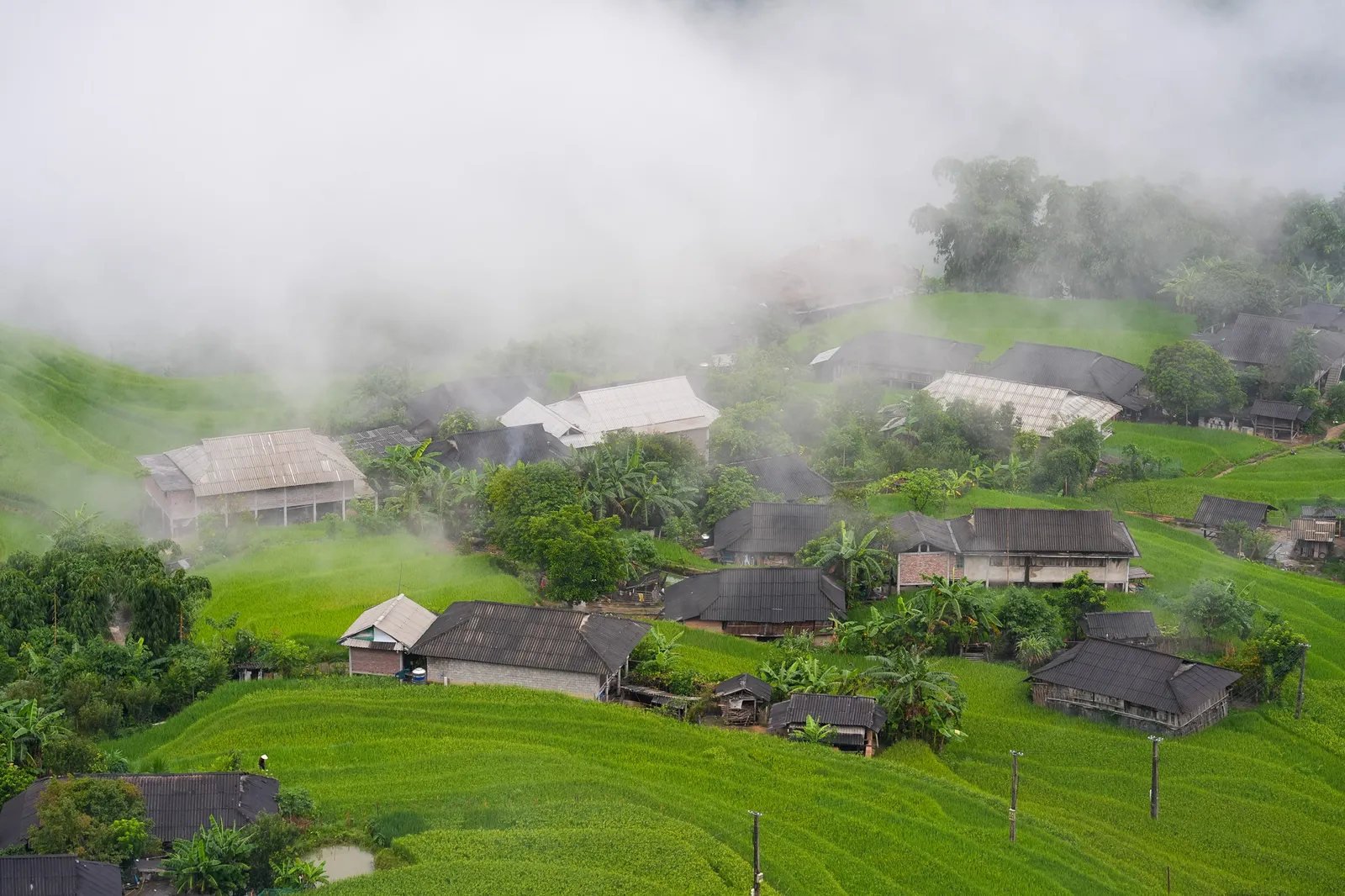
Recovery pacing on a multi-day trek
Managing three-day fatigue, motorbike luggage transfer, and why recovery is pacing and sleep — not a short Day 3 walk.
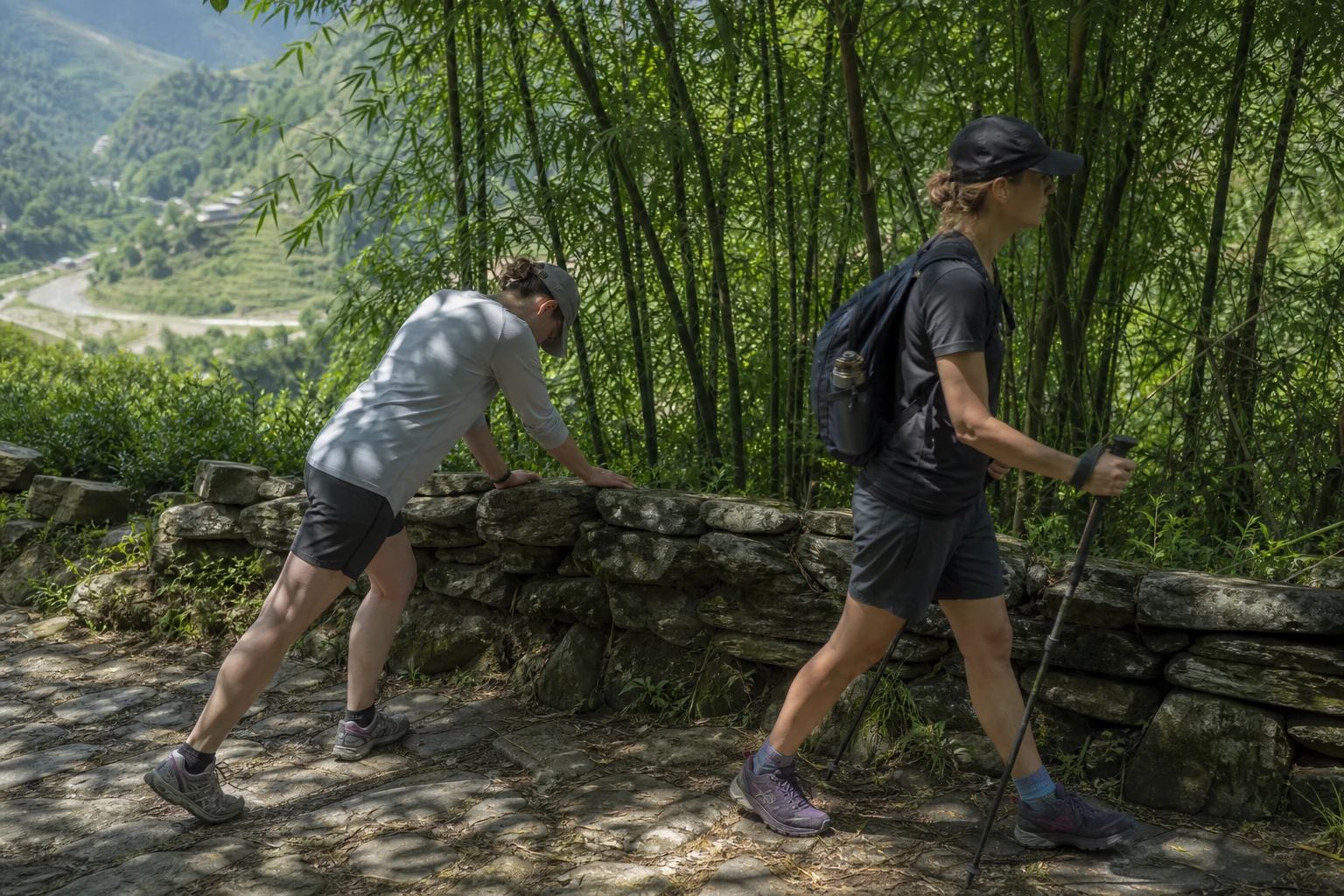
Managing three-day fatigue.
Multi-day treks fail on Day 3 when guests treat Day 1 as a fitness test. Ban Luoc rewards conservative pacing: steady breath on Day 1, a proper rest at Ho Thau on Night 1, early sleep before the 15 km Day 2 to Nam Ai. Recovery is not passive — it is built into luggage logistics, meal timing, hydration and sleep.
Day 3 is still approximately 17 km and about six to seven hours on foot. What eases at the end is finish logistics: you stop walking in Phin Ho, refresh, eat, then transfer by vehicle toward Tan Quang — not a short or token last trekking day.
This article is for walkers preparing the Ban Luoc traverse or any three-day village route in Hoang Su Phi. The principles apply wherever your main bag travels by motorbike and your legs carry a daypack across consecutive walking days.
Fatigue here is muscular and rhythmic — quads after uneven paths, calves after terrace climbs, sleep disrupted by simple overnight rooms — not altitude sickness. We do not publish an elevation profile for this programme.
- Ban Luoc — the long traverse (3 days)
Full programme page with day-by-day schedule, pricing and enquiry via Contact.
- Hoang Su Phi programme hub
Compare routes, difficulty and seasons at this collection hub.
Conservative start.
Day 1 is 17 km in about five to six hours — manageable, but not a race. Guides do not compress Day 1 to rest more at Ho Thau; arriving exhausted ruins Day 2. Save energy deliberately.
Hydrate at dinner; alcohol dehydrates. Pack the main bag the night before each walking day. Guides collect bags at breakfast; stuffing wet gear at the door delays the whole group and adds stress before the trail.
- Ban Luoc — the long traverse (3 days)
Full programme page with day-by-day schedule, pricing and enquiry via Contact.
The long day's toll.
Day 2 is 15 km — the filter day after a 17 km Day 1. Guests who push hard in the morning to bank time often struggle on the afternoon paths into Nam Ai. Guides set steady pace with water stops in shade.
Stretch calves and hips for five minutes before sleep on Night 2. Eat breakfast on Day 3 even if appetite is low — the walk into Phin Ho is safer on food. Poles help on rooty forest sections and stone steps slick after rain.
Your main bag is already heading to the Nam Ai overnight when access allows — carrying only a daypack is the logistics choice that makes consecutive long days possible. Packing everything in the daypack because you distrust transfer is a common mistake.
- Day 2 — Ho Thau to Nam Ai
Terrain and pacing notes for the middle day.
Main bag by motorbike.
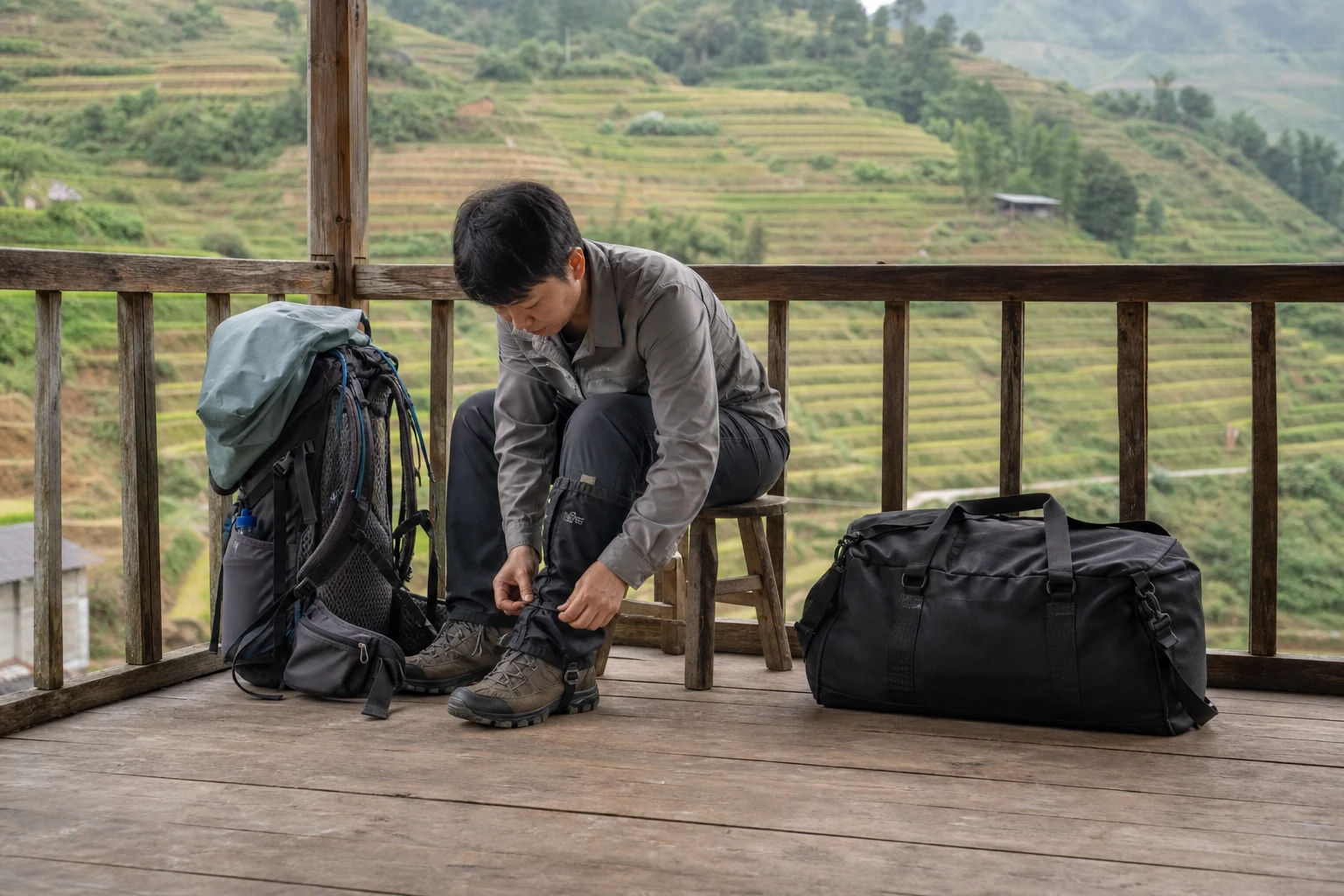
Your main luggage does not walk the traverse. Each morning you pack a labelled bag for the community driver network; it meets you at the next overnight before dinner when access allows. On trail you carry water, layers, camera, snacks, rain shell. Keep passport, medication and cash in your daypack.
The transfer route follows motorbike tracks that are not identical to the walking path. A dry sack inside the duffel protects against rain on the bike rack. Label main bag clearly with the same family name on transfer days.
A 25–30 L daypack is the right size for three days of walking. Community drivers know the overnight points; a misplaced bag is uncommon and usually a timing issue, not loss.
- Ban Luoc — the long traverse (3 days)
Full programme page with day-by-day schedule, pricing and enquiry via Contact.
Finish and transfer.
Day 3 is approximately 17 km from Nam Ai to Phin Ho over six to seven hours — a real walking day, not a token exit. On arrival there is time to rest, freshen up and eat before the vehicle to Tan Quang. If Day 2 ran long because of rain or photography stops, Day 3 start may shift — you still aim to reach Phin Ho with daylight for the refresh stop.
Do not treat Day 3 as a race to make up time. Use poles on wet sections. Guests who prefer a slower finish can add an optional overnight in the Phin Ho area — quoted separately, not part of the standard 3D2N price.
Sleeper-bus tickets toward Hanoi are an onward connection from Tan Quang — not included unless confirmed in writing.
- Ban Luoc — the long traverse (3 days)
Full programme page with day-by-day schedule, pricing and enquiry via Contact.
- Hoang Su Phi programme hub
Compare routes, difficulty and seasons at this collection hub.
Sleep, food and hydration.
Night 1 is a Ho Thau bungalow; Night 2 is a Nam Ai village stay — both are simple. Sleep may be lighter than in a hotel; recovery still happens if you eat well and hydrate. Family or property dinners are substantial. Eat slowly if portions are large; declining alcohol is normal.
Hosted breakfast on Day 2 and Day 3 mornings is included — do not skip either one. Snacks and seasonal fruit are provided on trail; drinking water is included. Personal appetite often drops on Day 3; eat anyway — the Nam Ai → Phin Ho stage remains a full walking day.
Warm layer for highland overnight stops — nights are cooler than the terrace afternoon.
- Homestay etiquette
Table manners and evening rhythm.
- Packing for Ha Giang
Layering and sleep kit.
- Luggage on Ha Giang treks
Main bag transfer and daypack habits across three days.
Recovery habits that work.
- Hydrate at dinner — alcohol dehydrates
- Stretch calves and hips five minutes before sleep on Night 2
- Eat breakfast on Day 3 even if appetite is low
- Use poles on wet or rooty sections — saves knees for the transfer
- Keep valuables in daypack — never in transferred main bag
Tell us at booking about knee, back or ankle history — guides adjust pace to the slowest walker. Travel insurance covering multi-day trekking is on the practical checklist.
Maximum group size is eight — smaller groups recover pace more easily when one walker needs slower descent.
- Ban Luoc — the long traverse (3 days)
Full programme page with day-by-day schedule, pricing and enquiry via Contact.
Pace and group size.
Maximum group size is eight trekkers — smaller groups adjust pace more easily when one walker needs a slower afternoon on Day 2. The English-speaking lead and local guides coordinate at every water stop; if you need slower pace, say so at breakfast rather than silently falling behind.
Multi-day fatigue is social as well as physical — simple rooms mean light sleep. A patient group culture on Day 1 prevents resentment on Day 2 when one walker needs an extra rest stop.
Demanding on our scale is distance and duration, not technical exposure. Regular walkers who respect Night 1 recovery habits finish Day 3 with energy for the transfer, not just the trail.
- Ban Luoc — the long traverse (3 days)
Full programme page with day-by-day schedule, pricing and enquiry via Contact.
Mental pace and sleep.
Three-day fatigue is partly mental — new overnight rules each night, simple rooms, unfamiliar food, patchy phone signal. Accepting simplicity early prevents irritability on Day 2 afternoon when the kilometres feel long. The traverse is designed for immersion, not comfort optimization.
Sleep may be lighter than at home. Eye mask and earplugs are underrated kit items. Early sleep on Night 1 matters more than reviewing photos after dinner.
Guides watch for quiet withdrawal as well as blisters — a walker who stops talking on the morning path may need water and pace change, not encouragement to speed up.
- Ban Luoc — the long traverse (3 days)
Full programme page with day-by-day schedule, pricing and enquiry via Contact.
Meals across three days.
Included meals run lunch Day 1 through lunch Day 3, hosted breakfast on Day 2 and Day 3 mornings, hosted dinners Nights 1 and 2. Breakfast before Day 1 pickup is your own arrangement. Portions are generous — eat steadily, hydrate, decline alcohol if you want clear legs.
Snacks and seasonal fruit on trail supplement but do not replace breakfast. Guides carry extra water in hot weeks; you still bring two litres capacity minimum.
Dietary restrictions communicated at booking reach host kitchens with notice — guides translate at dinner when ingredients surprise.
- Ban Luoc — the long traverse (3 days)
Full programme page with day-by-day schedule, pricing and enquiry via Contact.
Town rest and next routes.
After Phin Ho you transfer to Tan Quang unless you stay the optional extra night. Ridge programmes like Chieu Lau Thi are the usual altitude step up, but not the morning after Day 3. Allow a rest day between this traverse and a cold ridge programme.
Many guests later book Ban Phung as a photography day or Nam Hong if they have not walked it yet. We sequence dates when you enquire.
Legs recover slower than lungs after consecutive long days — plan accordingly.
- Three-day traverse overview
Full route context and fitness expectations.
Common questions.
Should I train before Ban Luoc?
Walk hilly terrain regularly for four to six weeks before departure. Practice with a loaded daypack similar to what you will carry — 25–30 L with water and layers.
Are rest days built into the programme?
Day 3 still walks approximately 17 km, then includes a refresh stop in Phin Ho before transfer. Rest after the trek is your responsibility — we recommend one clear calendar day before another walk.
Can I stay an extra night after the trek?
Yes — an optional post-trek overnight in the Phin Ho area can be arranged on request and is quoted separately. It is not part of the standard three-day two-night price.
What if I am sore on Day 3 morning?
Tell your guide at breakfast. Day 3 pace adjusts. The published Nam Ai → Phin Ho line does not shorten, but rest stops increase.
Published by Ha Giang Trekking — field knowledge from local trail guides on the routes described, checked against programme schedules and operating notes.
Journal pages are for route research and planning. Dates, prices, day-by-day schedules and enquiry sit on programme and tour pages.
Articles are published under Ha Giang Trekking. Named writer and guide bylines will be added when verified bios and consent are on file.
Operational details on programme and tour pages are published only after being checked against current operating information.
Ready to walk with local guides?
Dates, pricing and the day-by-day itinerary are on the programme page. Enquire about a departure when you are ready — we usually reply within 24 hours with availability, a clear price and what to pack.
Ban Luoc — the long traverse (3 days) — dates, pricing and itinerary