Photography across the Ban Luoc traverse
Three valleys, three light regimes — sunset terraces, morning mist, and tea-garden portraits with permission.
Photography on the western corridor.
Three days on the Ban Luoc traverse give three light windows — morning mist on Ban Luoc terraces, afternoon village paths on the Ho Thau ↔ Nam Ai corridor, and softer light in Shan Tuyet tea country toward Phin Ho. Plan card space and battery accordingly; charging at overnight stops is inconsistent. Keep one lens in the daypack accessible — stopping to dig through the main bag delays the group on Day 2.
This is field photography on a Demanding trek, not a dedicated photo tour. Group pace and overnight arrival take priority over your shot list. Your guide introduces portrait opportunities when hosts agree — working paths, not staged setups.
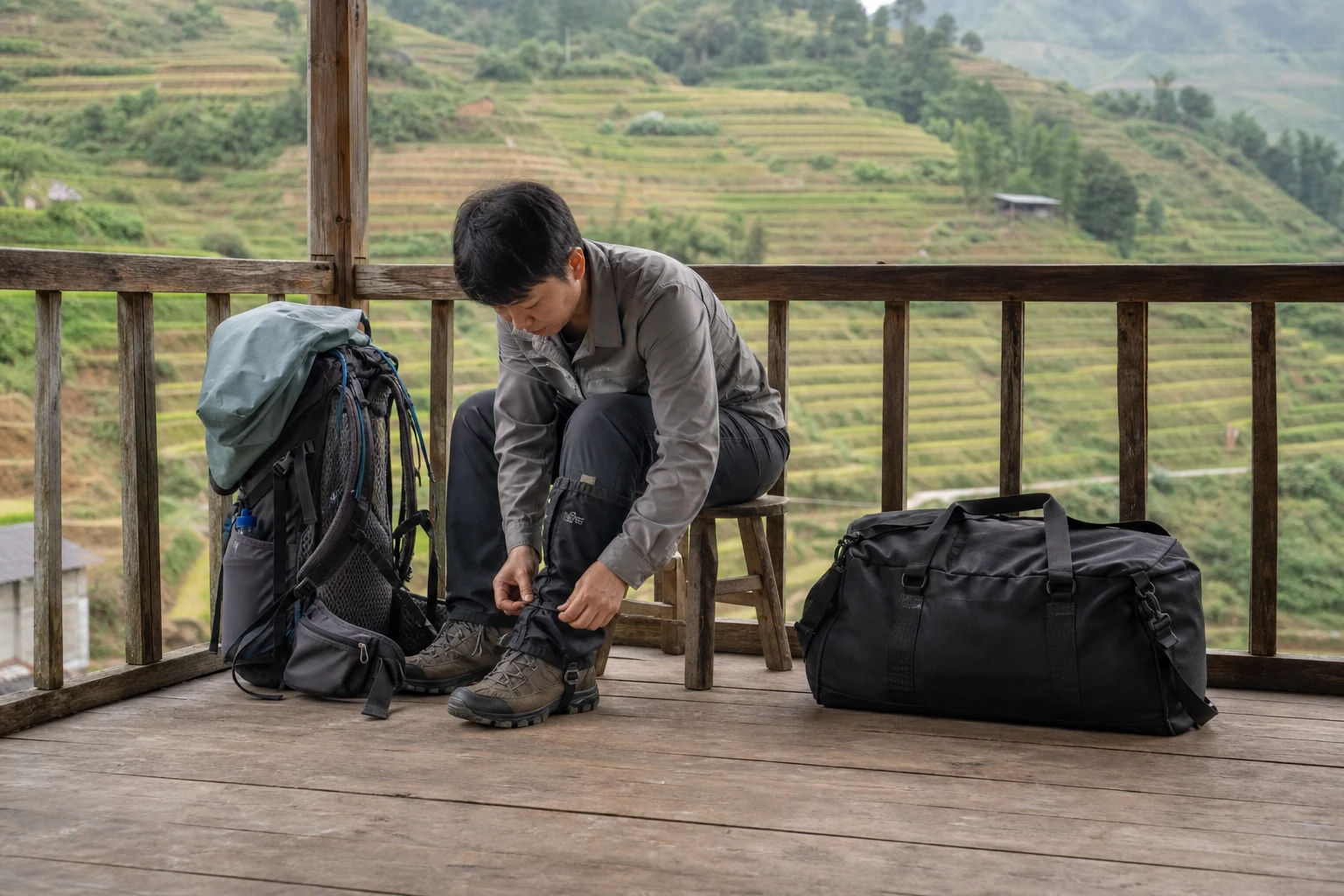
You carry full camera kit in the daypack; main bag travels by motorbike between overnight points where access allows. Phone shooters need exposure discipline for mist and bright terrace walls.
- Ban Luoc — the long traverse (3 days)
Full programme page with day-by-day schedule, pricing and enquiry via Contact.
- Hoang Su Phi programme hub
Compare routes, difficulty and seasons at this collection hub.
Ban Luoc terraces.
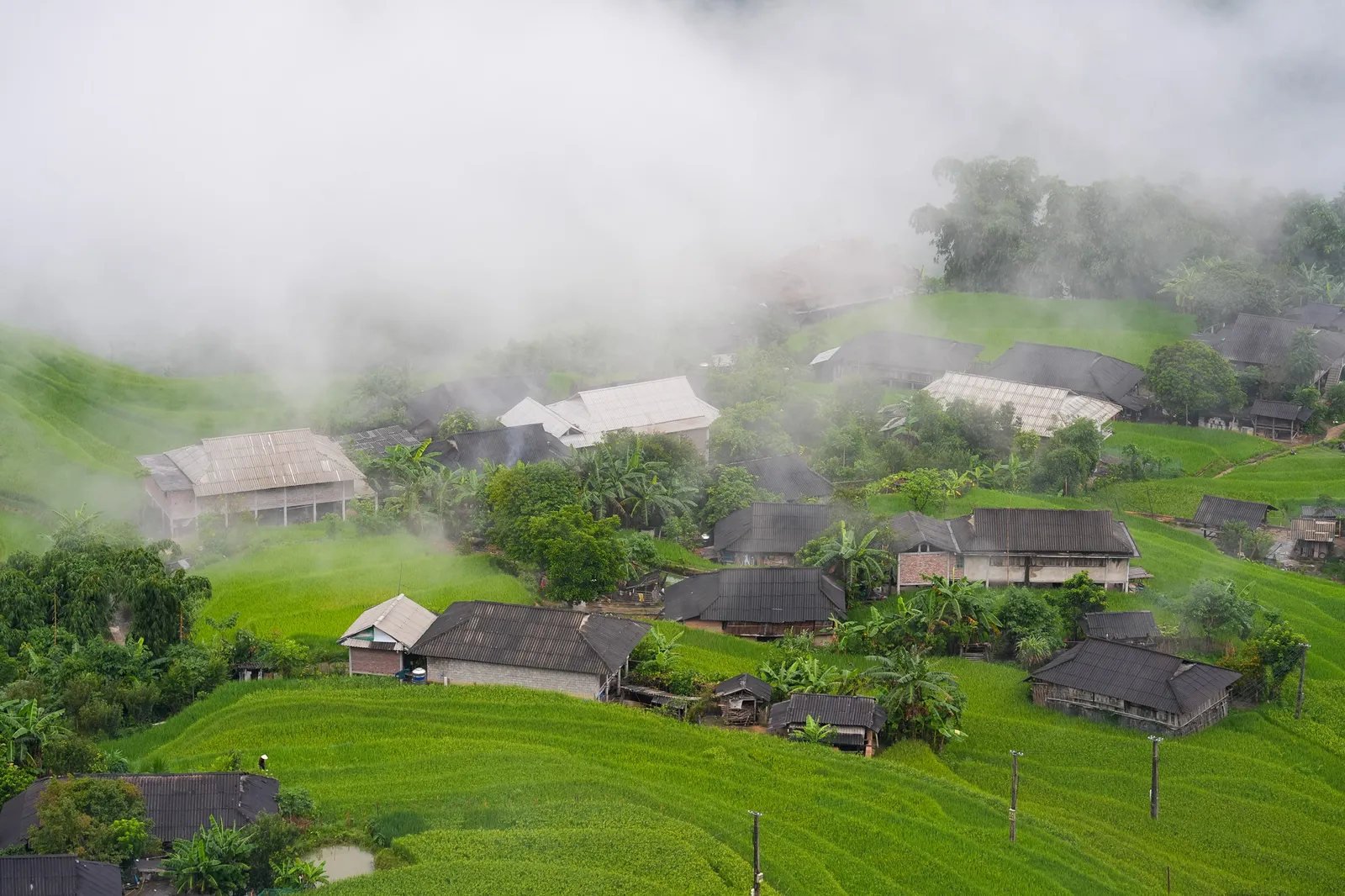
Day 1 leaves Ban Luoc terrace country toward Ho Thau — shoot downward into terraces before lunch when morning mist still defines walls. Afternoon haze can soften contrast on the approach to Ho Thau; do not burn card space only in the morning if you want bungalow evening frames later.
Herbal gardens and drying racks beside the path, where they still appear, are detail shots — ask before close-ups of household materials.
Overnight evening: ask before interior shots. Wide frames from outside reward dusk more than flash indoors.
- Homestay etiquette
Photography and indoor customs.
Ho Thau to Nam Ai.
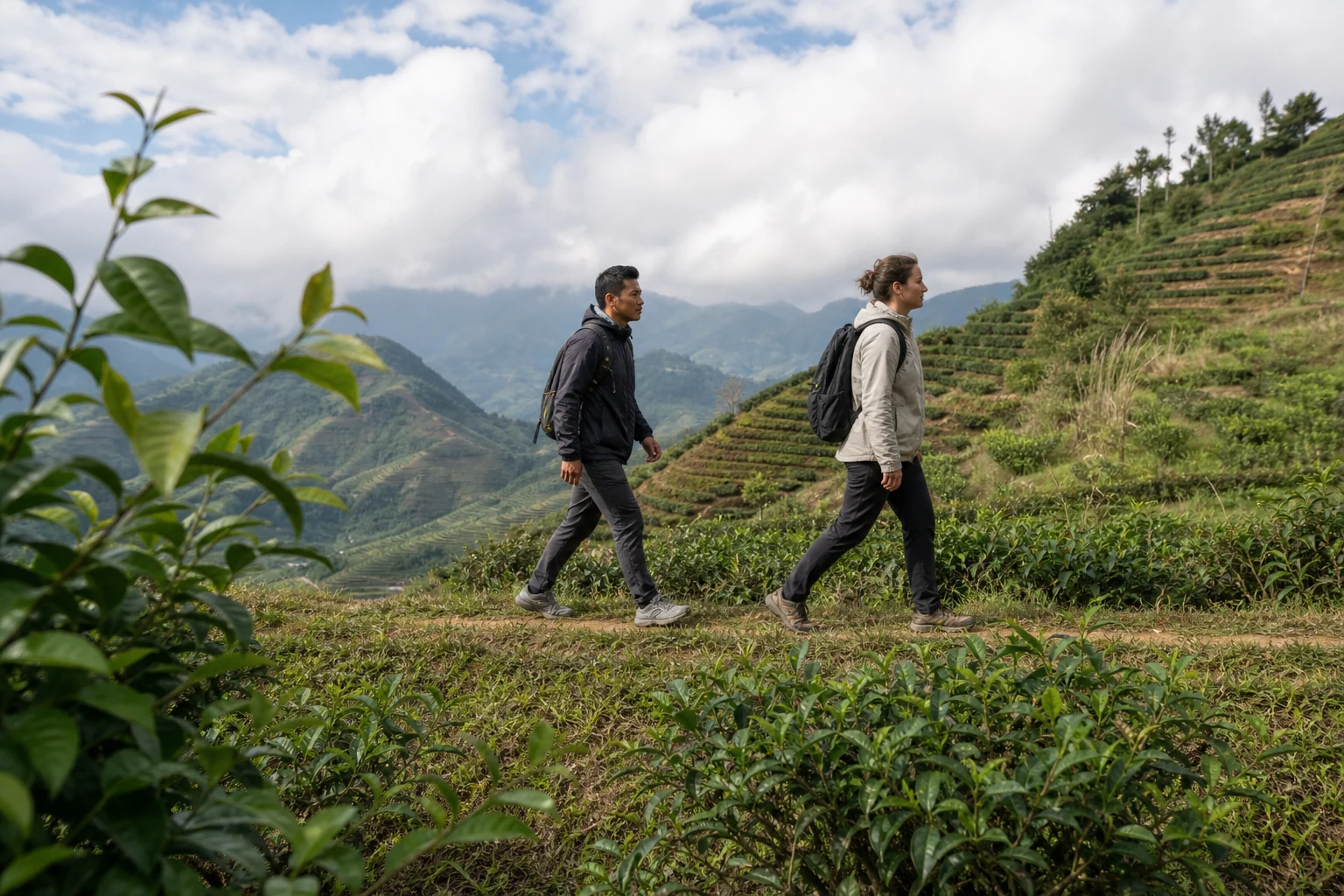
Day 2 is village-to-village walking toward Nam Ai — terrace margins and shaded forest sections, not the Ban Phung amphitheatre sunset. Harvest-season side-light on walls can still be good; shoot from paths, not planted rows.
Wide lens for terrace context; telephoto compresses walls but loses scale. If you arrive after dark, evening photography suffers — pacing in the morning matters for light as much as for legs.
- Photography guide — Ban Phung
One-day terrace light reference — a different programme.
- Day 2 crossing
Pacing that protects evening light.
Phin Ho tea country.
Day 3 is approximately 17 km into the Phin Ho area — Shan Tuyet tea landscape and a refresh stop before transfer. Portraits of tea pickers only with guide introduction — working paths, not staged. Morning of Day 3 is a second strong landscape window if Day 2 evening was misty.
Do not burn card space only on Day 2 — Day 3 finish frames balance the traverse story. Ask before table close-ups at the refresh stop.
Battery planning: two full days of shooting with inconsistent overnight charging means spare batteries or a modest power bank in the daypack — not in the transferred main bag.
- Ban Luoc — the long traverse (3 days)
Full programme page with day-by-day schedule, pricing and enquiry via Contact.
What stays in the daypack.
25–30 L daypack — camera body, two lenses or one zoom, spare battery, rain shell for gear and you. Main bag on motorbike holds trail clothing changes and toiletries. Keep memory cards and passport in the daypack.
Trekking poles recommended for Day 2 — one hand free for camera is not worth ankle risk on wet clay. Weather-sealed bodies help in humidity; plastic rain covers for non-sealed kit.
Drone use is not part of published programme practice — terrace communities prefer ground-level contact. Ask your guide if policy has changed for your dates.
- Packing for Ha Giang
General trekking kit for the province.
Portraits and permission.
Ask before photographing dye work, ceremonial dress or household interiors. Hosts are not costume for visitors — your guide explains when a household is in mourning or festival and photography should wait.
Gifts are discouraged — fair pay is through the booking. A waved greeting and patient presence earn more frames than telephoto intrusion from the trail above a village.
Children may appear curious at overnight stops — include parents in the frame or not at all, per host preference.
- Homestay etiquette
Photography and respect indoors.
Light by month.
September and October — harvest gold, long side-light, busiest weeks. November — mist on ridges, atmospheric layers, slower shutter discipline. March and April — flowers on forest margins, greener terraces. May and June — harsh midday contrast; shoot early and late. July and August — rain and slick paths; protect kit, accept fewer ridge hours.
October terrace light on the western corridor is the classic window — book early if photography drives your dates. Weather and harvest colour are not guaranteed.
Town forecasts understate ridge mist — overnight contacts inform evening expectations through your guide.
- Seasons and packing
When to walk for light and weather.
- Best time to trek Ha Giang
Province-wide seasonal guide.
Batteries, cards and rain.
Three days of photography with inconsistent overnight charging means spare batteries or a modest power bank in the daypack — not in the transferred main bag. Rain covers for non-weather-sealed bodies; humidity fogs lenses when you stop in shade.
Memory cards: shoot Day 1 morning, Day 2 village paths and Day 3 tea country as a deliberate three-act story — avoid filling cards on repetitive terrace angles from the same crest. Review deletes at dinner only if you have headlamp and consent from hosts for indoor screen glow.
Phone shooters benefit from exposure lock for mist at dawn and harsh side-light on terrace walls. HDR modes often flatten terrace depth — slight underexposure preserves wall texture.
- Ban Luoc — the long traverse (3 days)
Full programme page with day-by-day schedule, pricing and enquiry via Contact.
Lens choice by day.
Day 1 Ban Luoc terraces: 24–35 mm equivalent for downward views; 50 mm for herbal or household detail if hosts allow close approach. Day 2 village paths: 24 mm for terrace context, a short telephoto only if you accept compression. Day 3 Phin Ho tea country: 35–50 mm for rows and portraits with permission.
One-lens travellers manage with a quality 24–105 mm zoom — accept trade-offs when light changes fast. Phone ultrawide exaggerates terrace drop — useful for context, misleading for wall geometry.
Filter polariser optional — mist and side-light on terraces often reduce glare without filtration. Carry lens cloth in hip pocket, not main bag on motorbike.
- Ban Luoc — the long traverse (3 days)
Full programme page with day-by-day schedule, pricing and enquiry via Contact.
Editing a three-day story.
Think of the traverse as three acts — Ban Luoc morning mist, Ho Thau–Nam Ai village paths, Phin Ho tea finish. Avoid duplicating the same terrace angle from Day 1 and Day 2; the story is progression along the western corridor, not maximum frames of one wall.
Overnight detail shots — hands at table, maize drying — anchor the people story between landscape peaks. Ask before every interior frame.
Review and delete at the overnight only with headlamp discipline and host awareness — screen glow after 21:00 conflicts with quiet hours.
- Ban Luoc — the long traverse (3 days)
Full programme page with day-by-day schedule, pricing and enquiry via Contact.
Permits and community fees.
Permits and community contributions are included in the programme price — you do not negotiate access at village gates. Host payments are arranged through the booking; this is why gifts at the door are discouraged.
Maximum group size eight keeps terrace paths and overnight floors manageable. Private departures follow the same community fee structure with adjusted logistics.
Photography of restricted spaces — ceremony, mourning households, work in progress — waits for guide clearance regardless of permit status.
- Ban Luoc — the long traverse (3 days)
Full programme page with day-by-day schedule, pricing and enquiry via Contact.
Common mistakes.
- Banking morning time on Day 2 and arriving after useful evening light
- Only shooting terraces — missing household and trail detail tells half the story
- Packing camera only in main bag on Day 2
- Entering planted rows without permission
- Skipping Day 3 because cards are full — Phin Ho tea country balances the set
- Ban Luoc — the long traverse (3 days)
Full programme page with day-by-day schedule, pricing and enquiry via Contact.
Charging and headlamp.
Assume no reliable charging at overnight stops — spare batteries for camera and headlamp in daypack. Some properties offer a single outlet for brief use; do not depend on it for full device top-up.
Headlamp for paths after dark on Nights 1 and 2. Red light mode preserves night vision if you step outside after dinner.
Power bank in daypack under 10,000 mAh is enough for phone and headlamp refresh across three days when photography is moderate.
- Ban Luoc — the long traverse (3 days)
Full programme page with day-by-day schedule, pricing and enquiry via Contact.
Published Ban Luoc pace or photography-led timing.
This article is research along the western corridor — not a photography-specific Ban Luoc product. The published Ban Luoc traverse remains the correct choice if you are happy with programme pacing and brief photo stops.
If you need photo-first pacing, longer stops, timing adjustments or a different duration than the published three-day line, Custom Expeditions designs that after conversation. There is no separate Ban Luoc photo-tour SKU.
Season windows for light belong on the Ban Luoc seasons article and the province best-time guide. Weather and harvest colour are not guaranteed.
- Ban Luoc — the long traverse (3 days)
Full programme page with day-by-day schedule, pricing and enquiry via Contact.
- Custom Expeditions
Photo-first pacing only when the published traverse is not enough.
- Best time for Ha Giang trekking
Season research — not a photography booking page.
- Seasons, packing and route choice for Ban Luoc
When to walk for footing and seasonal light.
Common questions.
Is a tripod worth the weight?
Optional. Evening terrace light rewards a light tripod if you carry one habitually. Most walkers hand-hold with higher ISO in mist.
Can I charge batteries at overnight stops?
Sometimes — inconsistently. Bring spare batteries or a small power bank in the daypack.
Best lens for the traverse?
24–70 mm equivalent covers most scenes. One-lens travellers manage with a quality zoom.
Will the group wait for photos?
Brief stops yes; extended sessions no on Day 2. Communicate with your guide early if photography is a priority — private departures allow more flexibility.
Published by Ha Giang Trekking — field knowledge from local trail guides on the routes described, checked against programme schedules and operating notes.
Journal pages are for route research and planning. Dates, prices, day-by-day schedules and enquiry sit on programme and tour pages.
Articles are published under Ha Giang Trekking. Named writer and guide bylines will be added when verified bios and consent are on file.
Operational details on programme and tour pages are published only after being checked against current operating information.
Ready to walk with local guides?
Dates, pricing and the day-by-day itinerary are on the programme page. Enquire about a departure when you are ready — we usually reply within 24 hours with availability, a clear price and what to pack.
Ban Luoc — the long traverse (3 days) — dates, pricing and itinerary