Photography guide to Ban Phung
Side-light on terrace walls, respectful framing of farmers, and where to stand without stepping on planted rows.
Why Ban Phung rewards photographers.
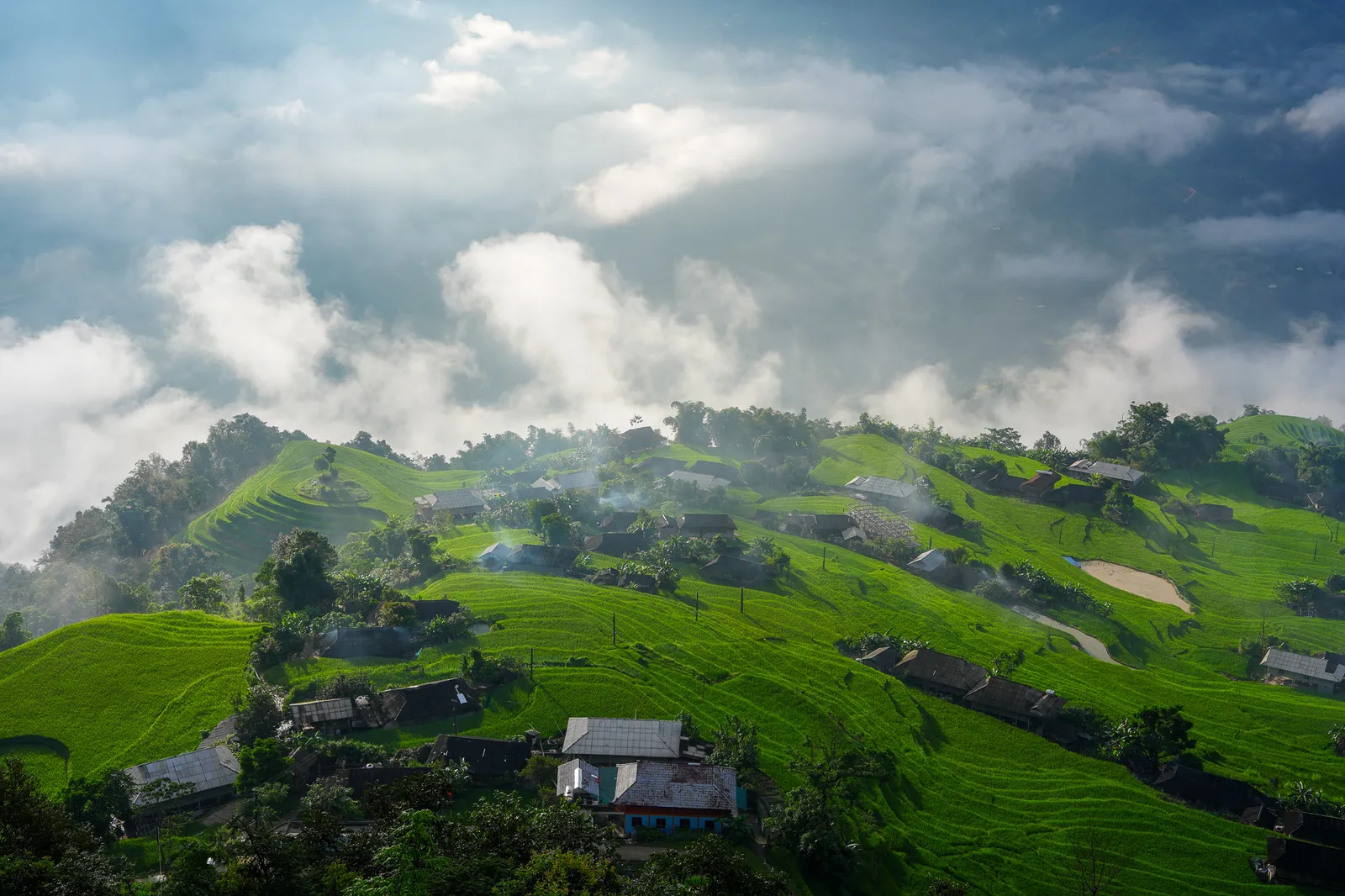
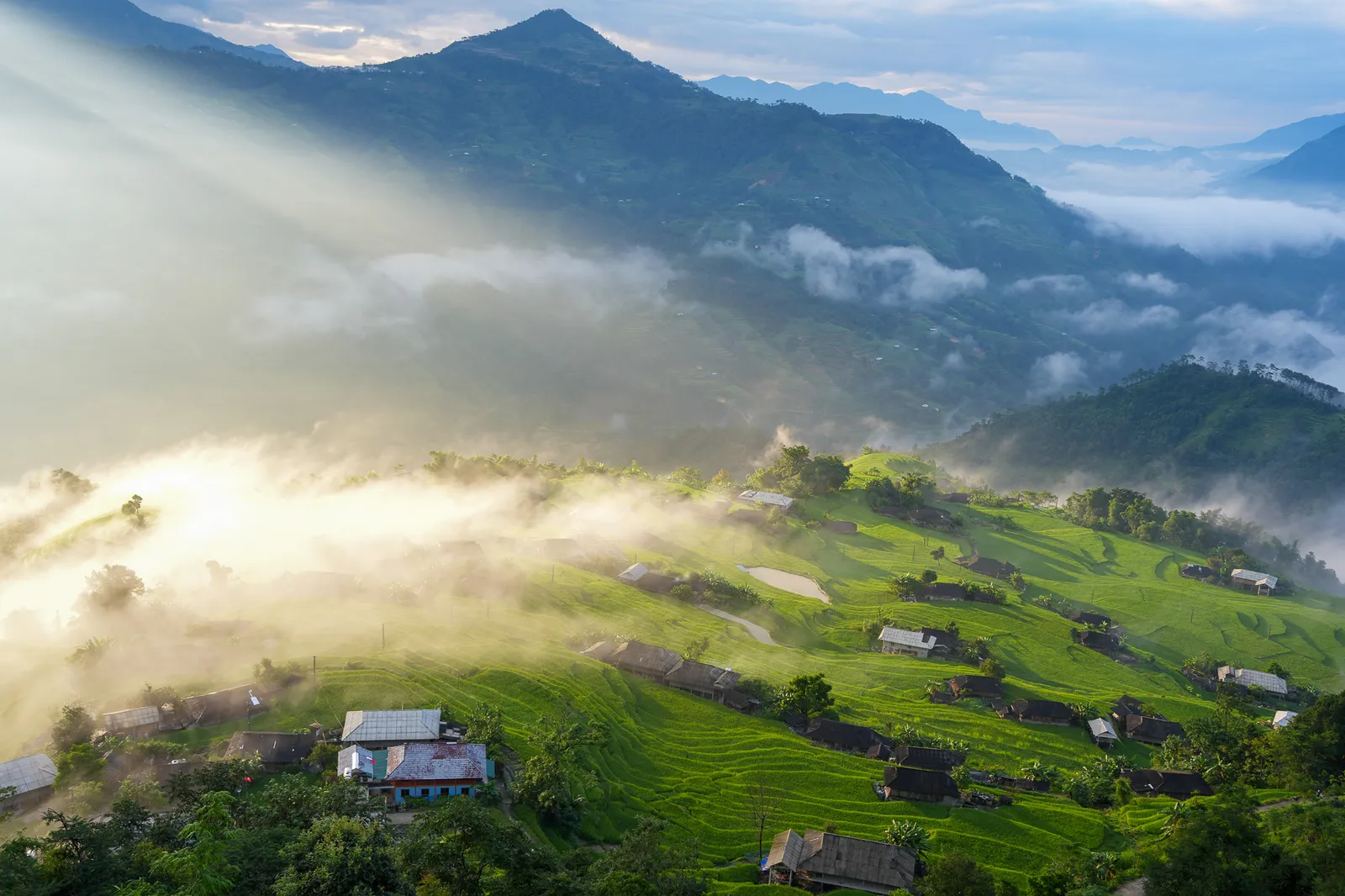
Ban Phung is where the terraces stop being scenic and start being work — which is exactly why the frames hold weight. Layered paddies above the Chay river, karst ridges to the north, stilt houses on the hamlet climb and side-light on harvest gold define the classic Hoang Su Phi terrace photograph.
This is not a viewpoint stop reached by bus. You walk inside the walls, cross a bamboo bridge and return through tea gardens — so light changes with your position throughout the day. The programme keeps you on the terraces from mid-morning through afternoon pickup around 17:00.
Respectful photography matters here: farmers work the same walls you walk. Basket trains, transplanting and lunch in a family kitchen are living scenes, not set dressing.
- Ban Phung highest terraces
- Walking the highest rice terraces in Ban Phung
Circuit timing and where the path goes.
Harvest vs green season light.
The classic frame looks down the terrace cascade toward the Chay river when side-light defines each wall — harvest season, roughly the first 90 minutes after sunrise from the upper path. Green season: 07:00–09:00, before wind ripples flooded paddies.
November through February brings cool mist — quiet paths and soft contrast when fog lifts in patches. March and April add silk-cotton flowers on forest edges above the terrace walls.
- Terrace farming in Hoang Su Phi
Harvest calendar and field work on the walls.
- Trekking Ban Phung through the seasons
Weather adaptations that affect shooting windows.
Where to stand without stepping on rows.
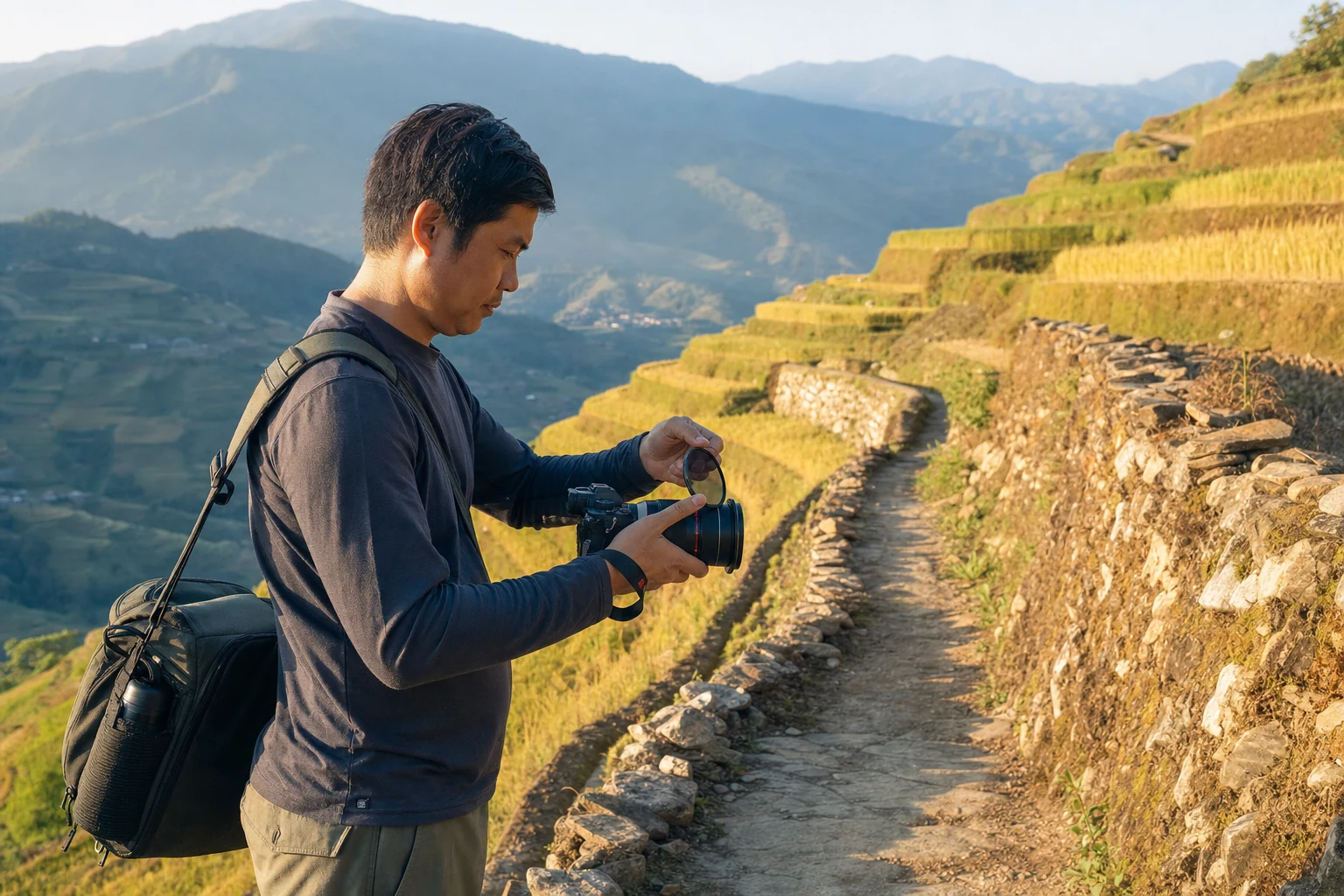
Guides rest the group on flat sections between tiers, not on narrow banks where irrigation runs — those same flats are the safe places to swap lenses or shoot panorama mode. Wall tops are off limits; never step on planted rows or wall caps for a better angle.
The morning descent offers downward views into the Chay valley; the hamlet climb gives elevated perspective back across the cascade. The bamboo bridge is a strong foreground element when the river runs clear — ask before blocking farmers waiting to cross.
Vertical phone shots rarely capture the scale — panorama mode or a wide lens serves better. Basket trains crossing below you are authentic but block a clean wide shot for minutes; patience beats asking people to move.
Lenses, filters and batteries.
Daypack size is 15–20 L — enough for water, rain shell and gear without bulky tripods on narrow walls. Open terraces amplify sun and wind; lens changes are easier in shade between tiers than on exposed lips.
- What to pack for trekking in Ha Giang
District-wide kit list including rain and sun protection.
Farmers, hosts and children.
Ask before photographing people at work in the fields — especially elders and children. Children may watch from the stairwell at lunch; wave if they wave first. Do not use flash across the cooking fire in the stilt house.
Gift-giving is discouraged. The fair exchange is the hosted meal, guide wages and community fees — not tips for posed photographs.
- Life in a La Chi village
Lunch etiquette and household respect.
Morning descent vs afternoon return.
Morning light on the descent favours views into the valley — warm tones on east-facing walls if you start on schedule after the 08:15 trailhead briefing. By 11:00 at the river, sun angle shifts; save wide cascade shots for the upper path if the guide pauses there after lunch.
Afternoon return through tea gardens catches side-light on western walls around 16:00 in harvest season. Tea rows add texture in the foreground when terrace layers sit in the background — a different palette from rice gold or green floodwater.
Pickup around 17:00 limits golden-hour shooting on the loop itself. Guests who want extended sunset light on Ban Phung terraces often book Ban Luoc Day 2, which ends above the Chay with terrace sunset from the ridge around 17:30 in October when weather allows.
Mist, rain and when to keep shooting.
We walk in light rain. In storms guides shorten the loop and shelter at the host house — low light and rain sleeves matter. Stone steps on the descent dry last; wet mornings sometimes start thirty minutes earlier when hamlet contacts call for it.
- Trekking Ban Phung through the seasons
Rain adaptations and reversed loops.
What flattens terrace images.
Guests sometimes stop on wall lips for height — unsafe and disrespectful to planted rows. Guides will redirect you to flat sections between tiers. The best scale shots come from the upper path looking down, not from climbing wall caps.
Sunset on Ban Luoc Day 2.
The one-day circuit ends with pickup around 17:00 — excellent afternoon side-light but not ridge sunset. Ban Luoc Day 2 crosses into La Chi Ban Phung on the longest walking day; guide field note: terrace sunset is best from the ridge above Ban Phung around 17:30 in October when weather allows.
Three days give three light regimes on the traverse — morning mist on Black Dao terraces, hard side-light on Ban Phung walls at sunset, soft overcast in Tay tea gardens on the exit. Plan card space and battery accordingly.
If photography is your primary goal and you have three days, compare Ban Phung alone against Ban Luoc Day 2 before booking — we help sequence dates when you enquire.
- Hoang Su Phi route comparison
Compare routes, difficulty and seasons at this collection hub.
The Chay river and karst backdrop.
Gallery captions from the programme describe the Chay valley from the terrace traverse, with karst ridges to the north — use those ridges as a depth layer when composing downward shots on the morning descent. When mist fills the valley, partial lifts often leave one ridge line visible; wait for guides on flat sections rather than rushing ahead for a frame.
The bamboo bridge over the Chay works as a leading line when the river runs clear — shoot from the near bank after crossing, not while farmers wait on the span. Upstream colour of the Chay tells guides whether overnight rain will matter; muddy water means alternate contours and fewer river-level angles.
Tea gardens on the afternoon loop add a mid-green foreground when terrace layers sit behind — useful when harvest gold or flooded paddies are not in season. The Tay schoolyard is not a portrait studio; long lenses from the path are enough if children engage willingly.
- Terrace farming in Hoang Su Phi
Seasonal palette on the walls — gold, green flood and bare stubble.
Phones, batteries and rain.
Vertical phone shots rarely capture terrace scale — panorama mode or a wide lens serves better. Keep a spare battery; you return to town same day but cold mornings on the transfer and long shooting pauses drain phones faster than expected.
Light rain continues on many monsoon walks — a zip bag for the body and a microfiber cloth beat expensive rain sleeves on narrow walls where you need one hand free for balance. Lens changes happen on flat sections between tiers, not on lips above planted rows.
If your priority is harvest gold, book September into October and tell the guide at the 08:15 briefing — side-light on the upper path lasts roughly ninety minutes after sunrise, and the afternoon tea-garden loop adds western wall light near 16:00 on clear days.
Polarising filters cut glare in May and June when flooded paddies reflect sky. In harvest season, side-light matters more than filter tricks — be ready in the first ninety minutes after the trailhead briefing when the group starts the descent.
- What to pack for trekking in Ha Giang
Rain gear and daypack sizing for terrace days.
Published Ban Phung pace or photography-led timing.
This article is research — light, stance and etiquette on the Ban Phung circuit. It is not a photography-tour product page.
If you are happy with the published one-day pace and want to photograph along that walk, book Ban Phung highest terraces. If you need more stopping time or private pacing than that programme allows, Custom Expeditions designs the departure after conversation.
Season and month research live on the best-time guide and the Ban Phung seasons article. Weather and light stay conditional — we do not guarantee sunrise, harvest colour, fog or empty trails.
- Ban Phung highest terraces
Published one-day programme — normal guided pace.
- Custom Expeditions
Photography-led pacing only when the published day is not enough.
- Best time for Ha Giang trekking
Season research — not a photography booking page.
- Trekking Ban Phung through the seasons
How the loop changes by month.
Common questions.
What lens should I bring for Ban Phung?
24–70 mm covers most situations; 70–200 mm compresses ridge layers from the upper path. A polarising filter helps in green season when paddies hold water.
Can I fly a drone?
Ask at booking. Community respect and other hikers on narrow walls come first; if drones are not appropriate on your dates, guides will say so before the walk.
Is September the best month for terrace photography?
September and October are the classic harvest months with firm paths and side-light. May and June offer reflections in flooded paddies if you prefer green mirror scenes.
Will farmers mind if I photograph them working?
Ask first — your guide can bridge the request. Never photograph children or elders without clear consent.
Published by Ha Giang Trekking — field knowledge from local trail guides on the routes described, checked against programme schedules and operating notes.
Journal pages are for route research and planning. Dates, prices, day-by-day schedules and enquiry sit on programme and tour pages.
Articles are published under Ha Giang Trekking. Named writer and guide bylines will be added when verified bios and consent are on file.
Operational details on programme and tour pages are published only after being checked against current operating information.
Ready to walk with local guides?
Dates, pricing and the day-by-day itinerary are on the programme page. Enquire about a departure when you are ready — we usually reply within 24 hours with availability, a clear price and what to pack.
Ban Phung — highest terraces (1 day) — dates, pricing and itinerary