The Ban Luoc three-day traverse — rhythm and fitness
Why three days on foot link three valleys, how each day is timed, and who the demanding traverse suits.
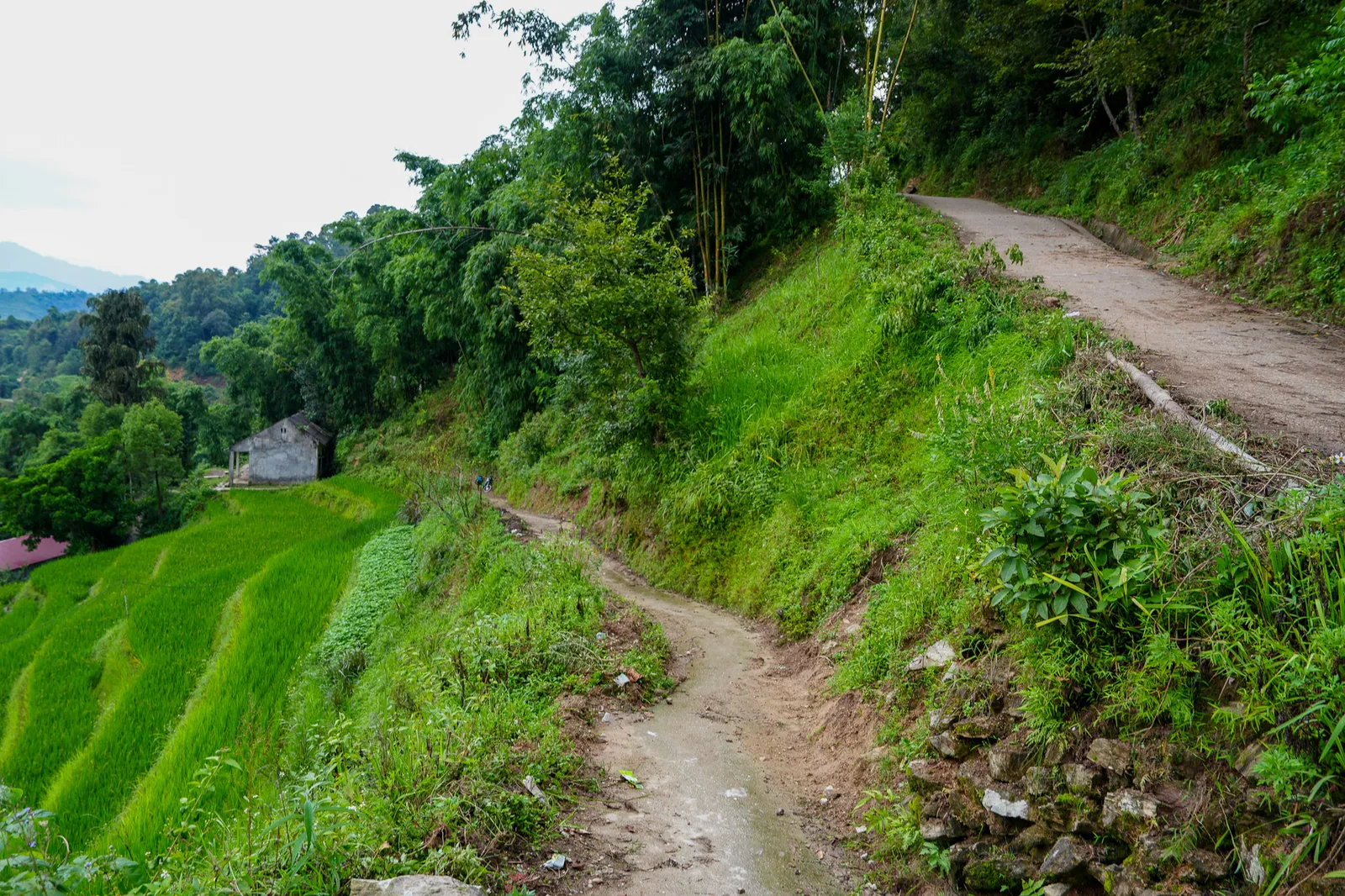
The Ban Luoc three-day traverse.
This field note explains the Ban Luoc long traverse as a village-to-village walk — Ban Luoc to Ho Thau on Day 1 (17 km), Ho Thau to Nam Ai on Day 2 (15 km), then Nam Ai to Phin Ho on Day 3 (approximately 17 km over six to seven hours) — not a road-hopping day-trip series.
For district research — seasons and landscape context — read the Ban Luoc trekking guide. For operator-confirmed distances, accommodation and booking, open the long traverse programme page.
If two days fit your calendar, Nam Hong to Ho Thau covers a Red Dao homestay rhythm without a third walking day. Ban Phung remains the one-day terrace walk.
- Ban Luoc — the long traverse (3 days)
Full programme page with day-by-day schedule, pricing and enquiry via Contact.
- Ban Luoc trekking guide
Landscape, seasons and route choice — research before you book.
- Hoang Su Phi programme hub
Compare routes, difficulty and seasons at this collection hub.
Multi-day continuity.
Mornings start after breakfast; evenings end at the overnight stop — bungalow at Ho Thau on Night 1, village accommodation in the Nam Ai area on Night 2. Your main bag meets you at each overnight by motorbike where access allows; you walk with a daypack. That rhythm is what separates a traverse from three separate day walks with road transfers.
Day-by-day times, distances and accommodation details are on the programme page — this note does not duplicate that schedule. Guides pace to the slowest walker and to trail conditions; weather may shift start times without changing the published line.
- Ban Luoc — the long traverse (3 days)
Full programme page with day-by-day schedule, pricing and enquiry via Contact.
- Ban Luoc trekking guide
Landscape, seasons and route choice — research before you book.
Western corridor, village to village.
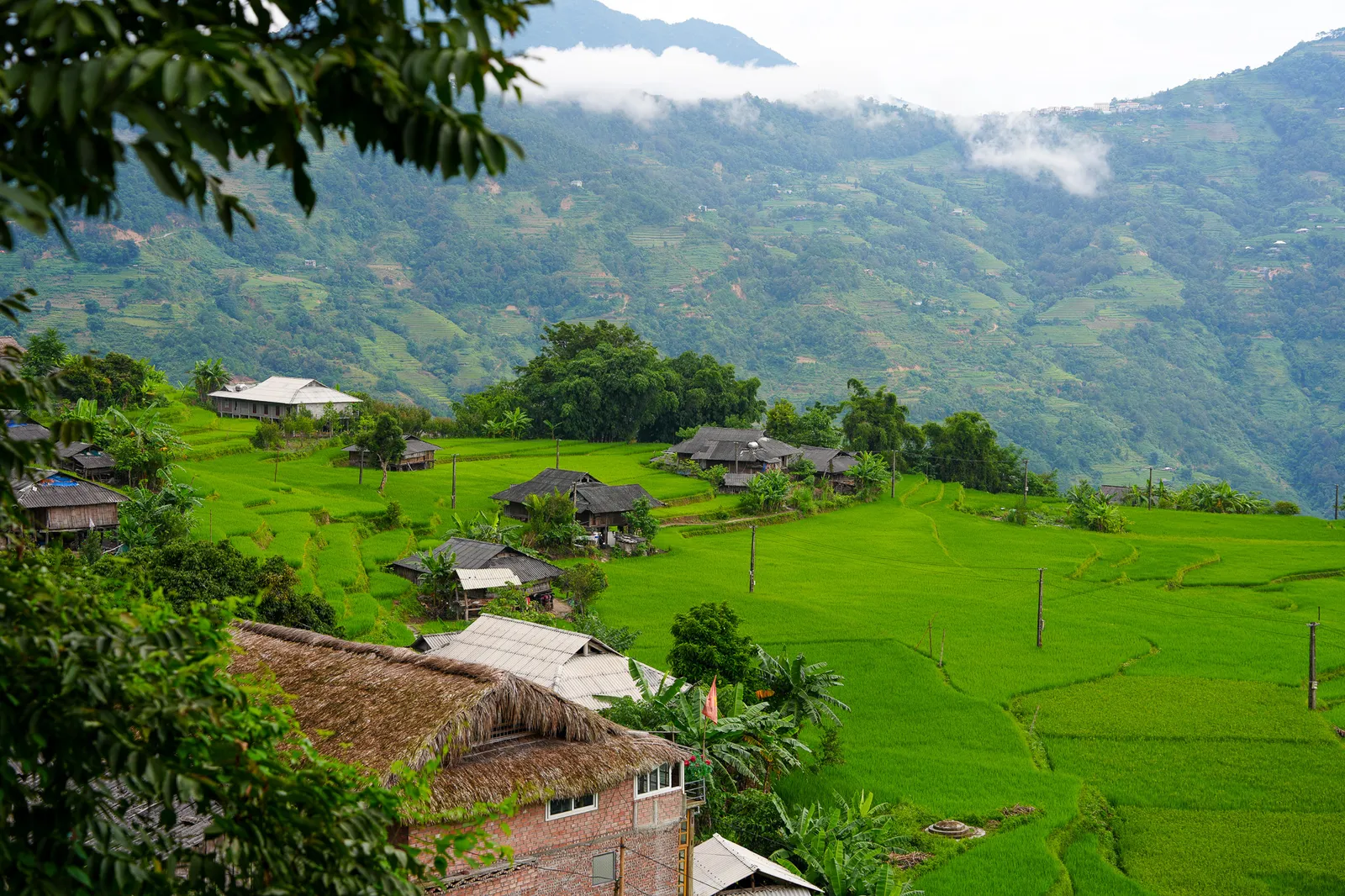
Western Hoang Su Phi terrace country links Ban Luoc, Ho Thau, Nam Ai and Phin Ho by village paths and farm tracks. The published three-day programme walks that line in sequence rather than hopping valleys by road.
Ban Luoc itself still reads as Black Dao herbal-garden country on the morning start. Ho Thau holds bungalow accommodation — typically Ho Thau Eco Village when confirmed for the departure. Nam Ai is the second overnight in the same highland belt. Phin Ho is known for long-established Shan Tuyet tea landscapes where the walking journey finishes.
Day 3 has no standard third programme night — you finish on foot in Phin Ho, rest and eat, then transfer by vehicle to Tan Quang unless you have arranged an optional post-trek overnight. Other Hoang Su Phi valleys — Nam Hong, Ban Phung, Thong Nguyen — remain real places on the district map and on other programmes; they are not stages of this traverse.
- Village transitions on the traverse
How Night 1 and Night 2 stops differ in style and rhythm.
- Terrace farming in Hoang Su Phi
Why the walls you cross are working agriculture, not scenery.
Who this traverse suits.
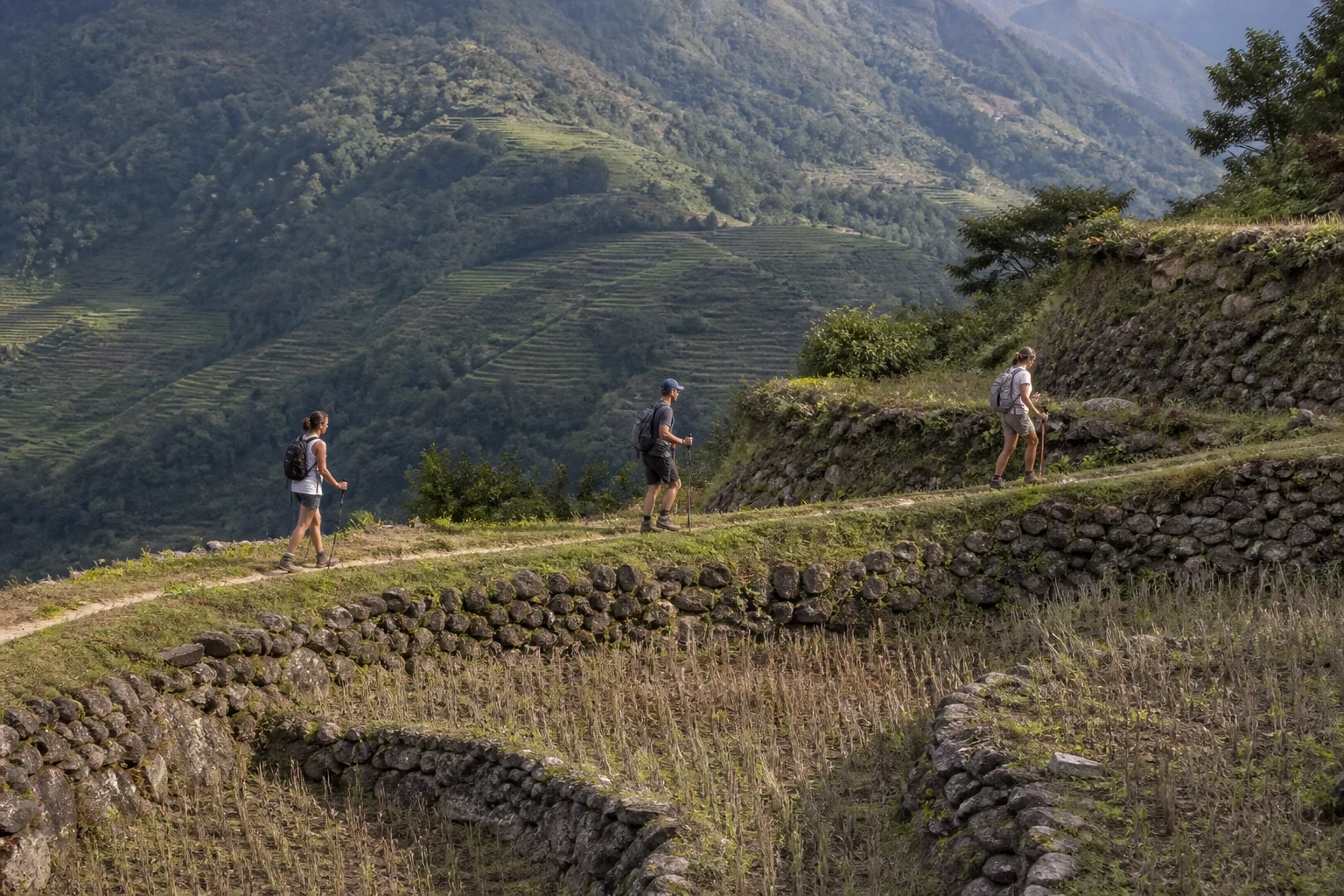
Demanding here means three operator-confirmed walking days on uneven farm and terrace paths — 17 km, 15 km and approximately 17 km — not rope work or high-altitude sickness. If you walk regularly at home and can manage six hours on a hilly day, the route is within reach when you pace Day 1 conservatively.
Guests in their fifties and sixties complete this traverse when they walk a few times per week at home and respect recovery between days. Previous multi-day trekking is helpful but not required. Tell us at booking if you have knee or ankle history — guides adjust pace to the slowest walker and can lend trekking poles.
- Comfortable with consecutive 15–17 km days on mixed village terrain
- Happy with simple bungalow and village nights
- No need for technical climbing experience
- Broken-in boots essential — blisters on Day 1 ruin Day 2
- Nam Hong to Ho Thau (2 days)
The two-day Red Dao crossing — a different corridor from the Ban Luoc → Ho Thau → Nam Ai → Phin Ho traverse.
- Ban Luoc — the long traverse (3 days)
Full programme page with day-by-day schedule, pricing and enquiry via Contact.
Daypack and main bag.
Your main luggage does not walk the traverse. Each morning you pack a labelled bag for the community driver network; it meets you at the next overnight before dinner when access allows. On trail you carry only what that day requires — water, layers, camera, snacks, rain shell.
Keep passport, medication and cash in your daypack. Pack the main bag the night before each walking day — guides collect bags at breakfast, and stuffing wet gear at the door delays the whole group. A dry sack inside the duffel protects against rain on the bike rack. Label main bag clearly with the same family name on transfer days.
A 25–30 L daypack is the right size. Packing everything in the daypack because you distrust transfer is a common mistake — you will regret it on Hour 5 of Day 2.
- Recovery pacing on a multi-day trek
How luggage transfer and Day 3 design support tired legs.
- Packing for trekking in Ha Giang
District-wide kit advice beyond this traverse.
Two nights on the trail.
Standard accommodation is two nights only. Night 1 is a private bungalow in Ho Thau — typically Ho Thau Eco Village when confirmed for your departure. Night 2 is local village accommodation in the Nam Ai area — household confirmed for the departure. Facilities vary: simple, warm in hospitality, not hotel en-suites every night.
A private room can sometimes be arranged subject to the property confirmed for the departure; otherwise expect a shared room and patchy or no phone signal. Earplugs help if village nights are light. Phin Ho may be offered as an optional post-trek overnight after Day 3 — quoted separately, not part of the standard 3D2N price.
September and October harvest weeks fill beds quickly across Hoang Su Phi programmes. If dates are fixed, book Ban Luoc before add-on day walks.
- Homestay etiquette in the north
Shoes, gifts, photography and quiet hours.
- Homestay trekking in Ha Giang
What to expect on multi-day village programmes.
When to walk the traverse.
September and October are the classic months — harvest gold on terraces, firmer paths, clearer ridge views. May and June hold green paddies but hotter afternoons and slicker clay on consecutive walking days. November brings mist on ridges — atmospheric but slower photography. March and April add flowers on forest margins; July and August need flexibility around rain and slippery terrace clay.
October is generally dry and the most beautiful month. We monitor weather daily and re-route around any unsafe section. Book early for October — we keep groups small during harvest weeks.
- Seasons and packing for Ban Luoc
Full seasonal guide and kit list for the traverse.
- Best time to trek Ha Giang
Month-by-month conditions across the province.
Nam Ai to Phin Ho.
Day 3 from Nam Ai to Phin Ho is approximately 17 km and usually six to seven hours on foot. It is another full trekking day — not a short exit morning before a bus.
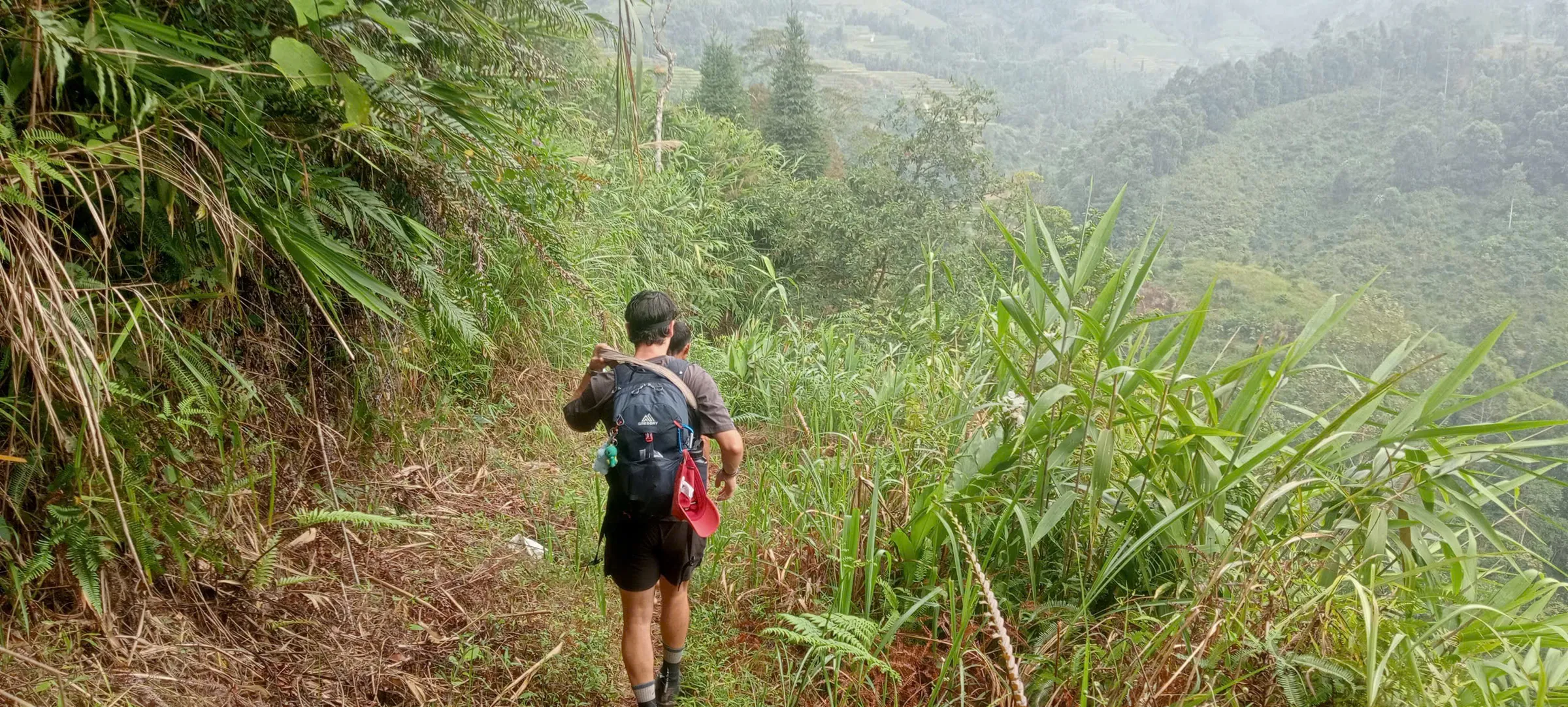
Surfaces change through the day: a narrow bamboo forest footpath where the line enters shade, then dirt paths above terraced slopes with your daypack. The walking stage ends in Phin Ho. There is time to rest, freshen up and eat before a vehicle transfer toward Tan Quang. Shan Tuyet tea country is part of the finish area — not a claim that the whole 17 km is tea gardens.
The standard product is three walking days and two overnights. An optional post-trek night in the Phin Ho area can be quoted separately. There is no published walking day from Phin Ho back to Ban Luoc on this programme.
- Day 2 — Ho Thau to Nam Ai
The middle day before this exit walk.
- Village transitions on the traverse
How Nights 1 and 2 differ from the Phin Ho finish.
- Recovery pacing on a multi-day trek
Why Day 3 still needs food, sleep and conservative Day 1 pacing.
- Ban Luoc — the long traverse (3 days)
Full programme page with day-by-day schedule, pricing and enquiry via Contact.
Traverse vs shorter routes.
Ban Luoc is the western three-day corridor — Ban Luoc → Ho Thau → Nam Ai → Phin Ho — with two standard overnights. Nam Hong is the better choice if you have two days and want a Red Dao homestay rhythm. Ban Phung alone gives you a concentrated La Chi terrace day with lunch only — no multi-day commitment.
Many guests walk Nam Hong–Ho Thau first, then add the traverse or a terrace day. We sequence dates when you enquire. Book a shorter Hoang Su Phi walk first if this is your first multi-day walk in the district — conservative pacing on a shorter route builds confidence for three consecutive days.
Maximum group size is eight trekkers. Private transfer to the Ban Luoc walking start is included — plan to arrive in Hoang Su Phi town the day before Day 1.
- Ban Phung — highest terraces (1 day)
One-day La Chi terrace walk — a separate valley from the Ban Luoc western traverse.
- Nam Hong to Ho Thau (2 days)
The two-day Red Dao crossing — a different corridor from the Ban Luoc → Ho Thau → Nam Ai → Phin Ho traverse.
- Ban Luoc — the long traverse (3 days)
Full programme page with day-by-day schedule, pricing and enquiry via Contact.
- Hoang Su Phi programme hub
Compare routes, difficulty and seasons at this collection hub.
Common questions.
How fit do I need to be for Day 2?
You should be comfortable walking roughly five to six hours on uneven terrace and village paths for 15 km, after a 17 km Day 1. We move at the slowest walker's pace. Trekking poles help on wet clay — we can lend a pair if you ask when you enquire.
Can luggage be transferred between overnight points?
Yes where motorbike access allows. Your main bag is moved separately so you only carry a daypack on the trail. Keep valuables and medication in the daypack.
Why three days instead of Nam Hong alone?
Ban Luoc adds a third walking day and a second overnight on the western corridor, finishing on foot in Phin Ho. Nam Hong is the better choice if you have two days, not three.
What meals are included?
Lunch Day 1 through lunch Day 3, hosted breakfast on Day 2 and Day 3 mornings, hosted dinners Nights 1 and 2. Breakfast before Day 1 pickup is your own arrangement.
Is the route safe in October rains?
October is generally dry and the most beautiful month. We monitor weather daily and re-route around any unsafe section. Gaiters earn their weight on village paths during shoulder season.
Is Day 3 shorter than Days 1 and 2?
No. Day 3 is still approximately 17 km and about six to seven hours on foot. What changes is the finish — you stop walking in Phin Ho, refresh, eat, then transfer by vehicle toward Tan Quang.
Do we walk from Phin Ho back to Ban Luoc?
No. The published western corridor walks Ban Luoc → Ho Thau → Nam Ai → Phin Ho in that order. There is no standard walking stage from Phin Ho back to Ban Luoc.
Is there a third standard overnight on the traverse?
No. The standard booking is three days and two nights — Ho Thau, then the Nam Ai area. Phin Ho is the walking finish, not a standard programme night unless you arrange an optional extra stay separately.
Published by Ha Giang Trekking — field knowledge from local trail guides on the routes described, checked against programme schedules and operating notes.
Journal pages are for route research and planning. Dates, prices, day-by-day schedules and enquiry sit on programme and tour pages.
Articles are published under Ha Giang Trekking. Named writer and guide bylines will be added when verified bios and consent are on file.
Operational details on programme and tour pages are published only after being checked against current operating information.
Ready to walk with local guides?
Dates, pricing and the day-by-day itinerary are on the programme page. Enquire about a departure when you are ready — we usually reply within 24 hours with availability, a clear price and what to pack.
Ban Luoc — the long traverse (3 days) — dates, pricing and itinerary