Village transitions on the Ban Luoc traverse
Ban Luoc to Ho Thau to Nam Ai — bungalow and village nights, and how each day links on foot.
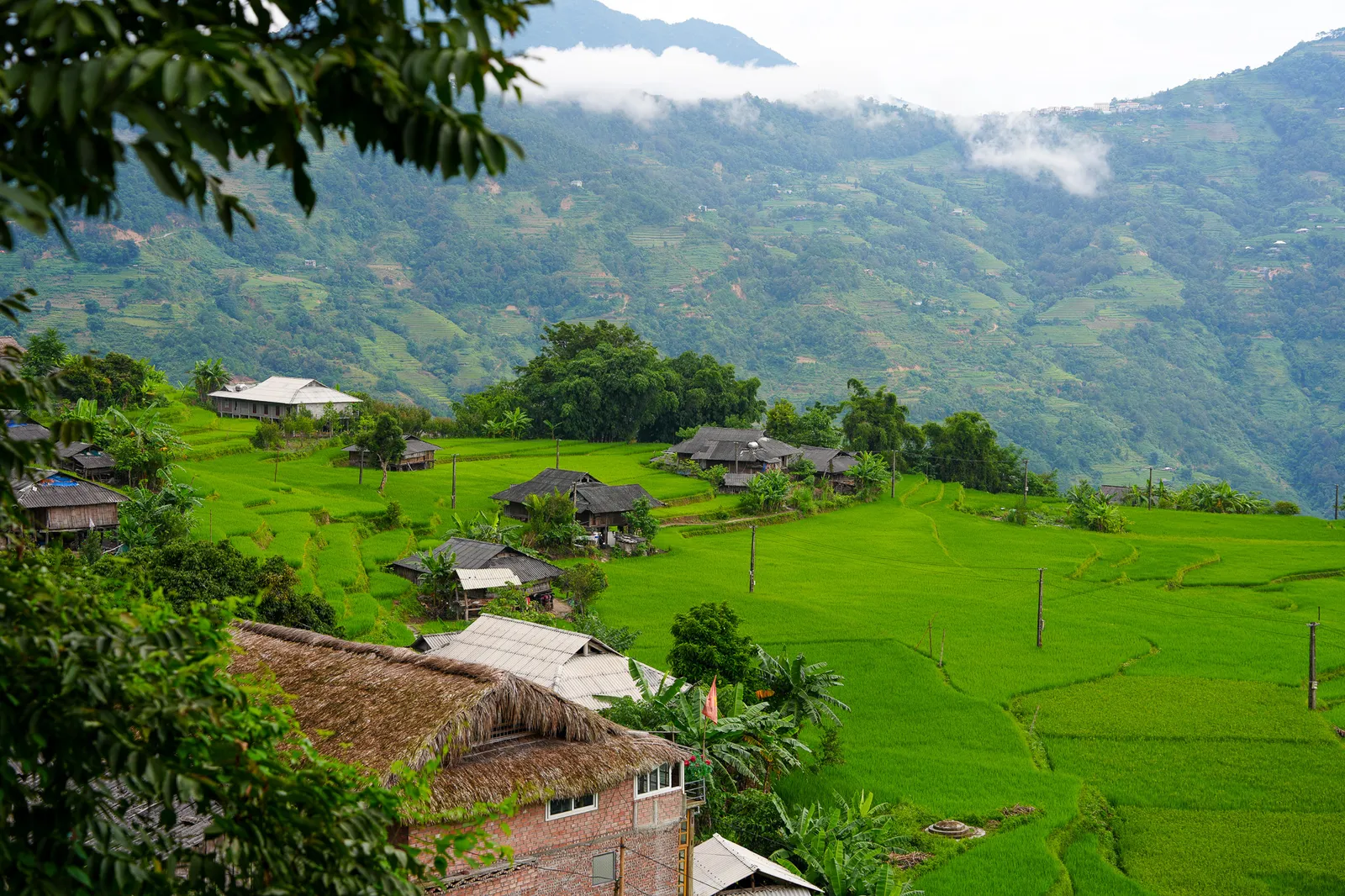
Village transitions.
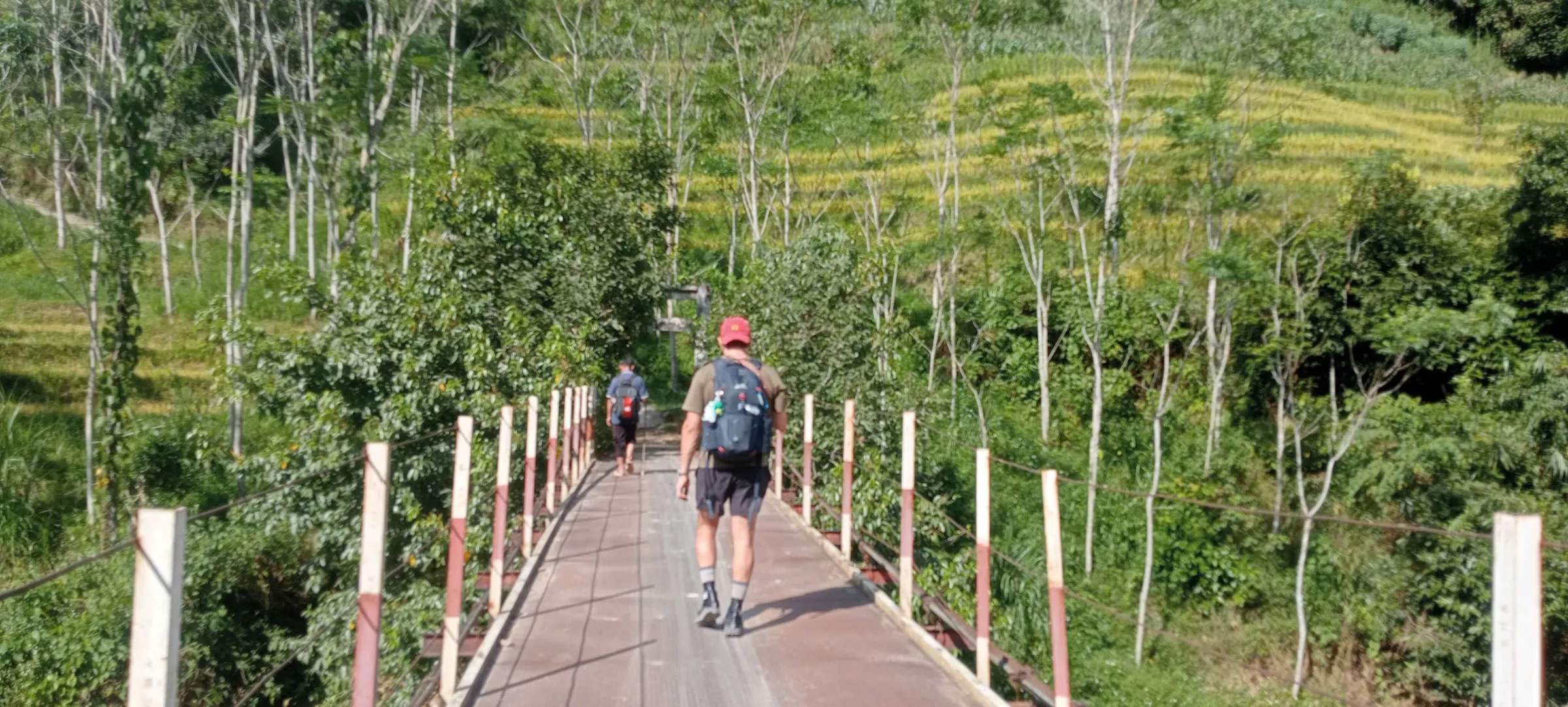
The Ban Luoc traverse is a village-to-village walk: Ban Luoc to Ho Thau, Ho Thau to Nam Ai, Nam Ai to Phin Ho. You sleep two standard nights — bungalow in Ho Thau, village accommodation in the Nam Ai area — then finish walking in Phin Ho before a vehicle transfer toward Tan Quang.
You are a guest in working highland country, not an audience at a cultural performance. The English-speaking lead guide coordinates logistics; local village guides walk their sections of path and explain what you are seeing in context.
Understanding the overnight stops before you walk helps you pack modest sleepwear, manage expectations about simple facilities, and decide whether you want an optional post-trek night in Phin Ho. For district overview and seasons, read the Ban Luoc trekking guide; for booking and day rhythm, open the long traverse programme.
- Ban Luoc — the long traverse (3 days)
Full programme page with day-by-day schedule, pricing and enquiry via Contact.
- Ban Luoc trekking guide
Landscape, seasons and route choice — research before you book.
- Hoang Su Phi programme hub
Compare routes, difficulty and seasons at this collection hub.
Ban Luoc start.
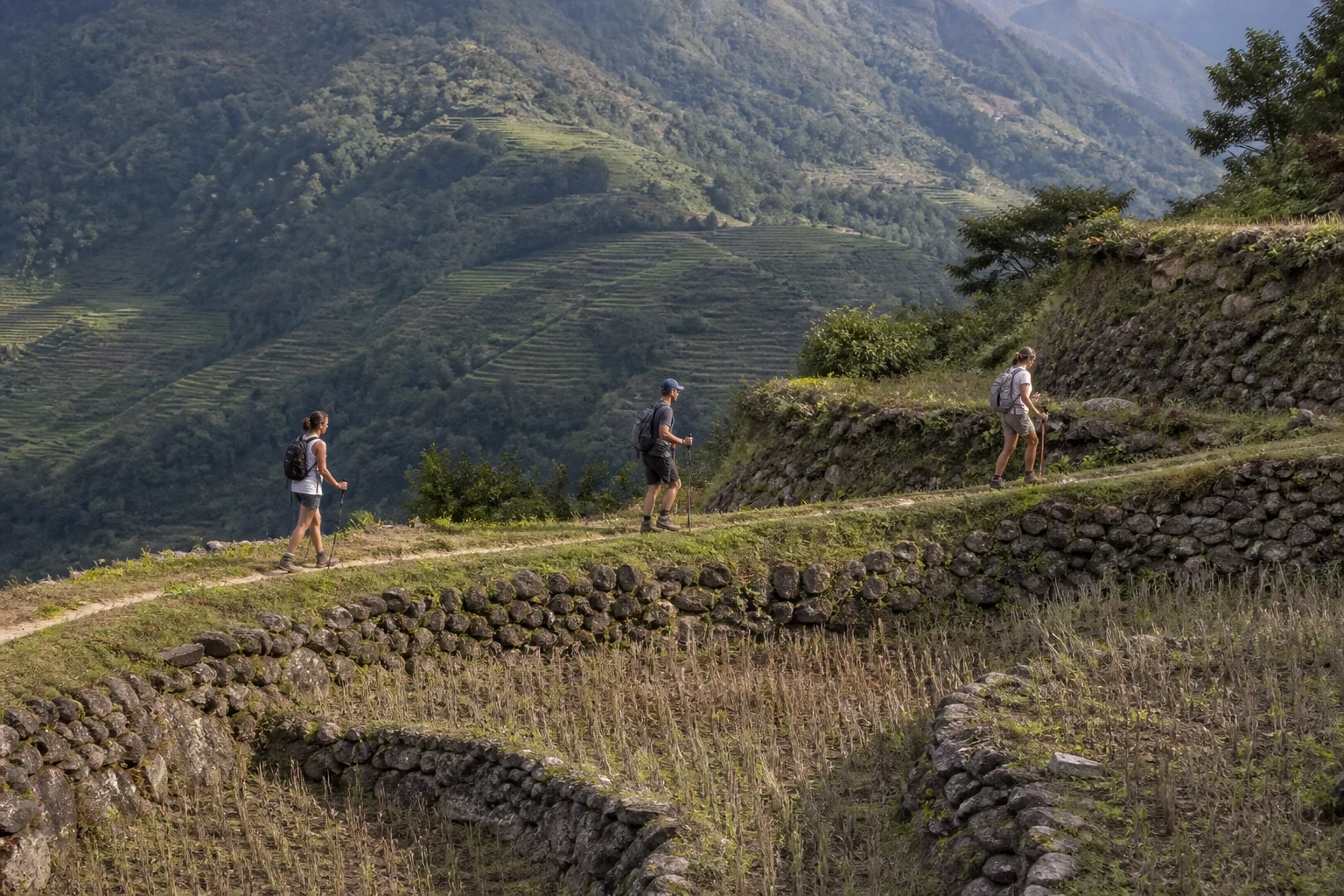
The traverse begins on foot in Ban Luoc — terrace country and village tracks in western Hoang Su Phi. Day 1 is 17 km toward Ho Thau, operator-confirmed, with a planning range of roughly five to six hours. Black Dao herbal gardens still mark the start; you may smell drying leaves beside farm paths as you leave the trailhead.
The morning is not a fitness test — guides set a steady pace because Day 2 asks for another long walk. You carry only a daypack; your main bag is labelled for motorbike transfer toward Ho Thau when access allows.
By afternoon you reach the Ho Thau area for Night 1. The published line does not drop into Nam Hong for the first overnight — that ridge is a different Hoang Su Phi programme.
- Ban Luoc trekking guide
District landscape and route choice.
- The three-day traverse field note
Why continuous walking matters on this route.
Night 1 · Ho Thau.
Night 1 is bungalow accommodation in Ho Thau — typically Ho Thau Eco Village when confirmed for your departure. Expect a private bungalow rather than a hotel en-suite; dinner is at or near the overnight property.
Pack modest sleepwear and a headlamp for paths after dark. Shoes off indoors where hosts ask. Facilities are confirmed for your dates when you enquire.
- Homestay etiquette
Photography, gifts and indoor customs.
- Homestay trekking in Ha Giang
What village and bungalow nights feel like.
Day 1 contours.
Day 1 is 17 km in about five to six hours — village tracks and mountain paths through terraced slopes toward Ho Thau. The path follows working farm contours, not engineered trail. Treat the hours as a planning range, not surveyed GPS truth.
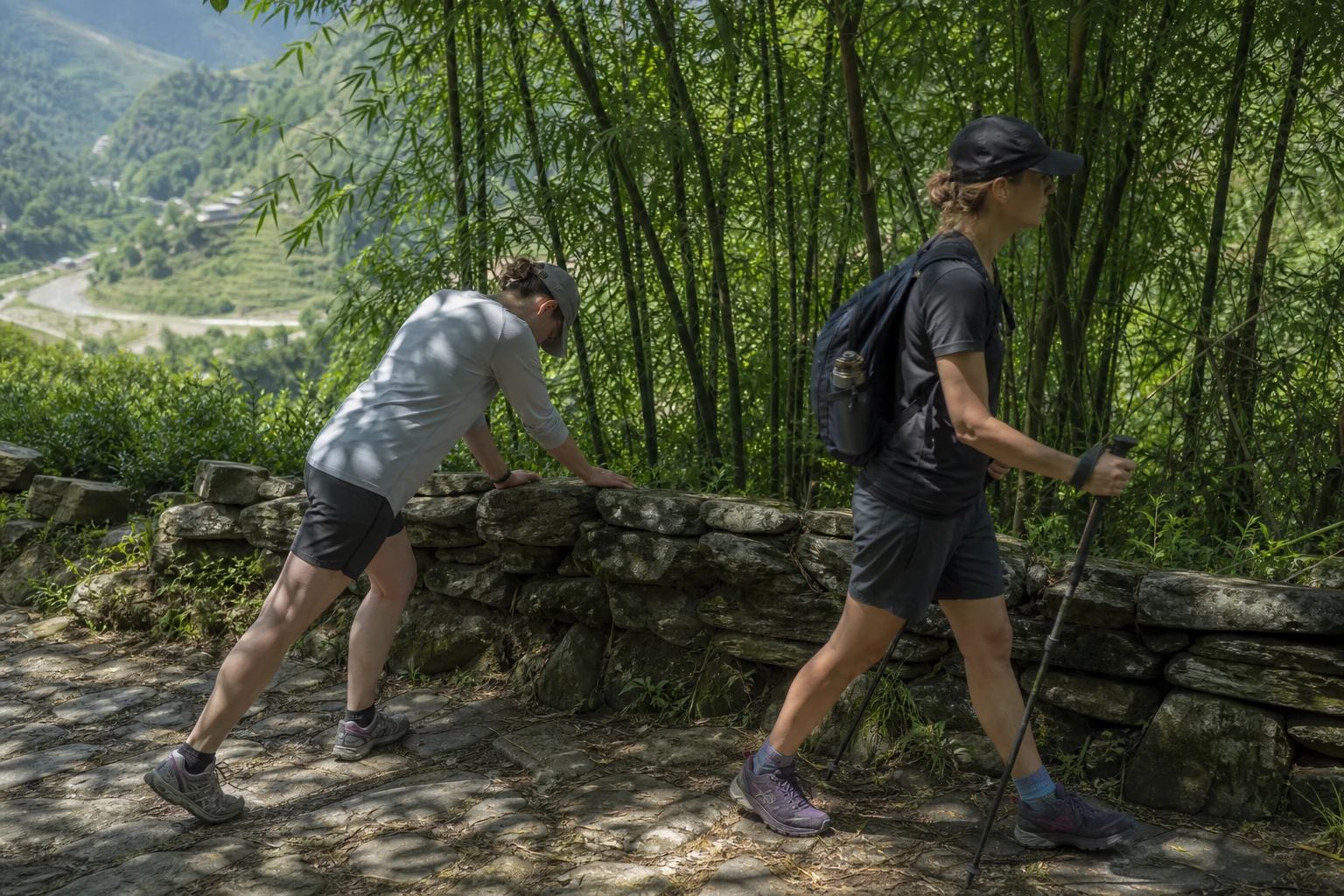
Save energy deliberately. Guests who push hard on Day 1 to bank time for Day 2 often wake with tired quads before the 15 km Ho Thau → Nam Ai stage. Conservative pacing on Day 1 is part of the route design.
Stay behind the local lead on narrow sections. Guides know which farm paths shortcut and which look faster but dead-end at a livestock wall.
- Ban Luoc — the long traverse (3 days)
Full programme page with day-by-day schedule, pricing and enquiry via Contact.
Night 2 · Nam Ai.
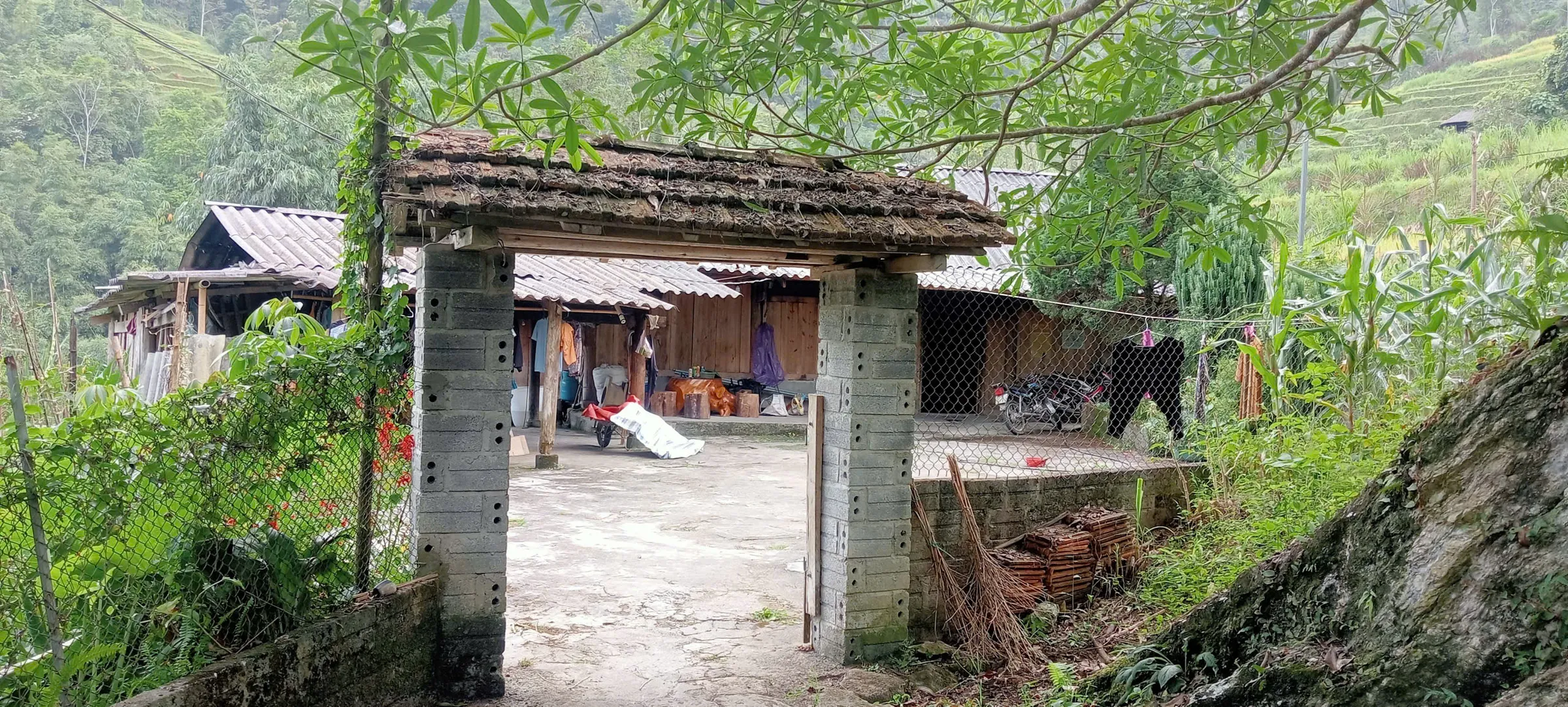
Night 2 is local village accommodation in the Nam Ai area — exact household or property confirmed for your departure. The house style is simple village stay, not a hotel; dinner is usually a shared meal with hosts.
Main bag is already at the overnight when you arrive if motorbike access allowed. Stretch calves and hips for five minutes before sleep; Day 3 is another long walking day into Phin Ho.
Do not expect a named lodge here unless it is confirmed in writing for your dates. Phin Ho is not the standard Night 2.
- Day 2 — Ho Thau to Nam Ai
Fifteen kilometres on village paths toward Nam Ai.
- Homestay etiquette
How to be a respectful guest.
Territory and handover.
Local village guides walk their section of path with you. The English-speaking lead holds group pace and translates terrain questions. Rest stops sit on the lee side of exposed crests, not necessarily the highest point.
If cloud rolls in on a Day 1 afternoon, pace slows but the published corridor does not change. Weather and trail conditions affect hours more than the overnight sequence.
Day 3 finishes on foot in Phin Ho. After time to rest, freshen up and eat, a vehicle runs Phin Ho → Tan Quang unless you have arranged an optional post-trek night. Sleeper-bus tickets toward Hanoi are an onward connection, not included unless quoted.
- Ban Luoc — the long traverse (3 days)
Full programme page with day-by-day schedule, pricing and enquiry via Contact.
Two nights, two stops.
- Night 1 · Ho Thau · bungalow — typically Ho Thau Eco Village when confirmed
- Night 2 · Nam Ai area · village accommodation — household confirmed for departure
- Optional · Phin Ho · post-trek extra night on request — not in the 3D2N price
- Both standard nights · main bag by motorbike where access allows — daypack only on trail
Which overnight is most basic? Night 2 village stays are usually simpler than the Ho Thau bungalow. A private room can sometimes be arranged; do not expect a private bathroom or hotel facilities at every stop.
Gifts are discouraged — fair pay is through the booking and host fee. Ask before photographing people at work. Quiet after 21:00 — families rise early for farm work.
- Homestay etiquette
North Vietnam homestay customs across highland communities.
Ban Luoc morning start.
Before the first overnight, you spend a morning walking out of Ban Luoc — terrace country and, where hosts still keep them, herbal gardens beside farm paths. The traverse does not linger here overnight.
Your guide names plants when hosts are comfortable — this is livelihood, not a performance for trekkers. Photography of drying herbs is lower sensitivity than photography of people, but still ask before close-ups of household storerooms.
Nam Hong remains a separate two-day Red Dao programme. Do not treat Night 1 of Ban Luoc as a Nam Hong homestay night.
- Ban Luoc — the long traverse (3 days)
Full programme page with day-by-day schedule, pricing and enquiry via Contact.
Phin Ho finish.
Day 3 continues on foot from Nam Ai toward Phin Ho — approximately 17 km over six to seven hours through western Hoang Su Phi highland paths and Shan Tuyet tea country. On arrival there is time to rest, freshen up, use bathroom facilities and eat before the onward transfer.
The standard product remains three days and two nights. Guests who prefer a slower finish can add an optional overnight in the Phin Ho area — quoted separately. Otherwise the vehicle runs Phin Ho → Tan Quang for the overnight sleeper-bus connection toward Hanoi.
Plan a rest evening after the traverse, not a fourth walking day. The walking journey ends in Phin Ho, not in Thong Nguyen.
- Ban Luoc — the long traverse (3 days)
Full programme page with day-by-day schedule, pricing and enquiry via Contact.
- Hoang Su Phi programme hub
Compare routes, difficulty and seasons at this collection hub.
Common questions.
Do I need to speak Vietnamese or local languages?
No. English-speaking lead guiding covers the programme, with local village guides on their sections of path. Learn a greeting if you wish — hosts appreciate the effort — but the route does not require language skill.
Can I request a specific homestay family?
Night 1 is typically Ho Thau Eco Village when confirmed. Night 2 in Nam Ai is allocated through community networks based on availability and group size. Harvest weeks in September and October are tight — book early if dates are fixed.
Are children welcome on the traverse?
Three long walking days and simple overnight facilities make this route best for teenagers and adults who walk regularly. Enquire with ages and we advise honestly.
What if I am uncomfortable with shared rooms?
Private-room arrangements can sometimes be made — tell us when you enquire. Standards vary by property. If simple village nights are a dealbreaker, consider Ban Phung as a day walk instead.
Published by Ha Giang Trekking — field knowledge from local trail guides on the routes described, checked against programme schedules and operating notes.
Journal pages are for route research and planning. Dates, prices, day-by-day schedules and enquiry sit on programme and tour pages.
Articles are published under Ha Giang Trekking. Named writer and guide bylines will be added when verified bios and consent are on file.
Operational details on programme and tour pages are published only after being checked against current operating information.
Ready to walk with local guides?
Dates, pricing and the day-by-day itinerary are on the programme page. Enquire about a departure when you are ready — we usually reply within 24 hours with availability, a clear price and what to pack.
Ban Luoc — the long traverse (3 days) — dates, pricing and itinerary