Life in a La Chi village
How La Chi guides lead the Ban Phung path, what lunch in a stilt house feels like, and the etiquette of eating inside a working farm kitchen.

La Chi country above the Chay.
Ban Phung is a La Chi community — one of Vietnam's smaller ethnic groups, with its own language and stilt-house architecture. Lunch is in a family home, not a restaurant built for tourists. The lead guide on the trail is La Chi and lives within walking distance of the route.
Hoang Su Phi is home to Red Dao, Black Dao, La Chi, Tay, Nung and Hmong communities — often within a half-day walk of one another, each with distinct dress, farming patterns and festival calendars. La Chi families in Ban Phung maintain terrace agriculture on slopes other groups would leave fallow.
On the terrace circuit you stay inside one valley and one ethnic world for the day. The afternoon return loop crosses Tay tea gardens — a different livelihood on the same hillside — but the hosted meal and trail leadership are La Chi throughout the morning and lunch stop.
- Hoang Su Phi destination hub
Compare routes, difficulty and seasons at this collection hub.
- Walking the highest rice terraces in Ban Phung
Full circuit from trailhead to pickup.
Stilt houses and farm layout.
La Chi stilt houses rise above ground on timber posts — chickens and tools underneath, living space and kitchen above. Woodsmoke from midday cooking drifts through floor gaps. The architecture is practical for steep terrain: level platforms where the slope offers none, storage for seed rice and space to dry harvest on mats.
Night 2 on the Ban Luoc traverse uses the same stilt-house format in Ban Phung — different house styles from the Red Dao homestay on Day 1, same shared-room simplicity. On the one-day walk you see the house at lunch hour when the kitchen is active and the table is set for guests and family together.
Shoes often stay at the threshold. The floor you walk on may be the same surface where rice is winnowed in harvest weeks — hosts clear space for guests, but the house remains a working farm building, not a dining room staged for visitors.
What lunch in a stilt house feels like.
Lunch is slow — five-spice grilled chicken, sticky rice, fresh greens from the garden. Dishes arrive in sequence: soup first, then chicken and rice. The meal usually lasts forty-five minutes. Vegetarian tables and dietary allergies need advance notice; kitchens are home-scale.
Hosts may offer corn liquor in small cups; one sip is enough if you are walking again within an hour. The English-speaking lead holds group pace against afternoon storms — if lunch runs long because of conversation, the return loop may shorten slightly.
- Ban Phung — highest terraces (1 day)
Hosted lunch is included in the day programme.
- Homestay etiquette in the north
Shared tables, baths and household rhythms beyond Ban Phung.
How La Chi guides lead the path.
Your La Chi guide on the trail knows which farm paths shortcut and which look faster but dead-end at a buffalo wall. They choose the line on slick stone steps after rain and set rest stops in shade, not on exposed terrace banks where irrigation runs.
The English-speaking trekking guide (local when available; otherwise assigned from Ha Giang City) handles booking logistics, pace for the whole group and translation at lunch. Community fees in your booking go to the hamlet fund before you walk — the hosted lunch and guide wages are the fair exchange; gift-giving to hosts is discouraged.
Guides carry a basic medical kit and know motorbike access points on each section of the loop. If someone needs to exit early, the hamlet climb section has the clearest access — your guide will know which contour track reaches the nearest road.
- How we work with communities
Community contributions and fair exchange on village routes.
Language, questions and your guide.
La Chi is a distinct language from Vietnamese. At lunch, hosts often ask where you are from — your guide bridges the conversation so curiosity flows both ways without phrasebook stiffness. Simple greetings learned on the trail go further than elaborate gifts.
Children may watch from the stairwell; wave if they wave first. Schoolchildren use the contour tracks on the return loop — the Tay schoolyard on the afternoon path is a normal part of village rhythm, not a cultural performance for visitors.
Markets rotate through the district — not for tourists, but for trade. A Sunday in Hoang Su Phi town before your walk is a good introduction to highland commerce before you eat inside a single hamlet kitchen.
Photography and people on the path.
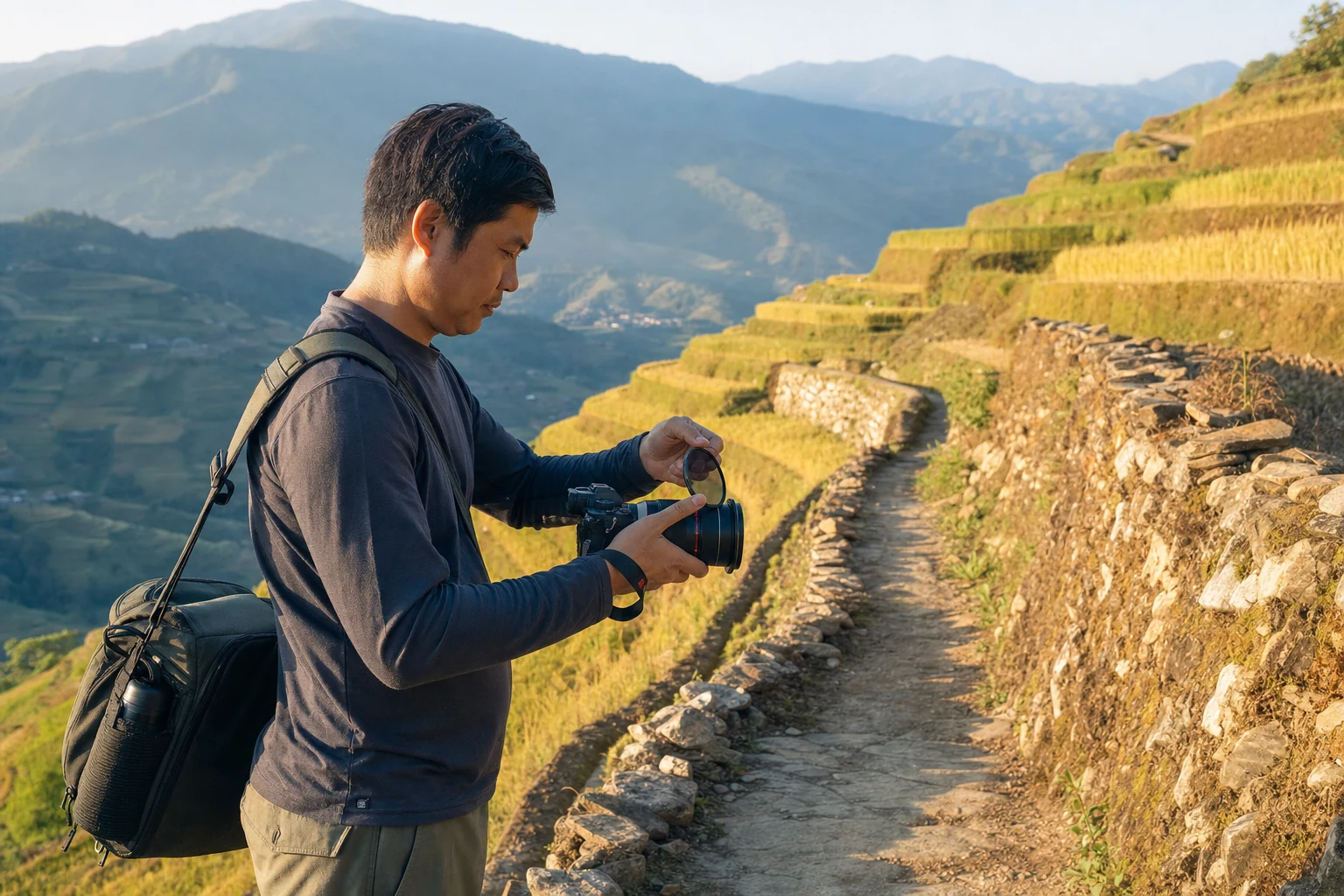
Do not photograph people without asking, especially elders and children. Basket trains crossing below you on the terraces are authentic but block a clean wide shot for minutes — ask before photographing people at work in the fields.
Pack out all litter — there is no collection on the loop. Respect for household space extends to not wandering into storage areas or sleeping quarters unless invited.
- Photography guide to Ban Phung
Light, lenses and respectful framing on the terraces.
Tea gardens and terrace rice.
The afternoon return loop contours through Tay tea gardens — rain-fed bushes on gentler slope beside La Chi rice walls. Tay villages in Thong Nguyen work tea gardens on contours that would not hold flooded paddies. On the one-day circuit you see both crops without crossing into a full Tay homestay night.
Tea picking seasons differ from rice transplanting and harvest. Your guide can point out where bushes were pruned recently and where leaves are left to grow for the next round. The contrast explains why Hoang Su Phi hosts multiple ethnic groups within a half-day walk — each fits a different slope and water regime.
Gift-giving is discouraged on the terrace day. The hosted lunch, guide wages and community fees are the structured exchange. If you want deeper cultural time, Nam Hong or Ban Luoc add homestay nights with Red Dao and Black Dao families on the ridge routes.
- Terrace farming in Hoang Su Phi
Irrigation, harvest and field work on La Chi walls.
Ban Phung vs Ban Luoc corridor.
The published Ban Luoc long traverse walks western Hoang Su Phi — Ban Luoc to Ho Thau, Ho Thau to Nam Ai, Nam Ai to Phin Ho — not through La Chi Ban Phung on the programme line. Ban Phung remains the concentrated one-day terrace walk in this valley.
Many guests walk Ban Phung first to learn La Chi terrace rhythm, then book Ban Luoc for three linked walking days on the Ho Thau ↔ Nam Ai ↔ Phin Ho corridor. Choose based on whether you want one valley in depth or a multi-day western traverse.
Guide field note: the one-day circuit pace is set for a single valley — not cumulative load from a 15 km Day 2 on the traverse.
Etiquette inside a working kitchen.
We walk in light rain; if a storm brings lightning, guides shorten the loop and stay longer with the host family. Full refund or reschedule only when we cancel for safety — not when mist hides the valley. That same patience applies at the table: storms may extend lunch until thunder passes.
- Homestay etiquette in the north
Evening baths, shared rooms and multi-day village stays.
Schoolyards, woodsmoke and daily routine.
The afternoon return loop passes a Tay schoolyard — children on contour tracks are part of village rhythm, not a performance for visitors. Morning farmers on the descent may carry seed rice up while you walk down; harvest weeks reverse the flow with basket trains heading to storage.
Woodsmoke from hamlet kitchens marks midday when you climb toward lunch. Chickens under stilt houses, tools stacked by the threshold, rice drying on mats in harvest weeks — the household stays active while guests eat. That is why lunch lasts forty-five minutes: the kitchen serves family and visitors in sequence, not from a fixed tourist menu.
Markets rotate through the district for trade, not tourism. Ask your guide which commune market falls on your dates. A Sunday in Hoang Su Phi town before the walk gives context for what you see in the hamlet — tea bundles from Tay communes, rice seed exchanged between La Chi neighbours.
- Walking the highest rice terraces in Ban Phung
Where the schoolyard and tea gardens sit on the circuit.
Hosted lunch vs overnight homestay.
The one-day programme is a hosted lunch, not an overnight homestay — you eat inside the house but return to Hoang Su Phi town by 18:30. Shared sleeping rooms, herbal baths and evening conversation belong to Nam Hong, Ban Luoc and other multi-day routes.
If cultural depth in one community is the goal and you have only one day, the long lunch is where that happens — conversation bridged by your guide, dishes from the garden, corn liquor optional but never required. If you need the evening bath and sunrise from a ridge homestay, book Nam Hong instead.
Ban Luoc Night 2 is village accommodation in the Nam Ai area on the western corridor — not an overnight in Ban Phung. Many guests do both: Ban Phung first as introduction, Ban Luoc later for the traverse.
Common questions.
Is lunch suitable for vegetarians?
Yes, with notice at booking — tofu, mountain greens, sticky rice and soup from the host kitchen. Kitchens are home-scale, so advance notice matters.
Should I bring gifts for the host family?
No. Community fees, guide wages and the hosted meal are the fair exchange. Gift-giving is discouraged.
Can I stay overnight in Ban Phung?
The one-day programme returns to town. Multi-day overnights on Ban Luoc are Ho Thau (Night 1) and Nam Ai (Night 2) — see the Ban Luoc programme for the full line.
Who leads the trail — La Chi or English-speaking guide?
Both. A La Chi lead guide walks the farm paths; an English-speaking trekking guide (local when available; otherwise assigned from Ha Giang City) handles pace, safety and translation at lunch.
Published by Ha Giang Trekking — field knowledge from local trail guides on the routes described, checked against programme schedules and operating notes.
Journal pages are for route research and planning. Dates, prices, day-by-day schedules and enquiry sit on programme and tour pages.
Articles are published under Ha Giang Trekking. Named writer and guide bylines will be added when verified bios and consent are on file.
Operational details on programme and tour pages are published only after being checked against current operating information.
Ready to walk with local guides?
Dates, pricing and the day-by-day itinerary are on the programme page. Enquire about a departure when you are ready — we usually reply within 24 hours with availability, a clear price and what to pack.
Ban Phung — highest terraces (1 day) — dates, pricing and itinerary