
Ha Giang vs Sapa trekking: which destination fits your walk
Ha Giang vs Sapa trekking — compare walking destinations in northern Vietnam by landscape, crowds, difficulty, access and overnight style before you book.
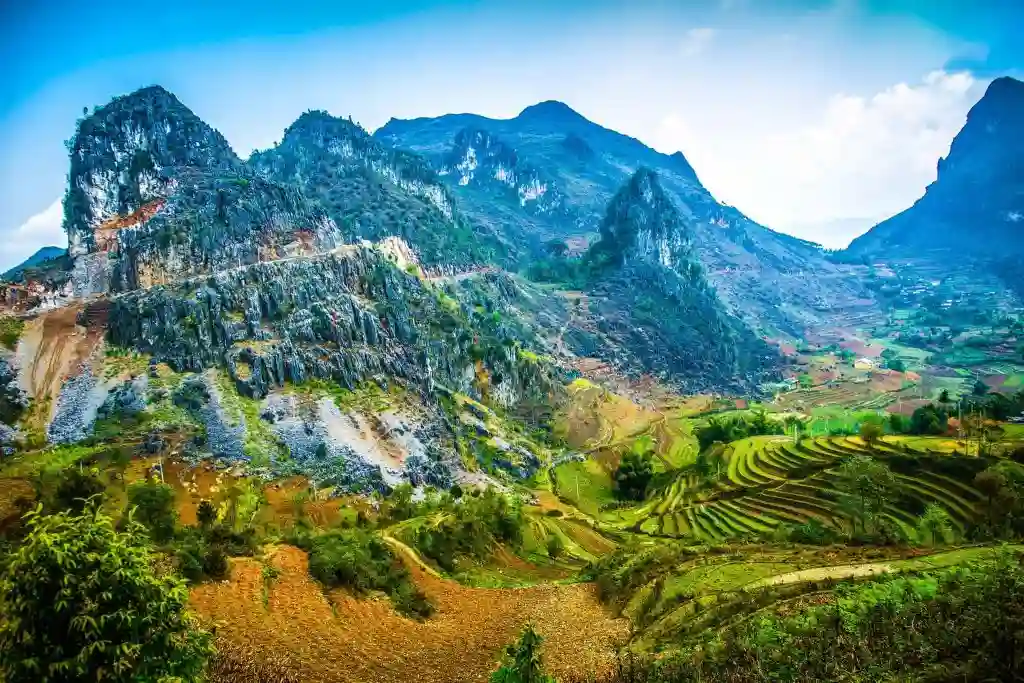
Ha Giang vs Sapa trekking: choose your walk.
This guide focuses specifically on ha giang vs sapa trekking — comparing walking and hiking destinations in northern Vietnam so you can decide ha giang or sapa for trekking before you book — not motorbike loop tourism, not programme day-by-day schedules and not a ranking of operators outside this site.
Both destinations offer real foot travel through highland villages and mountain landscapes. Sapa is the longer-established hill-station trekking base with developed trail tourism around rice terraces and ethnic villages. Ha Giang, on this site, means guide-led walking programmes across Hoang Su Phi terraces, Village Treks valleys and Ridge & Cloud massif routes — not the motorbike circuit that dominates many Ha Giang travel pages.
This page owns the destination comparison for walkers — landscape, village contact, crowds, difficulty, access, season, overnight rhythm and cost expectations for trekking — not Plan Your Ha Giang Trek (collection chooser inside Ha Giang), not the complete guide (province overview) and not Ha Giang loop on foot (walking vs motorbike inside Ha Giang).
We describe Ha Giang from published programmes and guides on this site. We describe Sapa in general trekking terms only — without inventing Sapa prices, awards or statistics not verified here.
- The complete guide to trekking Ha Giang
Province overview after destination choice.
- Plan Your Ha Giang Trek
Collection, season and difficulty inside Ha Giang.
- The Ha Giang loop on foot: trekking vs motorbike
Walking-first vs motorbike loop — not this destination compare.
- Hoang Su Phi programmes
Compare routes, difficulty and seasons at this collection hub.
- Village treks
Compare routes, difficulty and seasons at this collection hub.
Quick comparison summary.
Choose Sapa when you want a compact hill-station base, well-marked village trail tourism, shorter transfers from Lao Cai, and a wide range of short guided walks with established tourist infrastructure.
Choose Ha Giang when you want quieter terrace and village walking west of the massif, guide-led programmes with published Easy through Demanding labels, or multi-day homestay and ridge routes that are not organised around a motorbike loop.
sapa vs ha giang hiking is not a quality contest — it is a fit contest. The better destination is the one whose access, crowd level, overnight style and effort match your trip.
- Ha Giang trekking for beginners
First-trek fit if Ha Giang is still on the shortlist.
Decision matrix: what matters most.
Use this matrix before the detailed sections. Match the row that describes your priority — then confirm season and difficulty on the linked Ha Giang guides if you lean that way.
Decision matrix — trekking priorities
| Lean toward Sapa | Lean toward Ha Giang | |
|---|---|---|
| Access priority | Hill-station base with frequent tourist transfers and short day walks from town | Willingness to plan road days into Ha Giang city, then onward to a programme area |
| Crowd tolerance | Accept popular village trail tourism and more trailhead traffic | Prefer quieter paths on published terrace and village programmes |
| Overnight style | Mix of guesthouses, hotels and village homestays near a tourist town | Homestay and shelter nights tied to published programme Includes |
| Effort range | Many short, flexible guided walks; Fansipan as a separate summit option | Published Easy, Moderate and Demanding programmes — Ridge & Cloud only for experienced walkers |
| Landscape draw | Classic Hoang Lien Son terrace valleys around a hill station | Hoang Su Phi terraces, southern valleys, northern plateau villages or Tay Con Linh ridges |
Access priority
Lean toward Sapa
Hill-station base with frequent tourist transfers and short day walks from town
Lean toward Ha Giang
Willingness to plan road days into Ha Giang city, then onward to a programme area
Crowd tolerance
Lean toward Sapa
Accept popular village trail tourism and more trailhead traffic
Lean toward Ha Giang
Prefer quieter paths on published terrace and village programmes
Overnight style
Lean toward Sapa
Mix of guesthouses, hotels and village homestays near a tourist town
Lean toward Ha Giang
Homestay and shelter nights tied to published programme Includes
Effort range
Lean toward Sapa
Many short, flexible guided walks; Fansipan as a separate summit option
Lean toward Ha Giang
Published Easy, Moderate and Demanding programmes — Ridge & Cloud only for experienced walkers
Landscape draw
Lean toward Sapa
Classic Hoang Lien Son terrace valleys around a hill station
Lean toward Ha Giang
Hoang Su Phi terraces, southern valleys, northern plateau villages or Tay Con Linh ridges
- How to plan a Ha Giang trek
Planning checklist once Ha Giang is chosen.
- Ha Giang trekking itineraries
Duration compare across Ha Giang collections.
Comparison table for walkers.
Ha Giang vs Sapa trekking — at a glance
| Sapa (general trekking) | Ha Giang (this site) | |
|---|---|---|
| Primary product shape | Hill-station day walks and multi-day village treks | 1–3 day hub programmes + 4–7 day extended journeys |
| Best known for walking | Terrace valleys and ethnic villages around Sapa town | Hoang Su Phi terraces, Village Treks, Ridge & Cloud massif |
| Typical overnight | Town lodgings and village homestays | Homestays, ridge shelters where listed, programme Includes |
| Crowd level on popular trails | Higher on classic tourist circuits | Generally quieter on published foot programmes |
| Difficulty signalling | Varies by operator and guide | Published Easy / Moderate / Demanding on each programme page |
| Not this page | Cable-car or peak tourism as the whole trip | Motorbike loop tourism as the whole trip |
Primary product shape
Sapa (general trekking)
Hill-station day walks and multi-day village treks
Ha Giang (this site)
1–3 day hub programmes + 4–7 day extended journeys
Best known for walking
Sapa (general trekking)
Terrace valleys and ethnic villages around Sapa town
Ha Giang (this site)
Hoang Su Phi terraces, Village Treks, Ridge & Cloud massif
Typical overnight
Sapa (general trekking)
Town lodgings and village homestays
Ha Giang (this site)
Homestays, ridge shelters where listed, programme Includes
Crowd level on popular trails
Sapa (general trekking)
Higher on classic tourist circuits
Ha Giang (this site)
Generally quieter on published foot programmes
Difficulty signalling
Sapa (general trekking)
Varies by operator and guide
Ha Giang (this site)
Published Easy / Moderate / Demanding on each programme page
Not this page
Sapa (general trekking)
Cable-car or peak tourism as the whole trip
Ha Giang (this site)
Motorbike loop tourism as the whole trip
Landscape comparison.
Sapa’s trekking landscape is the Hoang Lien Son highland — steep rice terraces, forested valleys and villages within reach of a developed hill station. Walkers often base in town and trek out into neighbouring valleys.
Ha Giang trekking on this site spans several landscapes: La Chi and Red Dao terrace country in Hoang Su Phi; forested southern valleys such as Du Gia; northern plateau villages toward Lo Lo Chai and Quan Ba; and the Tay Con Linh massif for cloud forest and ridge programmes.
best trekking destination northern vietnam depends on which landscape you want underfoot — compact terrace valleys from a hill station, or a wider province of terrace, village and ridge walking organised as published programmes.
- Hoang Su Phi programmes
Compare routes, difficulty and seasons at this collection hub.
- Ridge & Cloud programmes
Compare routes, difficulty and seasons at this collection hub.
- Rice terrace trekking in Ha Giang
Terrace landscape owner for Ha Giang.
Trekking experience comparison.
In Sapa, many travellers book short guided village walks or multi-day treks that return to town or move between nearby hamlets. The experience is shaped by a mature trekking market — easy to arrange on arrival for common routes.
In Ha Giang on this site, you choose a published programme or extended journey before you arrive — day structure, difficulty label, Includes and enquiry live on the programme or tour page. Village days follow household pace; ridge days follow massif weather and shelter rhythm.
ha giang trekking compared to sapa is less about which path is “better” and more about whether you want hill-station flexibility or a pre-booked guide-led line with a clear published grade.
- Guided vs self-guided Ha Giang trekking
Why Ha Giang multi-day routes on this site are guide-led.
- Ha Giang trekking itineraries
One-day to multi-day duration compare.
- Village treks
Compare routes, difficulty and seasons at this collection hub.
Village and culture comparison.
Both destinations bring walkers into ethnic minority highland communities. Sapa’s village circuits are among the best known in Vietnam — Hmong and Dao communities feature heavily in classic day and overnight treks.
Ha Giang programmes on this site meet Red Dao, La Chi, Tay, Hmong, Lo Lo and Dao Cham communities on published routes — homestay nights and hosted meals where the programme Includes list them. Cultural contact is part of the walking day, not a separate show.
Respectful behaviour matters in both places — shoes, photography and shared meals follow household pace. Homestay etiquette on this site covers guest behaviour before overnight routes.
- Ethnic minority trekking in Ha Giang
Cultural route choice on Ha Giang programmes.
- Homestay etiquette
Guest behaviour on overnight routes.
Crowd comparison.
Sapa’s classic village trails carry more tourist traffic, especially in peak terrace and holiday windows. That infrastructure is part of why short walks are easy to organise — and why popular paths can feel busy.
Ha Giang foot programmes on this site are generally quieter than Sapa’s main tourist circuits. That is a relative statement — harvest weekends in Hoang Su Phi and northern flower season still bring visitors — not a claim of empty trails.
If low trail density is your main filter, Ha Giang’s published terrace and village programmes usually fit better than Sapa’s most photographed day walks. If easy on-arrival booking of short walks matters more, Sapa’s market density is an advantage.
Difficulty comparison.
Sapa offers a wide range of short walks suitable for travellers with modest hill fitness, plus longer village treks and separate summit options such as Fansipan. Difficulty language varies by operator — confirm distance, ascent and overnight style before you book.
Ha Giang programmes on this site publish Easy, Moderate or Demanding on each product page. Du Gia forest villages is Easy. Many Hoang Su Phi and Village Treks homestay lines are Moderate. Every Ridge & Cloud programme is Demanding and runs October through April only.
First-time trekkers comparing destinations should read Ha Giang trekking for beginners if Ha Giang remains a candidate — Ridge & Cloud is not a typical first booking.
- Ha Giang trekking fitness and difficulty
Easy, Moderate and Demanding tier depth.
- Ha Giang trekking for beginners
First-trek programme choice.
Accessibility comparison.
Sapa is reached via Lao Cai with frequent tourist transport and a concentrated hill-station base. Many walks start from town or a short transfer — useful when your calendar is short or you want same-day flexibility.
Ha Giang walking on this site starts with a road day from Hanoi to Ha Giang city — typically six to seven hours — then an onward transfer to Hoang Su Phi, Du Gia, Quan Ba or a ridge trailhead depending on the programme. A buffer night before the first walking day usually improves the first trail day.
If transfer simplicity is decisive, Sapa is often easier. If you accept a longer approach for quieter published foot programmes, Ha Giang logistics are manageable with the getting-to and planning guides on this site.
- Getting to Ha Giang for Trekkers
Road timing and buffer nights.
- How to plan a Ha Giang trek
Full planning order after destination choice.
Best season comparison.
Both regions share highland seasons — cooler dry months, green planting and harvest colour — with local variation by elevation. Sapa’s trekking calendar is organised around a hill-station tourism year; confirm operator operating windows for the walks you want.
Ha Giang on this site has a published season map: terrace harvest and green-season village pace favour different collections; Ridge & Cloud operates October through April only and does not run in storm season. Read Best time for Ha Giang trekking before you fix dates.
Season alone rarely decides ha giang or sapa for trekking — crowd preference, access and overnight style usually matter more once your month is flexible.
- Best time for Ha Giang trekking
Month-by-month Ha Giang calendar.
- Green season trekking in Ha Giang
May–August village and terrace pace.
Accommodation comparison.
Sapa mixes hotels and guesthouses in town with village homestays on multi-day treks. Many travellers sleep in town between day walks — useful for comfort and flexible dining.
Ha Giang hub programmes list overnight style on each product page — family homestays on terrace and village routes, communal ridge shelters on overnight Ridge & Cloud lines. Extended journeys on /tours list their own overnight pattern.
If you want a tourist-town base between short walks, Sapa’s lodging mix is usually simpler. If you want overnight rhythm built into a published walking line, Ha Giang programmes are designed that way.
- Homestay etiquette
Shared-room and household pace on Ha Giang routes.
Cost expectations.
Sapa trekking prices vary widely by operator, group size and inclusions — this site does not publish Sapa from-prices. Compare any quote by what is included: guide, meals, overnight, transfers and permits.
Published hub programmes on this site currently list from US$ 85 per person (Du Gia forest villages) to from US$ 425 per person (Kieu Lieu Ti three-day traverse) — each price on its programme page.
Published extended journeys on /tours currently list from US$ 420 per person (Hidden Valleys Slow Trek) to from US$ 980 per person (Ma Pi Leng Canyon Expedition) — each price on its tour page.
Those Ha Giang figures are walking-product from-prices only — not Hanoi travel, buffer nights or personal insurance. Read the Ha Giang trekking cost guide for what to budget separately.
Cost should not decide the destination alone — a cheap day walk with thin inclusions is not comparable to a multi-day guided programme with meals and homestay nights listed on the product page.
- Ha Giang trekking cost: what to budget
Published from-prices and separate budget categories.
Who should choose Sapa.
Choose Sapa when your priority is a compact hill-station trekking base with frequent short guided walks, easier same-week arrangement of common village routes, and more tourist infrastructure between walking days.
Sapa also suits travellers who want terrace and village walking without a long road approach into Ha Giang province, or who prefer to mix walking days with town lodging and flexible dining.
Sapa remains a strong trekking destination — choosing Ha Giang instead is about fit, not about rejecting Sapa’s landscapes or communities.
Who should choose Ha Giang.
Choose Ha Giang when you want guide-led walking through Hoang Su Phi terraces, Village Treks valleys or Ridge & Cloud massif routes — with published difficulty labels and enquiry-led booking on programme pages.
Ha Giang suits walkers who accept a longer approach from Hanoi, prefer quieter paths than Sapa’s busiest circuits, and want overnight rhythm built into a published line rather than a motorbike loop with optional short walks.
If that matches your trip, continue with Plan Your Ha Giang Trek for collection and difficulty, or How to plan a Ha Giang trek for the full checklist — then open a hub programme page to enquire.
- Plan Your Ha Giang Trek
Next step inside Ha Giang.
- How to plan a Ha Giang trek
Preparation checklist and timeline.
- Ha Giang trekking for beginners
First-trek shortlist on Easy or Moderate lines.
- Village treks
Compare routes, difficulty and seasons at this collection hub.
- Hoang Su Phi programmes
Compare routes, difficulty and seasons at this collection hub.
Common questions.
Ha Giang or Sapa for trekking — which is better?
Neither is universally better. Sapa suits hill-station logistics and popular short village walks. Ha Giang on this site suits quieter guide-led terrace, village and ridge programmes with published Easy, Moderate or Demanding labels.
Is Ha Giang better than Sapa for hiking?
Only if quieter published foot programmes and multi-day guide-led lines match your trip. Sapa is often better when you want compact hill-station access and flexible short walks.
Does this page compare the Ha Giang motorbike loop with Sapa?
No. This page compares trekking with trekking. For walking versus the motorbike loop inside Ha Giang, read The Ha Giang loop on foot.
Which is easier for beginners?
Sapa offers many short guided walks that are easy to arrange. Ha Giang can suit beginners on published Easy or Moderate programmes such as Du Gia or a Moderate homestay line — not Ridge & Cloud as a first booking. See Ha Giang trekking for beginners.
Which has fewer crowds?
Published Ha Giang foot programmes are generally quieter than Sapa’s busiest tourist circuits, though harvest and flower seasons still bring visitors. Exact density varies by route and month.
Can I do both destinations?
Yes if your calendar allows separate approaches — Sapa via Lao Cai and Ha Giang via Ha Giang city are different road systems. Plan buffer days; do not treat them as one continuous day walk.
Where do I book Ha Giang trekking on this site?
Open a collection hub — Hoang Su Phi, Village Treks or Ridge & Cloud — or an extended journey on /tours, then enquire from the programme or tour page. Contact when your dates are ready.
Choose the walk, then plan.
Ha Giang vs Sapa trekking is a fit decision — hill-station flexibility and popular village circuits on one side; quieter guide-led terrace, village and ridge programmes on the other.
If Sapa fits, book through a Sapa trekking operator whose inclusions match your walk. If Ha Giang fits, use Plan Your Ha Giang Trek and How to plan a Ha Giang trek, then open a hub programme page for schedule and enquiry.
- The complete guide to trekking Ha Giang
Province overview after choosing Ha Giang.
- Plan Your Ha Giang Trek
Collection, season and difficulty chooser.
- How to plan a Ha Giang trek
Checklist and timeline before enquiry.
- Ha Giang trekking itineraries
Duration compare across collections.
- Village treks
Compare routes, difficulty and seasons at this collection hub.
- Hoang Su Phi programmes
Compare routes, difficulty and seasons at this collection hub.
- Contact — enquire with your dates
Published by Ha Giang Trekking — field knowledge from local trail guides on the routes described, checked against programme schedules and operating notes.
Journal pages are for route research and planning. Dates, prices, day-by-day schedules and enquiry sit on programme and tour pages.
Articles are published under Ha Giang Trekking. Named writer and guide bylines will be added when verified bios and consent are on file.
Compare published routes and open the programme or journey page when you are ready to enquire.
- Hoang Su Phi — compare terrace programmes
One- to three-day terrace and homestay routes in the west of the province.
- Village treks — compare valley routes
Valley and plateau village circuits with homestay nights.
- Ridge & Cloud — compare summit programmes
Summit ridges and cloud-forest massifs above the terrace country.
- Extended journeys — multi-day loops
Four- to seven-day journeys across Dong Van, Ma Pi Leng and the northern plateau.
- Ban Phung — highest terraces (1 day)
Ban Phung — highest terraces (1 day) — dates, pricing and enquiry.
- Du Gia forest villages (1 day)
Du Gia forest villages (1 day) — dates, pricing and enquiry.
- Chieu Lau Thi — sunrise ridge (1 day)
Chieu Lau Thi — sunrise ridge (1 day) — dates, pricing and enquiry.
- Dong Van Karst Traverse
Dong Van Karst Traverse — full itinerary and enquiry.
- Hidden Valleys Slow Trek
Hidden Valleys Slow Trek — full itinerary and enquiry.
- The complete guide to trekking Ha Giang
Province-wide planning and route sequencing.

