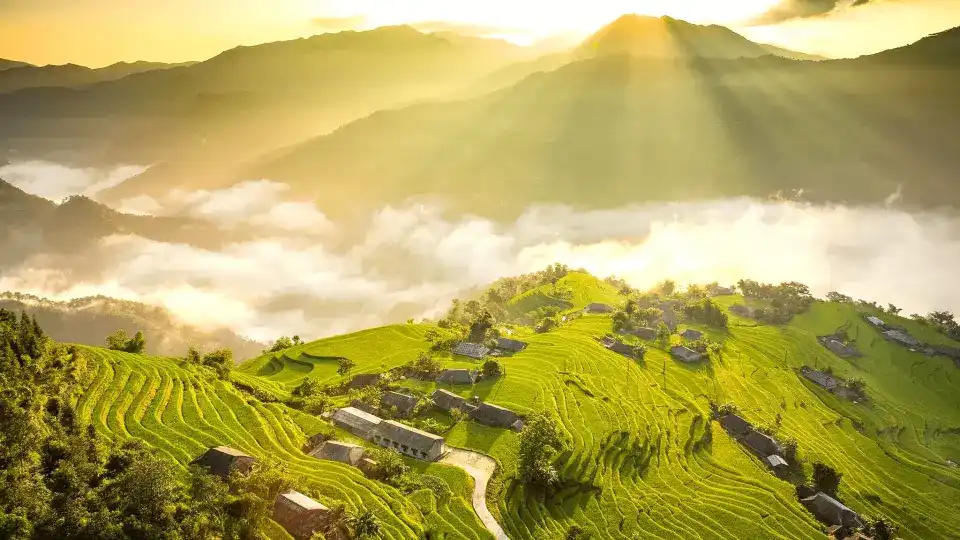
Guide-led vs self-guided trekking in Ha Giang
Ha Giang trekking without guide — honest limits on permits, homestays and unmarked paths, plus what guide-led programmes include and published from-prices.

Guide-led or self-guided.
This guide focuses specifically on the ha giang trekking without guide question — guide-led vs self-arranged walking — not solo join-in mechanics, cost stacks or safety planning.
Can you trek in Ha Giang without a guide? Yes, in limited cases — short day walks near a town you know. Multi-day village, terrace and ridge routes are different: ha giang trekking without guide is not realistic there because paths are unmarked, northern-plateau permits still apply, and homestay access usually needs a local contact.
This page owns the guide question — not province overview (complete guide), not collection choice (Plan Your Ha Giang Trek) and not trip shape (Programme vs Extended Journey). For one-person bookings on guide-led routes, read Solo trekking in Ha Giang; for permit detail, read Ha Giang trekking permits update.
Ha Giang has no marked national-park trail network. Paths follow irrigation channels, farm decisions and weather calls made by people who live on the route. That reality shapes what self-guided can mean here — and why most foreign trekkers on our routes book guide-led programmes.
We are a licensed local operator listing guide-led programmes and extended journeys on this site. This article explains what each option involves in practice, where self-walking is limited, and how published programme prices compare — without inventing market statistics we cannot verify.
- Plan Your Ha Giang Trek
Choose collection, season and difficulty after the guide decision.
- The complete guide to trekking Ha Giang
Province overview and planning order.
- Programme vs Extended Journey
Trip shape once guide-led is the plan.
- Ha Giang trekking FAQ
Central FAQ hub — guide, cost, solo and permits questions.
- Hoang Su Phi programmes
Compare routes, difficulty and seasons at this collection hub.
- Village treks
Compare routes, difficulty and seasons at this collection hub.
- Ridge & Cloud programmes
Compare routes, difficulty and seasons at this collection hub.
What self-guided means here.
Self-guided trekking in Ha Giang usually means walking without a licensed operator programme — arranging your own transport, navigation, meals and overnight stays, and handling permit paperwork yourself where rules require it.
It does not mean there is a signed trail system to follow. Consumer map apps show roads and some paths inconsistently; farm tracks change with harvest, landslides and seasonal irrigation. A path that worked last month may be blocked or rerouted without notice.
Self-guided also does not remove permit or checkpoint requirements on the northern plateau and Dong Van loop. Foreign travellers still need the province entry permit and must carry passport and permit guidance — see the permits guide for the working routine.
Self-guided ground by landscape
| Village and terrace walks | Ridge and plateau routes | |
|---|---|---|
| Navigation | Farm paths between hamlets — easier to follow in daylight but unmarked | Ridge crests, cloud forest and border-adjacent paths — visibility and exposure change fast |
| Overnight | Homestay access usually needs a local introduction or prior booking | Shelter nights and high camps need operator coordination on published routes |
| Permits | Community or forest permits may still apply on access paths | Northern plateau entry permit plus route-specific permissions on border paths |
| Realistic self-walk | Short day walks near a town you know — not a substitute for a programme crossing | Generally not appropriate for unguided foreign trekkers on our published ridge lines |
Navigation
Village and terrace walks
Farm paths between hamlets — easier to follow in daylight but unmarked
Ridge and plateau routes
Ridge crests, cloud forest and border-adjacent paths — visibility and exposure change fast
Overnight
Village and terrace walks
Homestay access usually needs a local introduction or prior booking
Ridge and plateau routes
Shelter nights and high camps need operator coordination on published routes
Permits
Village and terrace walks
Community or forest permits may still apply on access paths
Ridge and plateau routes
Northern plateau entry permit plus route-specific permissions on border paths
Realistic self-walk
Village and terrace walks
Short day walks near a town you know — not a substitute for a programme crossing
Ridge and plateau routes
Generally not appropriate for unguided foreign trekkers on our published ridge lines
- Ha Giang trekking fitness and difficulty
Effort tier before guide-led pacing.
- Village Treks vs Ridge Treks
Terrain compare — village paths vs ridge massif ground.
- Ha Giang trekking permits
Plateau entry and programme permit routine.
What guide-led includes on our programmes.
Guide-led on this site means booking a published programme on Hoang Su Phi, Village Treks or Ridge & Cloud, or an extended journey on /tours — each with local trail guides, English-speaking trekking leads, meals and overnight rhythm as listed on the product page.
Programme prices include community and forest permits where they apply, and the guide handles registration on walking days — standard on guide-led trekking Ha Giang departures listed here.
Programme prices include community and forest permits where they apply, and the guide handles registration on walking days. Personal accident and trekking insurance is included on every guide-led programme — see each programme's includes list.
Homestay payments go directly to host families — we do not take a margin on meals or overnight stays. Guide-led programmes run small groups — typically two to eight trekkers; ridge routes cap at six.
Enquiry is by WhatsApp from any programme or tour page. No payment on this site — we usually reply within 24 hours with availability, a clear price and what to pack.
- Safety Policy
Insurance, pace and weather decisions on departures.
- Responsible Travel
Homestay payments and community fees.
- Licensed Local Operator
Hanoi Travel Mate Co., Ltd. runs every departure listed here.
- Is Ha Giang trekking safe? A practical guide
Terrain, weather and route-fit risks.
- Hoang Su Phi programmes
Compare routes, difficulty and seasons at this collection hub.
- Village treks
Compare routes, difficulty and seasons at this collection hub.
- Ridge & Cloud programmes
Compare routes, difficulty and seasons at this collection hub.
- Extended journeys
Multi-day guide-led routes on /tours.
Permits and border paths.
Permit rules depend on where you walk, not whether you prefer the word self-guided or guided. Foreign travellers on the northern plateau and Dong Van loop need a Ha Giang province entry permit. Carry your passport and keep permit guidance from your booking confirmation with your travel documents.
Programme prices on this site include community and forest permits for the published route, and the guide handles registration on walking days. The Lo Lo Chai to Then Pa programme also includes permits, community contributions and flagpole entry — on that northern route, carry your passport in your daypack.
Self-guided walkers must arrange province entry and any community or forest permissions themselves. Rules and checkpoint routine can change — follow instructions in your booking confirmation when you have one, or enquire before attempting border-adjacent paths without a guide.
Permits and travel insurance are different things. Programme arrangements do not replace the travel insurance you arrange from home.
- Ha Giang trekking permits update
Current foreign-traveller guidance before route choice.
- Ha Giang trekking permits
Full permit and checkpoint guide.
- Getting to Ha Giang for Trekkers
Road timing and buffer nights before walking days.
- Lo Lo Chai to Then Pa
Northern plateau programme with permits included.
Navigation and language.
On guide-led programmes, your local trail guide is primary navigation — not a consumer map app. They know which farm track is open after rain, where the lee side of a ridge offers rest out of wind, and when to turn back if lightning is visible on the massif.
English-speaking trekking leads handle pace, guest communication and logistics. In hamlets, local guides translate between guests and host families — herbal baths, meal timing and the small protocol that keeps homestay nights smooth.
Without a guide, you need enough Vietnamese or ethnic-language capacity to ask permission at field edges, clarify homestay availability and respond to checkpoint questions — or accept that many interactions will be gesture and guesswork.
- Ha Giang trekking fitness and difficulty
Effort tier when fitness is uncertain on guide-led routes.
- Packing for Ha Giang trekking
Footwear, layers and daypack kit for trail conditions.
- Guide roles & field notes
How local guides work on published routes.
Homestay access.
Homestay nights on our programmes are arranged in advance with host families in the villages on the route. Guides check allocation by phone from the trailhead when signal allows — space is not an open dormitory system.
Unguided walkers arriving at a stilt house without introduction may find no bed, a meal only by generosity, or a household mid-harvest with no capacity. Homestay etiquette matters either way — shoes, hearth and shared table — but access usually requires a local contact.
Community payments on guide-led programmes stay with host families and communes as listed on the product page. Self-guided travellers should budget cash for meals and stays directly with hosts, and should not assume card payment in valley homes.
- Homestay etiquette
Shoes, hearth, meals and guest behaviour in stilt houses.
- Responsible Travel
How community payments work on programmes.
Who should book guide-led.
Book guide-led if you are a foreign trekker planning multi-day village, terrace or ridge routes with homestay or shelter nights — especially your first visit to Ha Giang or any Demanding ridge programme.
Book guide-led if your route crosses the northern plateau, approaches border paths or needs community and forest permits you do not want to arrange alone. Lo Lo Chai to Then Pa, Ban Luoc, Nam Hong to Ho Thau and Chieu Lau Thi sunrise ridge all assume hosted logistics.
Book guide-led if you are travelling solo and want to join a small group departure rather than negotiating homestays and transport alone. Solo travellers are welcome on published departures when dates align — read Solo trekking in Ha Giang for join-in mechanics, homestay sharing and enquiry flow.
Book guide-led if weather, pace and safety decisions should rest with people who walk these paths year-round. Town forecasts are unreliable above 2,000 m; guides turn groups back when lightning is visible on Tay Con Linh. Read Is Ha Giang trekking safe? A practical guide for terrain and weather context.
- Contact — enquire about a departure
Share your dates, route choice and group size.
- Plan Your Ha Giang Trek
- Programme vs Extended Journey
- Solo trekking in Ha Giang
Join-in groups and solo-friendly programmes.
- Hoang Su Phi programmes
Compare routes, difficulty and seasons at this collection hub.
- Village treks
Compare routes, difficulty and seasons at this collection hub.
- Ridge & Cloud programmes
Compare routes, difficulty and seasons at this collection hub.
When self-walk might work.
Self-walking can be realistic for short, low-exposure day walks when you already know the hamlet, have local language or a fixed homestay booking, and are not crossing permit-controlled plateau sections.
Examples on this site are not invitations to skip guides on programme routes — Du Gia forest villages is an Easy guided day; walking nearby valley paths on your own still requires the same respect for farm access and dogs at field edges.
The Dong Van motorbike loop is a transport itinerary, not a trekking substitute. Walking rim sections such as Ma Pi Leng on foot still involves heat, exposure and timing decisions — read the Ma Pi Leng on-foot guide for pace context, then book guide-led if the full canyon expedition fits. For the full loop-on-foot map — motorbike circuit vs purpose-built walking — read The Ha Giang loop on foot: trekking vs motorbike.
We do not publish standalone local-guide day rates on this site. If you need guide-only logistics for a route we operate, enquire through Contact — pricing is quoted per departure, not averaged here.
- Ma Pi Leng on foot
Walking the canyon rim — pace and timing without inventing a loop trek.
- The Ha Giang loop on foot: trekking vs motorbike
Walking-first vs motorbike loop — segments and extended journeys.
- Walking Du Gia valley
Valley context — programme page holds the guided day schedule.
- Du Gia forest villages
Easy guided valley day — from-price on programme page.
Cost comparison — honest ranges.
We only quote prices published on this site — not averages across other operators or unverified forum reports.
Published hub programmes on this site currently list from US$ 85 per person (Du Gia forest villages) to from US$ 425 per person (Kieu Lieu Ti three-day traverse) — each price on its programme page.
Published extended journeys on /tours currently list from US$ 420 per person (Hidden Valleys Slow Trek) to from US$ 980 per person (Ma Pi Leng Canyon Expedition) — each price on its tour page.
Programme and tour from-prices do not include international flights, Hanoi–Ha Giang road travel or city buffer nights unless a specific tour page says otherwise. Northern-plateau entry permit paperwork is handled separately from programme community and forest permits — see the permits guide.
- Trekking logistics in Ha Giang
Province budget guidance from published prices.
- Ha Giang trekking cost: what to budget
Full cost stack — from-prices, transport and sample budgets.
- Extended journeys
From-prices on each tour page.
- Hoang Su Phi programmes
Compare routes, difficulty and seasons at this collection hub.
- Village treks
Compare routes, difficulty and seasons at this collection hub.
- Ridge & Cloud programmes
Compare routes, difficulty and seasons at this collection hub.
Your next step.
If guide-led fits, work through the planning spine: complete guide for overview, Plan Your Ha Giang Trek for collection and difficulty, best-time guide for dates, then Programme vs Extended Journey for trip shape. Book on the programme or tour page — schedules and enquiry live there, not on journal pages.
If you still plan self-guided walking, read the permits guide, carry passport and cash, and do not treat consumer maps as a trail network. When a published route on this site matches what you want, booking guide-led is usually the steadier plan.
Tell us your dates, route and group size when you enquire. We reply with availability, a clear price and what to pack — usually within 24 hours.
- Contact — enquire about a departure
WhatsApp enquiry — no payment on this site.
- Plan Your Ha Giang Trek
- Ha Giang trekking permits
- The complete guide to trekking Ha Giang
- Booking Terms
Enquiry and confirmation steps.
Common questions.
Can I trek solo in Ha Giang without a guide?
Solo foreign trekkers can walk short, low-exposure day sections near towns they know, but multi-day village, terrace and ridge routes with homestays are guide-led on this site. Solo travellers can join small-group departures when dates align — enquire with your route and window.
Is self-guided trekking legal on the Dong Van loop?
Foreign travellers on the northern plateau and Dong Van loop need a Ha Giang province entry permit regardless of guide status. Walking border-adjacent paths without correct paperwork is not a plan we recommend — read the permits guide and confirm your route before you travel.
Will homestays accept unguided walkers?
Homestay space on our routes is arranged in advance with host families. Arriving unannounced may mean no bed or limited meals. Homestay etiquette applies either way — see the homestay guide — but access usually needs a local introduction.
How much does a guide cost compared with booking a programme?
Published hub programmes on this site list from US$ 85 per person (Du Gia) to from US$ 425 per person (Kieu Lieu Ti). Extended journeys list from US$ 420 to from US$ 980 per person. Standalone local-guide day rates are not published here — enquire through Contact for guide-only logistics on routes we operate.
Can I join a group departure as a solo traveller?
Yes, when dates align. Guide-led programmes run small groups — typically two to eight trekkers; ridge routes cap at six. Enquire by WhatsApp with your route and dates; we reply with availability and price.
Do I need a guide for Hoang Su Phi terraces?
Terrace programmes such as Ban Phung, Nam Hong and Ban Luoc assume local guides, homestay allocation and permit registration included in the programme price. Self-walking steep terrace walls without local knowledge is unsafe and unwelcome during harvest work.
Can I use offline maps instead of a guide?
Use offline maps as backup only. Farm paths change seasonally and ridge visibility can drop quickly in cloud. On our programmes, your local trail guide is primary navigation — apps do not replace field knowledge on these routes.
What permits do I need if I walk without a guide?
Foreign travellers on the northern plateau and Dong Van loop need the Ha Giang province entry permit. Community and forest permissions may apply on access paths. Programme bookings include permits where listed; self-guided walkers must arrange paperwork themselves — see the permits guide.
Published by Ha Giang Trekking — field knowledge from local trail guides on the routes described, checked against programme schedules and operating notes.
Journal pages are for route research and planning. Dates, prices, day-by-day schedules and enquiry sit on programme and tour pages.
Articles are published under Ha Giang Trekking. Named writer and guide bylines will be added when verified bios and consent are on file.
Compare published routes and open the programme or journey page when you are ready to enquire.
- Hoang Su Phi — compare terrace programmes
One- to three-day terrace and homestay routes in the west of the province.
- Village treks — compare valley routes
Valley and plateau village circuits with homestay nights.
- Ridge & Cloud — compare summit programmes
Summit ridges and cloud-forest massifs above the terrace country.
- Extended journeys — multi-day loops
Four- to seven-day journeys across Dong Van, Ma Pi Leng and the northern plateau.
- Ban Phung — highest terraces (1 day)
Ban Phung — highest terraces (1 day) — dates, pricing and enquiry.
- Du Gia forest villages (1 day)
Du Gia forest villages (1 day) — dates, pricing and enquiry.
- Chieu Lau Thi — sunrise ridge (1 day)
Chieu Lau Thi — sunrise ridge (1 day) — dates, pricing and enquiry.
- Dong Van Karst Traverse
Dong Van Karst Traverse — full itinerary and enquiry.
- Hidden Valleys Slow Trek
Hidden Valleys Slow Trek — full itinerary and enquiry.
- The complete guide to trekking Ha Giang
Province-wide planning and route sequencing.