Nam Hong: A Trekker's Guide to Red Dao Villages
Research Nam Hong Red Dao country — tea gardens, ridge landscape, homestay culture and seasons. Book the two-day programme for day-by-day schedule and enquiry.
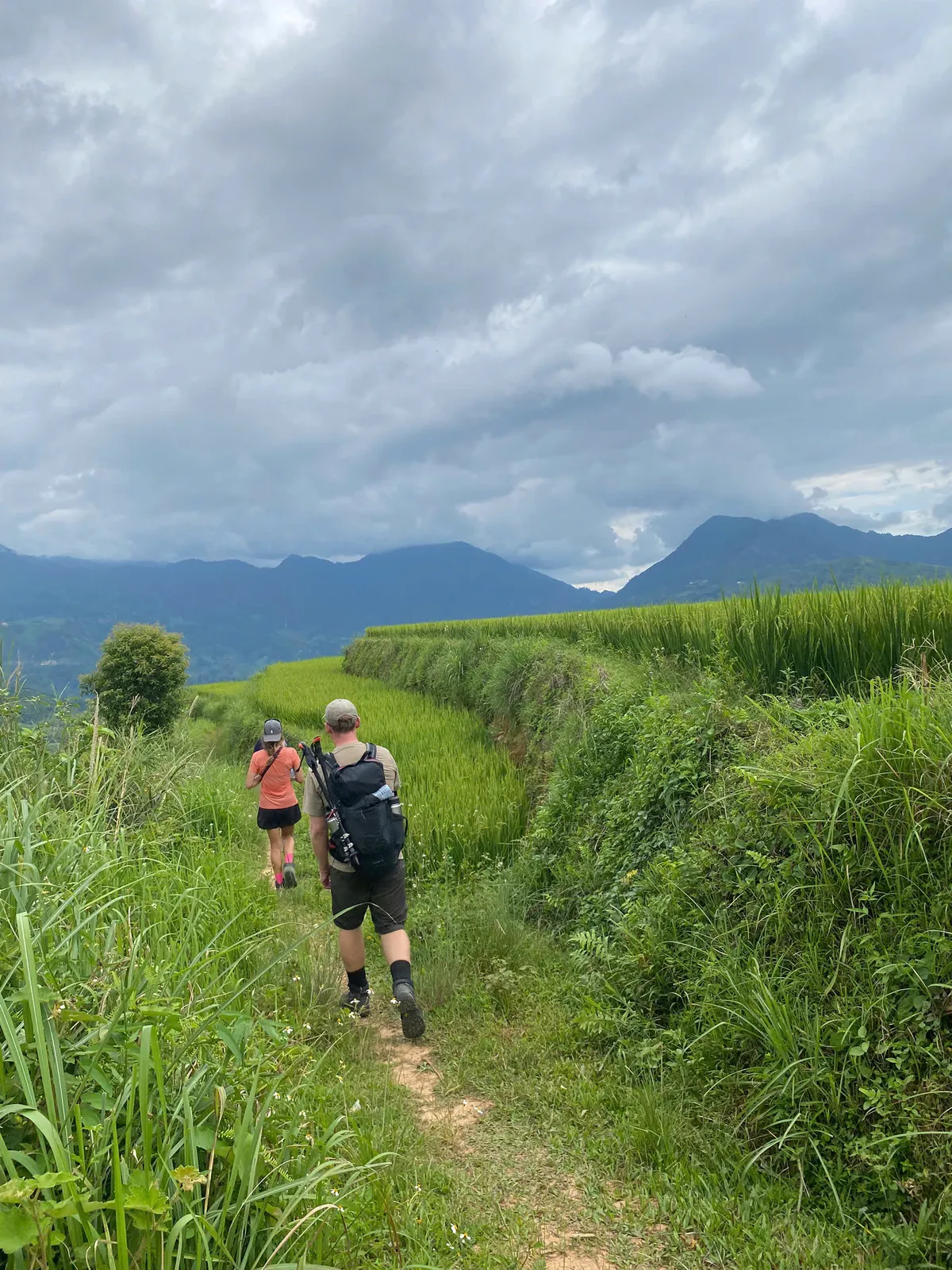
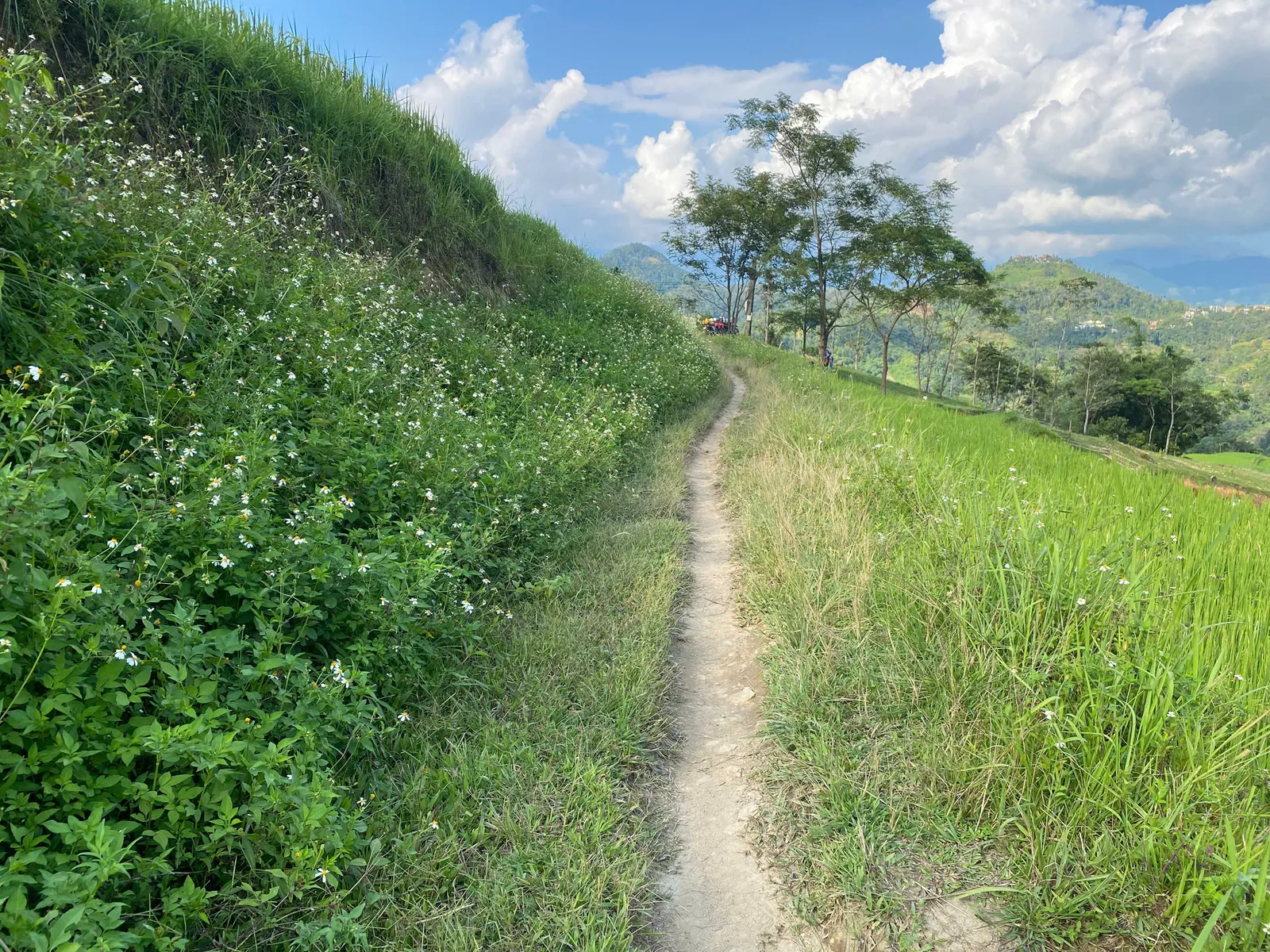
Nam Hong: ridge between villages.
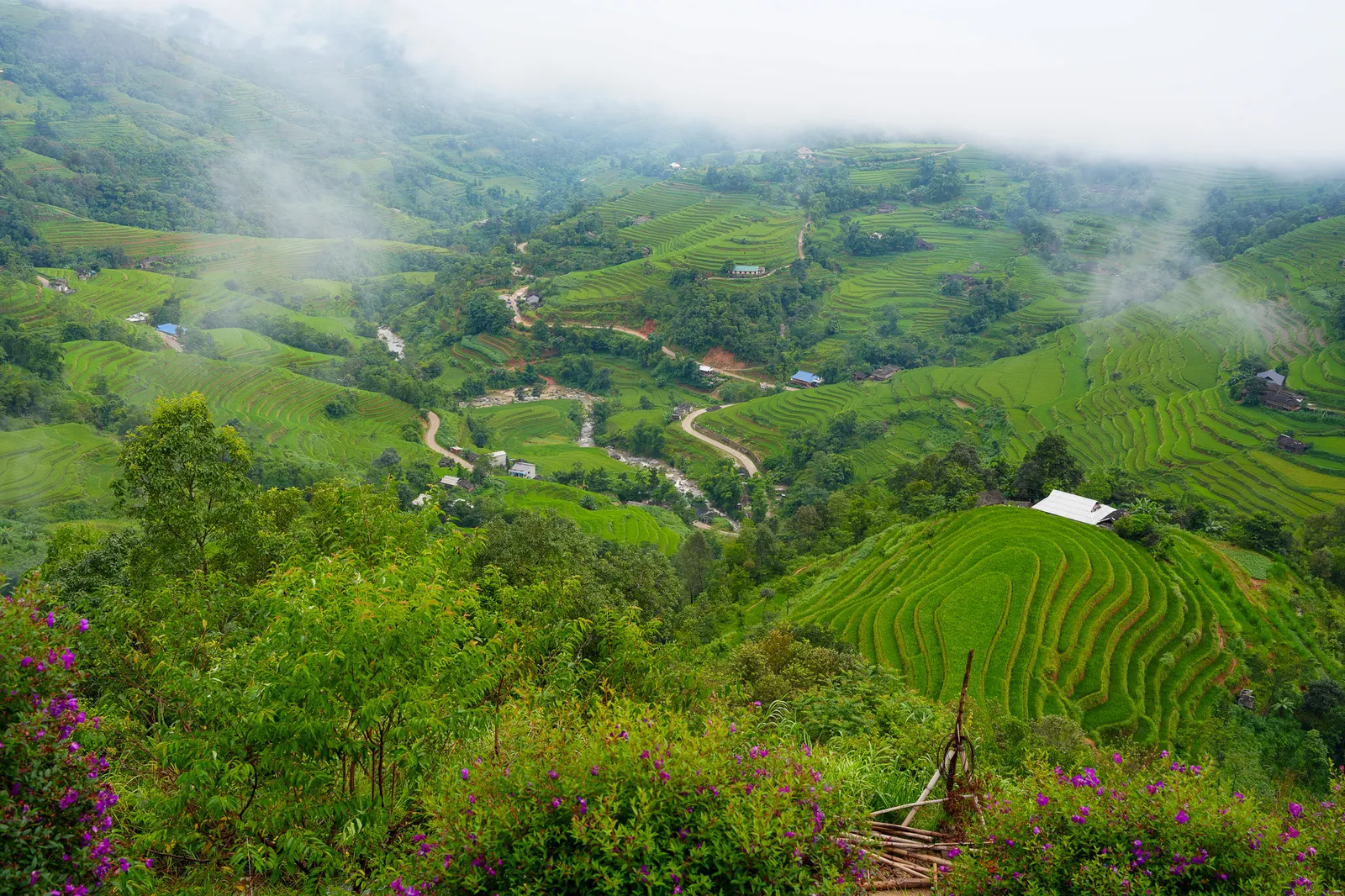
Nam Hong to Ho Thau follows a ridge between two Red Dao communes — tea gardens on the climb, forest on the traverse, terraces below the path and a homestay night above 1,500 metres. This page is research: Red Dao landscape, village livelihoods, homestay culture and when the ridge walks best.
It is not a booking page and not a day-by-day schedule. The Nam Hong to Ho Thau programme owns fit, logistics, times, price and enquiry. Use this guide for landscape and community context; open the programme when you are ready to book.
If one terrace day fits better, Ban Phung highest terraces covers La Chi country without overnight gear. If three valleys and a longer crossing fit, Ban Luoc long traverse continues beyond Nam Hong to Ban Phung.
- Nam Hong to Ho Thau (2 days)
Book the two-day programme — schedule, includes and enquiry.
- Ban Phung — highest terraces (1 day)
One-day La Chi terrace alternative.
- Ban Luoc — the long traverse (3 days)
Three-day multi-valley alternative.
- The complete guide to trekking Ha Giang
Place Nam Hong within the wider province.
- Plan Your Ha Giang Trek
Compare duration and difficulty across hubs.
- Hoang Su Phi Rice Terraces guide
District farming and terrace context.
Forest, tea and household life.
Red Dao families in this area are known for indigo cloth, herbal medicine and the forest-leaf bath prepared at the homestay. These are parts of daily household life, not a performance around the walking route.
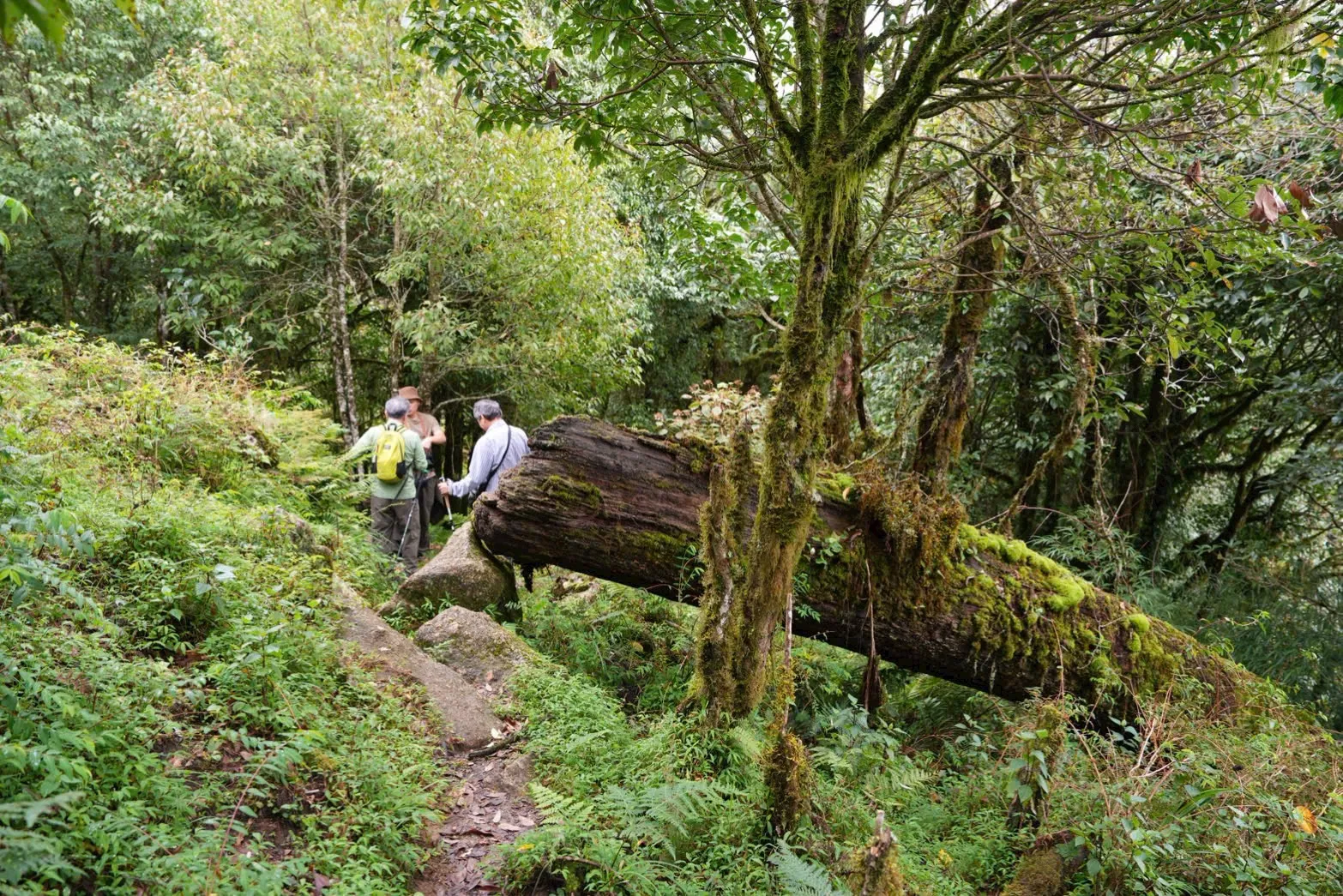
Tea gardens lead into bamboo margins before the open ridge above Nam Pien. Cardamom understorey and terrace rice below the path connect the communes — the same farm paths families use to move between Nam Hong and Ho Thau.
The landscape changes without leaving the same cultural setting. Tea, forest and terraces reward a steady pace more than a rush to the next viewpoint.
- Hoang Su Phi programmes
Compare routes, difficulty and seasons at this collection hub.
- Nam Hong to Ho Thau
Book when the landscape and season fit your dates.
- Red Dao homestay evening
The rhythm of the bath, dinner and village night.
- Homestay etiquette
How to arrive respectfully at a family home.
Moderate ridge without exposure.
Nam Hong is rated Moderate — consecutive walking days on uneven farm paths with climbs and descents, but no ropes, exposure or summit altitude. Expect tea-garden ascent, an open afternoon ridge and a forest descent on the second day rather than a single long summit push.
The homestay night shapes the rhythm: wood-fired herbal bath, shared table and an early start when conditions allow for valley cloud. Fitness expectations and day-by-day times live on the programme page — tell us at enquiry if you have knee or back concerns.
Guides pace to the slowest walker and to ridge visibility. This route suits walkers who want cultural depth in one Red Dao setting rather than a multi-valley traverse.
- Carry a warm layer for the homestay night above 1,500 metres.
- Use shoes with grip and pack a light rain shell for forest and ridge conditions.
- Bring a headlamp, toiletries and modest sleepwear for the shared homestay.
- Expect patchy signal in Nam Hong and none at the homestay.
- Nam Hong to Ho Thau
Full programme with day rhythm and booking.
- Packing for Ha Giang
Layers and footwear for a ridge and homestay route.
- Homestay etiquette
Prepare for a shared family-home stay.
Valley finish on Day 2.
Ho Thau is the Red Dao commune where Day 2 descends — cardamom forest, irrigation channels between farmhouses and hosted lunch before road pickup near 16:00. The programme ends at trailhead logic in Ho Thau commune, not a town-centre stop; Hoang Su Phi town services wait until the drive back.
Morning cloud above Ho Thau is the signature frame on this route — the open ridge on Day 1 looks toward Ho Thau-side weather, and guides name that direction when pace or visibility changes. Afternoon terrace light in the valley reads flatter than dawn above the homestay.
For field detail on the Day 2 arc — pre-dawn viewpoint, cardamom descent and village contours — read the cloud morning and Ho Thau facet article. This guide stays on landscape and community context; the trek page lists times, price and enquiry.
- Nam Hong to Ho Thau
Book the two-day programme — schedule and enquiry.
- Cloud morning and Ho Thau Day 2
Field note on the descent and finish commune.
- Red Dao Nam Hong to Ho Thau
Ridge and homestay context on the same route.
Cloud, tea and changing fields.
March through May brings flowers and clearer ridge conditions. September through November brings harvest terraces below the path, while Nam Pien homestay availability is tighter in September and October.
June to August brings regular rain and a greener forest. The route can operate with timing adjustments when conditions are safe, but cloud, wet ground and visibility ask for more flexibility than in the drier months.
Photography works best as part of the walk: tea gardens in the morning, terraces opening from the ridge and early light above the homestay. Cloud sea is common after clear nights but never guaranteed; a clear valley still gives a westward terrace view.

Drier season and green season
| March – May and September – November | June – August | |
|---|---|---|
| Landscape | Flowers or harvest terraces below the ridge | Greener forest and wetter terrace country |
| Conditions | Clearer ridge mornings and cooler nights | Regular rain, cloud and slower ground |
| Photography | Tea, ridge layers and early valley light | Mist, saturated forest and changing weather |
| Planning | Reserve earlier for September and October homestay nights | Keep timing flexible around safe weather windows |
Landscape
March – May and September – November
Flowers or harvest terraces below the ridge
June – August
Greener forest and wetter terrace country
Conditions
March – May and September – November
Clearer ridge mornings and cooler nights
June – August
Regular rain, cloud and slower ground
Photography
March – May and September – November
Tea, ridge layers and early valley light
June – August
Mist, saturated forest and changing weather
Planning
March – May and September – November
Reserve earlier for September and October homestay nights
June – August
Keep timing flexible around safe weather windows
- Best time to trek Ha Giang
Month-by-month regional conditions.
- Packing for Ha Giang
Prepare for cool homestay nights and rain.
Stay a guest, not an observer.
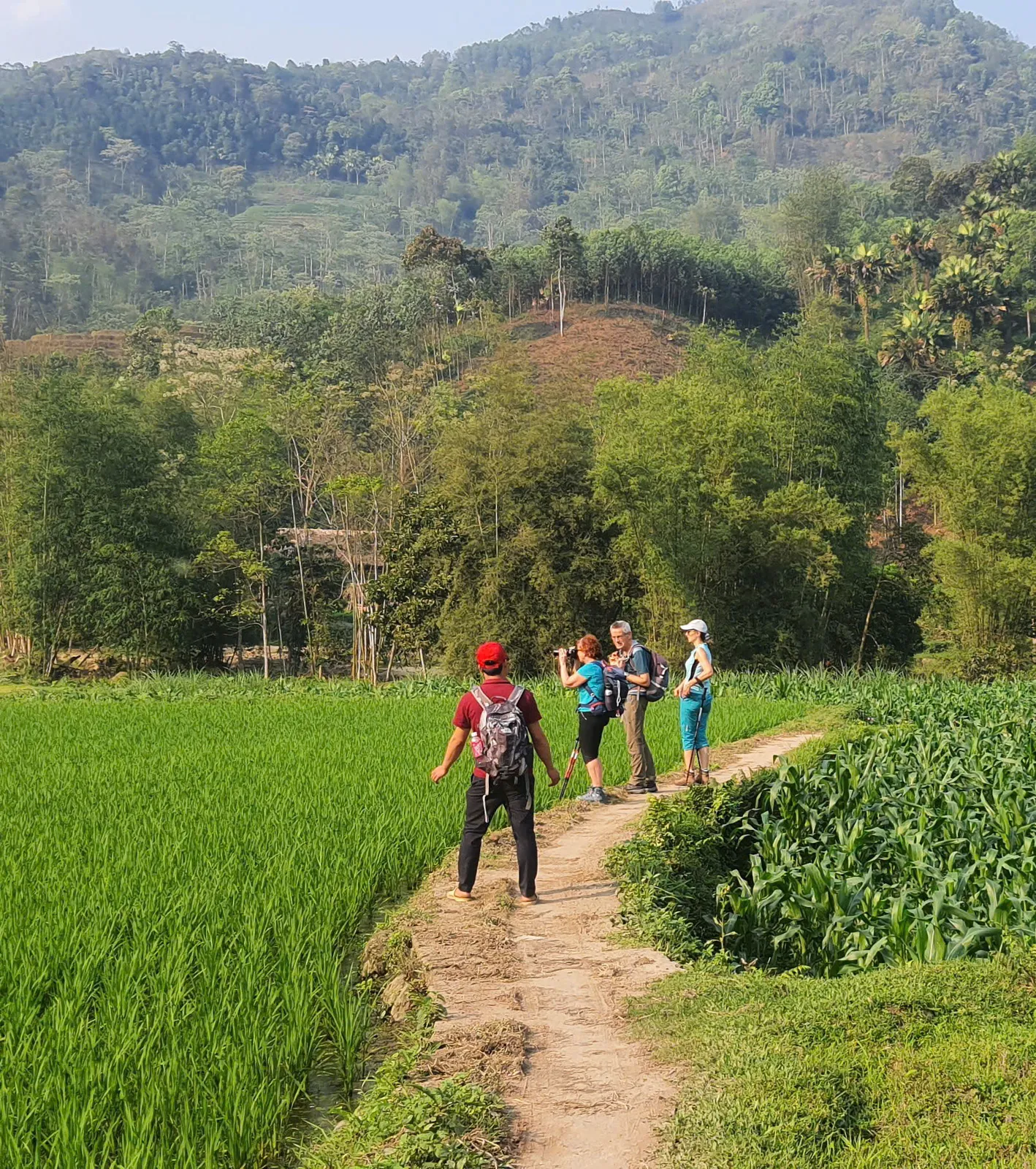
The homestay is a household before it is an overnight stop. Follow the host's lead on shoes, bathing, meals and shared space, and ask before photographing people, indigo work or the kitchen.
Tea gardens, cardamom forest and terrace paths are working ground. Stay with the guide's line, avoid stepping into crops and allow farm work to set the pace when a path is in use.
The local Red Dao guide explains where photography should wait, especially during family occasions or mourning. Listening to that guidance is the simplest way to keep the visit respectful.
- Homestay etiquette
Practical guidance for a family-home stay.
- Ha Giang trekking permits
Read the current travel requirements.
- Getting to Ha Giang for Trekkers
Plan a buffer before the two walking days.
Cultural depth, without the longest crossing.
Choose Nam Hong when two clear days, one homestay night and a Moderate ridge walk fit your trip. It suits walkers who want to stay within one Red Dao setting rather than cover several communities in a single traverse.
Choose Ban Phung if you have one day and want terrace country to be the central experience. Choose Ban Luoc if you have three days, previous trekking experience and want a more demanding route across multiple valleys and communities.
The Hoang Su Phi hub holds the full route comparison. Use it alongside the programme pages when the choice depends on your dates, fitness and preferred overnight rhythm.
- Nam Hong to Ho Thau
A two-day Moderate Red Dao ridge route.
- Ban Phung — highest terraces
A one-day Moderate terrace circuit.
- Ban Luoc long traverse
A three-day Demanding crossing.
- Compare Hoang Su Phi programmes
Compare routes, difficulty and seasons at this collection hub.
Common questions.
How difficult is the Nam Hong to Ho Thau trek?
It is rated Moderate — ridge and forest paths with steady climbs and descents but no technical terrain. Day-by-day distance and times are on the programme page.
How basic is the Red Dao homestay?
It is simple and shared, with bedding and mosquito nets on a wooden floor, a squat toilet in a separate building and a wood-fired herbal bath.
When is the best season for Nam Hong?
March through May suits flowers and clearer ridges, while September through November brings harvest terraces below the path. June to August is greener and wetter, with more flexible timing around rain.
Is the cloud sea guaranteed on the second morning?
No. The viewpoint walk still goes ahead when conditions allow; clear mornings can offer a westward terrace view even when clouds do not settle in the valley.
How does Nam Hong compare with Ban Phung and Ban Luoc?
Nam Hong is a two-day Moderate Red Dao ridge route with one homestay night. Ban Phung is a one-day Moderate terrace circuit, while Ban Luoc is a three-day Demanding crossing through wider Hoang Su Phi country.
Choose the ridge, then the season.
Choose Nam Hong when a Red Dao homestay and two days of ridge walking fit the trip you want. Check the season here, then book on the programme page for the exact day-by-day plan, price and enquiry.
Send your dates and walking experience through Contact. We will help match the route to your arrival plan and the conditions of the season.
- Book Nam Hong to Ho Thau
Schedule, includes, price and enquiry.
- Hoang Su Phi programmes
Compare routes, difficulty and seasons at this collection hub.
- Enquire about a departure
Share your dates and walking experience with the team.
Published by Ha Giang Trekking — field knowledge from local trail guides on the routes described, checked against programme schedules and operating notes.
Journal pages are for route research and planning. Dates, prices, day-by-day schedules and enquiry sit on programme and tour pages.
Articles are published under Ha Giang Trekking. Named writer and guide bylines will be added when verified bios and consent are on file.
Operational details on programme and tour pages are published only after being checked against current operating information.
Compare published routes and open the programme or journey page when you are ready to enquire.
- Hoang Su Phi — compare terrace programmes
Compare difficulty, seasons and walking style before you enquire.
- Nam Hong to Ho Thau (2 days)
Nam Hong to Ho Thau (2 days) — dates, pricing and enquiry.
- Tay Con Linh from Tung San (2 days)
Tay Con Linh from Tung San (2 days) — dates, pricing and enquiry.
- Private Hoang Su Phi to Dong Van Hiking Journey
Private Hoang Su Phi to Dong Van Hiking Journey — full itinerary and enquiry.
- Hoang Su Phi Rice Terraces tour
Hoang Su Phi Rice Terraces tour — full itinerary and enquiry.
- Nam Hong to Ho Thau — packing, photography and route choice
Day-by-day walking detail and pacing for Nam Hong.
- Hoang Su Phi Rice Terraces: A Complete Guide for Trekkers
Landscape, seasons and routes around Hoang Su Phi.
- Ban Phung Rice Terraces: A Guide for Trekkers and Photographers
Neighbouring walking country linked to Nam Hong.
- Ban Luoc: A Trekker's Guide to Valleys, Rice Terraces and Red Dao Homestays
Neighbouring walking country linked to Nam Hong.