Ban Luoc: A Trekker's Guide to Valleys, Rice Terraces and Red Dao Homestays
Research Ban Luoc traverse country — valleys, ethnic sequence, seasons and route choice. Book the three-day programme for day-by-day schedule, logistics and enquiry.
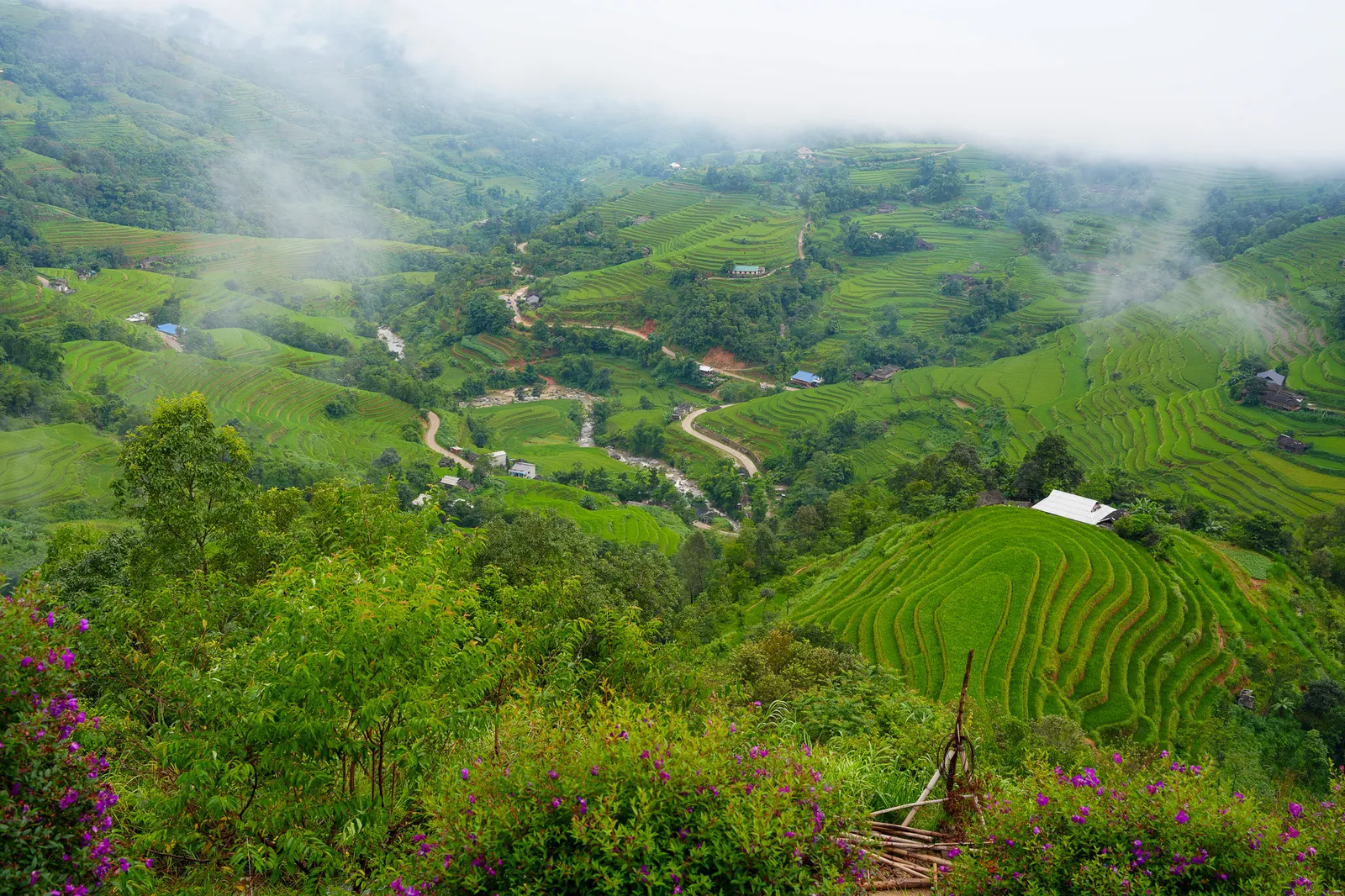
Ban Luoc: valleys in sequence.
Ban Luoc is a three-day village-to-village walk in western Hoang Su Phi — on foot from Ban Luoc to Ho Thau, Ho Thau to Nam Ai, then Nam Ai to Phin Ho, with two standard overnights (Ho Thau and Nam Ai) before the walking finish in Phin Ho. This page is research: landscape context, pacing and seasons — not a booking page or day-by-day schedule.
The Ban Luoc long traverse programme owns fit, logistics, times, price and enquiry. Use this guide for context; open the programme when you are ready to book.
If two days fit better, Nam Hong to Ho Thau covers a Red Dao homestay rhythm without a third walking day. If one terrace day is enough, Ban Phung highest terraces covers La Chi country without multi-day commitment.
- Ban Luoc — the long traverse (3 days)
Book the three-day programme — schedule, includes and enquiry.
- Nam Hong to Ho Thau (2 days)
Two-day Red Dao alternative.
- Ban Phung — highest terraces (1 day)
One-day La Chi terrace alternative.
- The complete guide to trekking Ha Giang
Place the traverse within the wider province.
- Plan Your Ha Giang Trek
Compare duration and difficulty.
- Hoang Su Phi Rice Terraces guide
District farming and terrace context.
Western corridor, village to village.
Western Hoang Su Phi terrace country links Ban Luoc, Ho Thau, Nam Ai and Phin Ho by footpaths and farm tracks — the published three-day programme walks that line in sequence, not as separate day trips linked by road.
Black Dao herbal gardens still mark the Ban Luoc start; Ho Thau holds bungalow accommodation on the ridge; Nam Ai is a village-stay night in the same highland belt; Phin Ho is known for long-established Shan Tuyet tea landscapes where the walking journey finishes before vehicle transfer toward Tan Quang.
Night one is typically Ho Thau Eco Village when confirmed for your departure; night two is village accommodation in the Nam Ai area. Phin Ho is not a standard programme overnight — only an optional post-trek extension on request.
- Village transitions on the traverse
How homestay nights differ in style and rhythm.
- Terrace farming in Hoang Su Phi
Working agriculture on the walls you cross.
- Homestay etiquette
Prepare for two family-home nights.
Walking finish and onward transfer.
Phin Ho is where the published Ban Luoc traverse finishes on foot on Day 3 — approximately 17 km from Nam Ai through western highland paths and Shan Tuyet tea country. There is time to rest, freshen up and eat before the vehicle transfer to Tan Quang and an onward overnight sleeper-bus connection toward Hanoi.
Phin Ho is not included as a standard programme overnight. Guests who prefer a slower finish may add an optional post-trek night in the Phin Ho area — quoted separately, not part of the three-day two-night from-price.
Sleeper bus tickets are not included by default unless confirmed in writing for your departure. Many guests connect the same evening from Tan Quang; others rest locally before continuing their journey.
- Ban Luoc long traverse
Book the three-day programme — schedule and enquiry.
- Day 2 — Ho Thau to Nam Ai
Middle walking day before the Phin Ho finish.
- Recovery pacing on a multi-day trek
Pacing across three walking days.
- Village transitions on the traverse
How overnight stops differ along the corridor.
Demanding without exposure.
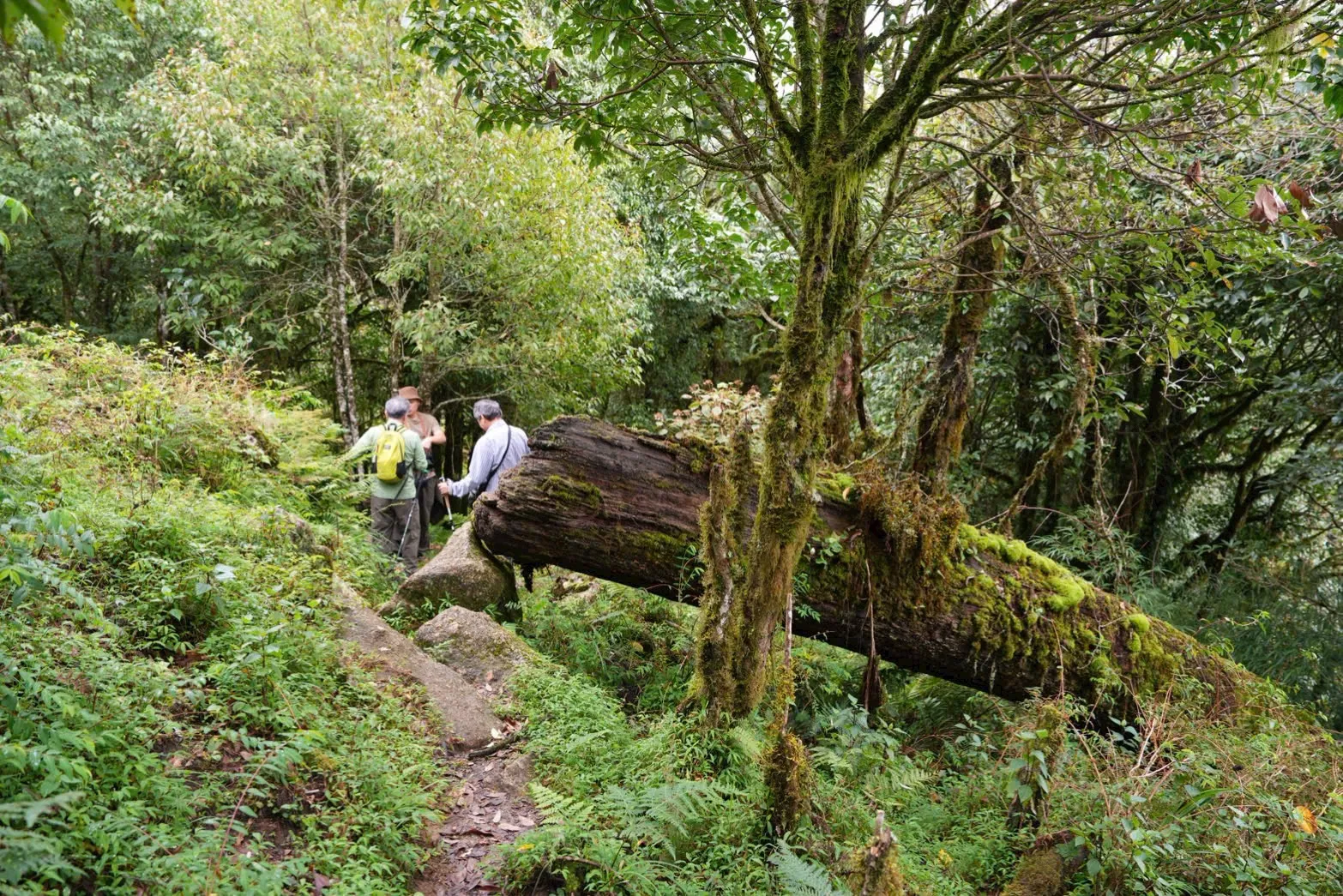
Ban Luoc is rated Demanding because three operator-confirmed walking days (17 km, 15 km and approx. 17 km) stack on uneven farm and terrace paths — not because of ropes, exposure or altitude sickness. Expect sustained distance, humidity after rain, and simple village or bungalow nights rather than hotel comfort.
The traverse keeps you inside western Hoang Su Phi on village paths. Luggage transfer by motorbike between overnight points means you walk with a daypack only — a practical rhythm that shapes how legs feel on the final stage into Phin Ho.
Fitness expectations and day-by-day times live on the programme page. Tell us at enquiry if you have knee or ankle history — guides pace to the slowest walker.
- Ban Luoc long traverse
Full programme with day rhythm and booking.
- Day 2 — the long crossing
Field note on the middle day without repeating the programme schedule.
- Recovery pacing on a multi-day trek
How Day 3 design supports tired legs.
Two nights on the floor.
Standard accommodation is two nights only: Night 1 in Ho Thau — typically Ho Thau Eco Village bungalow when confirmed for your departure; Night 2 in local village accommodation in the Nam Ai area. Facilities vary — mattress, mosquito net, simple toilet arrangements — not hotel en-suites every night.
Phin Ho may be offered as an optional post-trek overnight after Day 3 — quoted separately, not part of the standard 3D2N price. A private room can sometimes be arranged subject to the property confirmed for your departure.
September and October harvest weeks fill beds quickly across Hoang Su Phi programmes. Fixed dates need early booking.
- Homestay etiquette
How to be a respectful guest in village stays.
- Homestay trekking in Ha Giang
What to expect on multi-day village programmes.
Harvest gold or green paddies.
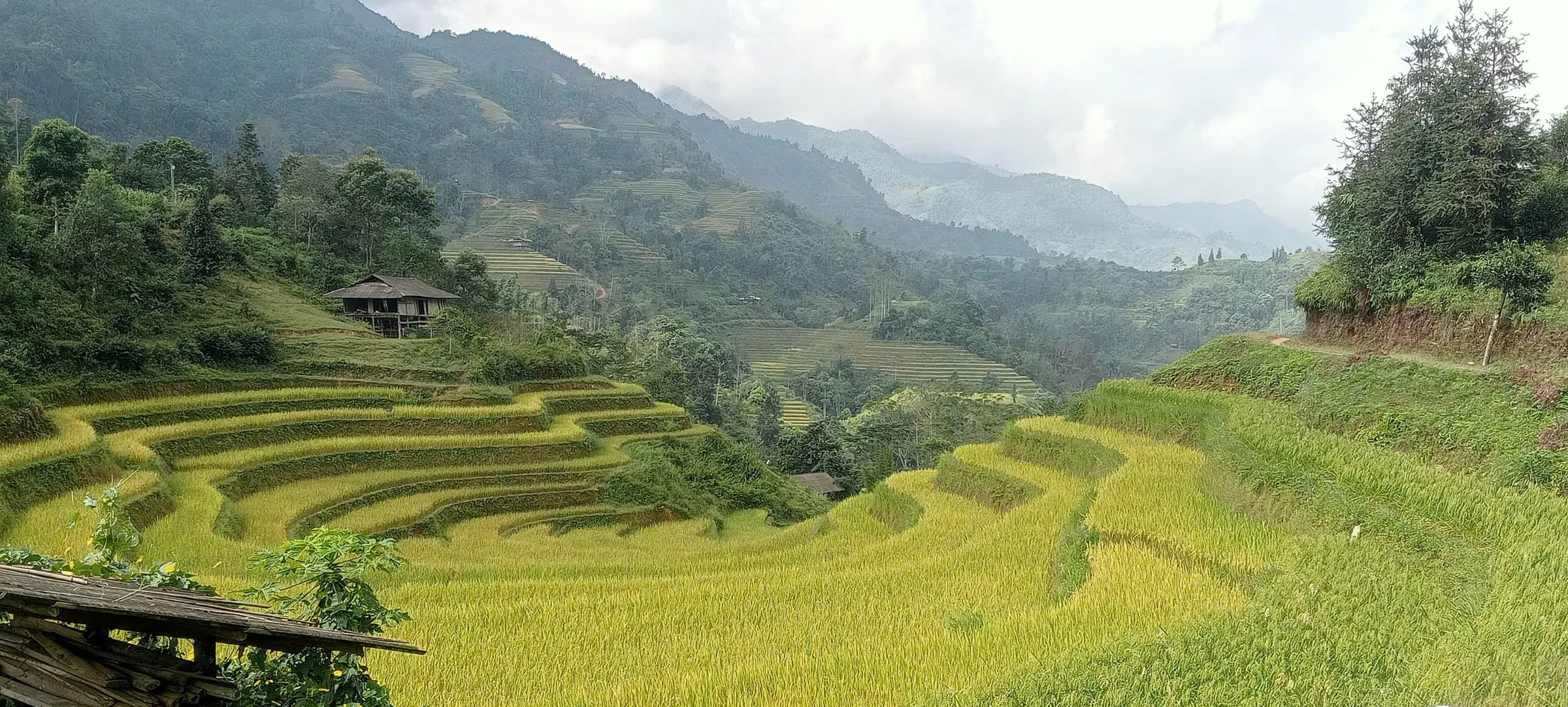
September and October are the classic months — harvest terraces, firmer paths, clear ridge views. March and April add flowers on forest margins; May and June bring green paddies and warmer afternoons. November mist slows photography but rarely stops the walk. July and August need flexibility around rain and slippery terrace clay.
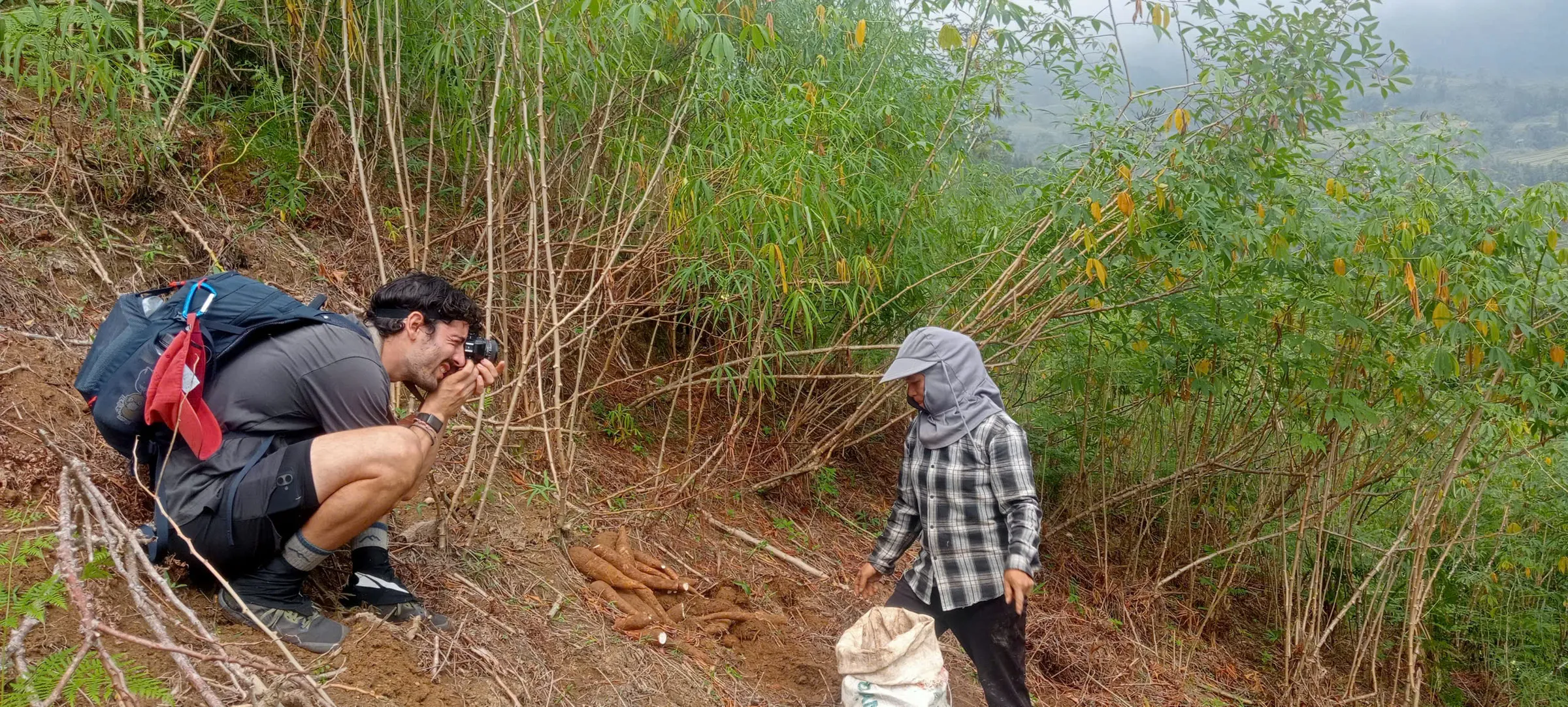
Photography works best as the route unfolds: terrace layers near Ban Luoc, village paths on the Ho Thau ↔ Nam Ai corridor, Shan Tuyet tea country toward Phin Ho when conditions allow. Ask before photographing workers in the fields — your guide translates if hosts invite you closer.
Seasonal kit detail lives in Ban Luoc seasons and packing — this guide stays at district and landscape level.
Harvest and green-season traverse
| September – October | March – August | |
|---|---|---|
| Landscape | Golden terraces and clearer ridge layers | Flowers, greener paddies and fuller forest |
| Ground | Usually firmer paths | Softer clay and wetter descents after rain |
| Planning | Book earlier for harvest-week homestays | Keep route timing flexible around weather |
Landscape
September – October
Golden terraces and clearer ridge layers
March – August
Flowers, greener paddies and fuller forest
Ground
September – October
Usually firmer paths
March – August
Softer clay and wetter descents after rain
Planning
September – October
Book earlier for harvest-week homestays
March – August
Keep route timing flexible around weather
- Seasons and packing for Ban Luoc
Seasonal kit and practical field detail.
- Best time to trek Ha Giang
Month-by-month across the province.
Ban Phung, Nam Hong or the full traverse.
Choose Ban Phung when one Moderate day in La Chi terrace country is enough — the Day Two landscape in a focused circuit without homestay nights.
Choose Nam Hong when two Moderate days and one Red Dao homestay fit your calendar.
Choose Ban Luoc when you have three clear days, prior multi-day walking experience and want the western corridor Ban Luoc → Ho Thau → Nam Ai → Phin Ho in one connected walk.
Ban Phung and Nam Hong compared with Ban Luoc
| Ban Phung / Nam Hong | Ban Luoc long traverse | |
|---|---|---|
| Duration | One day or two days | Three days |
| Difficulty | Moderate | Demanding |
| Focus | One terrace valley or one Red Dao ridge | Several valleys in sequence |
| Overnights | None or one Red Dao homestay | Ho Thau + Nam Ai (2 nights standard) |
Duration
Ban Phung / Nam Hong
One day or two days
Ban Luoc long traverse
Three days
Difficulty
Ban Phung / Nam Hong
Moderate
Ban Luoc long traverse
Demanding
Focus
Ban Phung / Nam Hong
One terrace valley or one Red Dao ridge
Ban Luoc long traverse
Several valleys in sequence
Overnights
Ban Phung / Nam Hong
None or one Red Dao homestay
Ban Luoc long traverse
Ho Thau + Nam Ai (2 nights standard)
- Ban Phung — highest terraces
One-day Moderate terrace circuit.
- Nam Hong to Ho Thau
Two-day Moderate Red Dao route.
- Ban Luoc long traverse
Three-day Demanding programme.
Walk through farms with care.
The traverse crosses working terraces, tea gardens and household land. Stay on the guide's line, do not walk on planted rows or terrace wall caps, and make room for farmers and livestock on narrow paths.
Each community receives the route differently because it is their home. Follow the local guide on photography and household customs, and understand that adjusted pace after rain protects people and fields as well as the group.
Permits and community contributions are handled within the programme.
- Homestay etiquette
How to be a respectful guest.
- Ha Giang trekking permits
Current practical guidance.
Common questions.
What is Ban Luoc as a landscape?
A western Hoang Su Phi village-to-village traverse — Ban Luoc, Ho Thau, Nam Ai and Phin Ho linked by footpaths, with two standard overnights before the walking finish in Phin Ho.
How demanding is the traverse?
Rated Demanding for three long walking days on uneven farm paths — not for technical climbing. Fitness detail and daily times are on the programme page.
When is the best season?
September and October for harvest terraces and firmer paths. Spring and summer bring green paddies and flowers with more rain flexibility needed.
Should I choose Ban Luoc, Nam Hong or Ban Phung?
Ban Phung for one terrace day, Nam Hong for two days with one homestay, Ban Luoc for the full three-day connected traverse.
Where do I book?
On the Ban Luoc long traverse programme page — schedule, includes, price and enquiry. This guide is research only.
Book on the programme page.
Use this guide for landscape and community context. When you are ready to book, open the Ban Luoc long traverse programme for the day-by-day schedule, includes and enquiry — not a journal article.
Send your dates and walking experience when you enquire. We help match the traverse to your fitness and season.
- View Ban Luoc long traverse
Three-day programme — schedule and enquiry.
- Enquire about a departure
Share your dates and walking experience.
- Hoang Su Phi programmes
Compare routes, difficulty and seasons at this collection hub.
Published by Ha Giang Trekking — field knowledge from local trail guides on the routes described, checked against programme schedules and operating notes.
Journal pages are for route research and planning. Dates, prices, day-by-day schedules and enquiry sit on programme and tour pages.
Articles are published under Ha Giang Trekking. Named writer and guide bylines will be added when verified bios and consent are on file.
Operational details on programme and tour pages are published only after being checked against current operating information.
Compare published routes and open the programme or journey page when you are ready to enquire.
- Hoang Su Phi — compare terrace programmes
Compare difficulty, seasons and walking style before you enquire.
- Ban Luoc — long traverse (3 days)
Ban Luoc — long traverse (3 days) — dates, pricing and enquiry.
- Private Hoang Su Phi to Dong Van Hiking Journey
Private Hoang Su Phi to Dong Van Hiking Journey — full itinerary and enquiry.
- Hoang Su Phi Rice Terraces: A Complete Guide for Trekkers
Landscape, seasons and routes around Hoang Su Phi.
- Ban Phung Rice Terraces: A Guide for Trekkers and Photographers
Neighbouring walking country linked to Ban Luoc.
- Nam Hong: A Trekker's Guide to Red Dao Villages
Neighbouring walking country linked to Ban Luoc.