Ban Phung Rice Terraces: A Guide for Trekkers and Photographers
Walk the steep La Chi terraces above the Chay river, plan around the farming calendar and photograph the valley without getting in the way of its work.
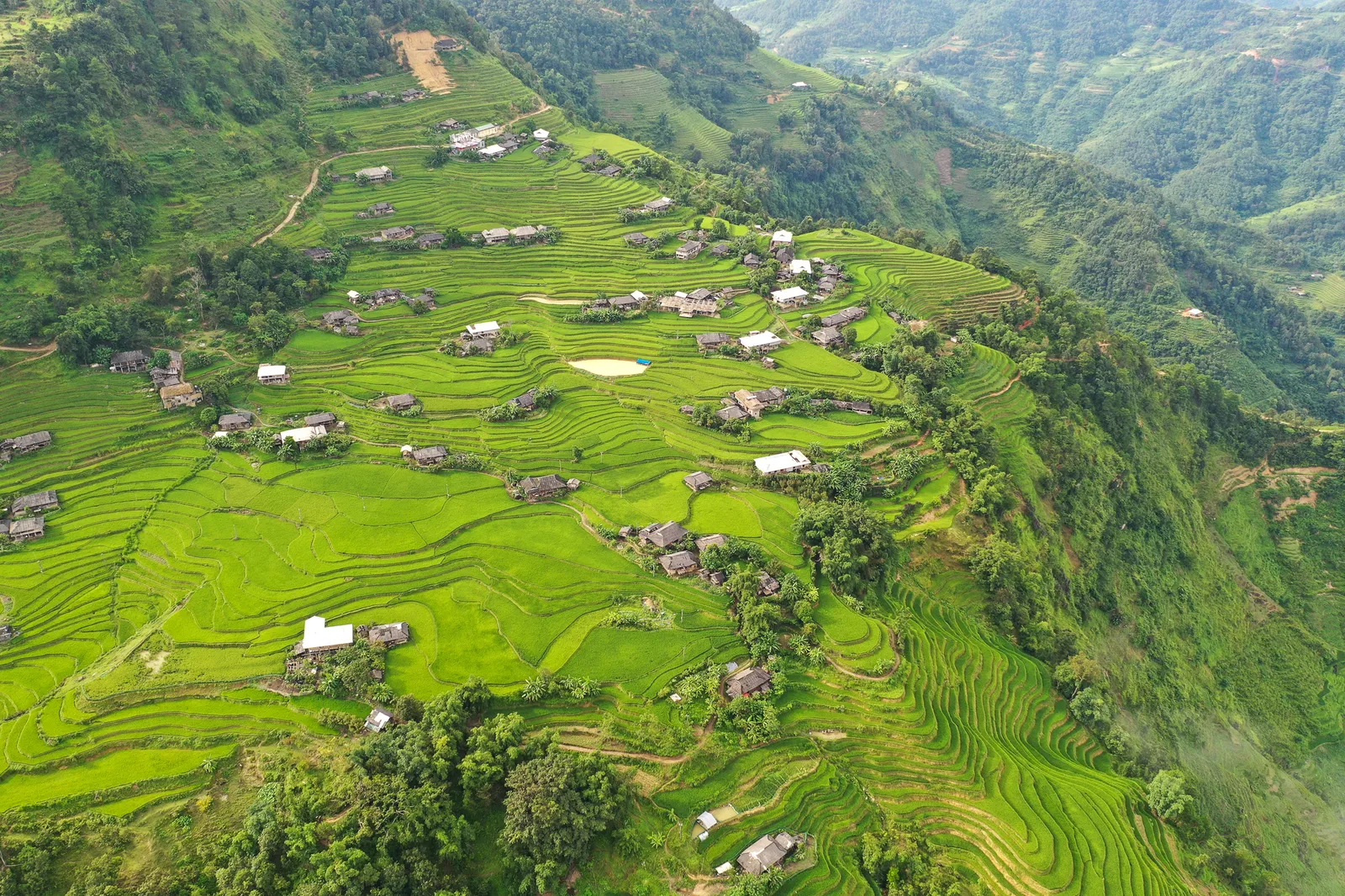
Ban Phung: a terrace day on foot.
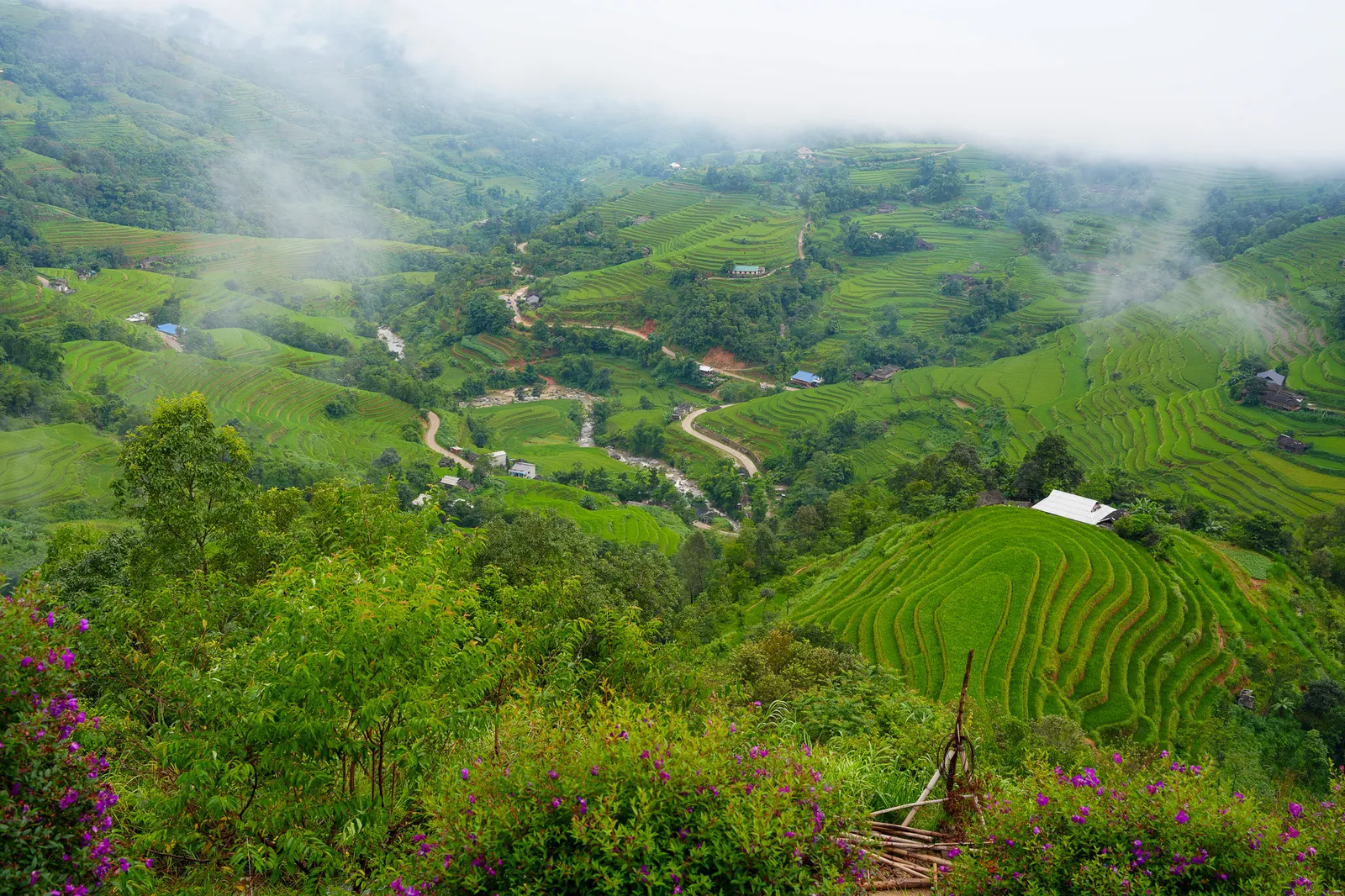
Ban Phung concentrates Hoang Su Phi’s terrace country into one valley above the Chay river. La Chi farmers plant rice on steep slopes, with some planting above 1,000 metres; local farmers describe this as among the highest terrace country in the district, rather than a formal ranking.
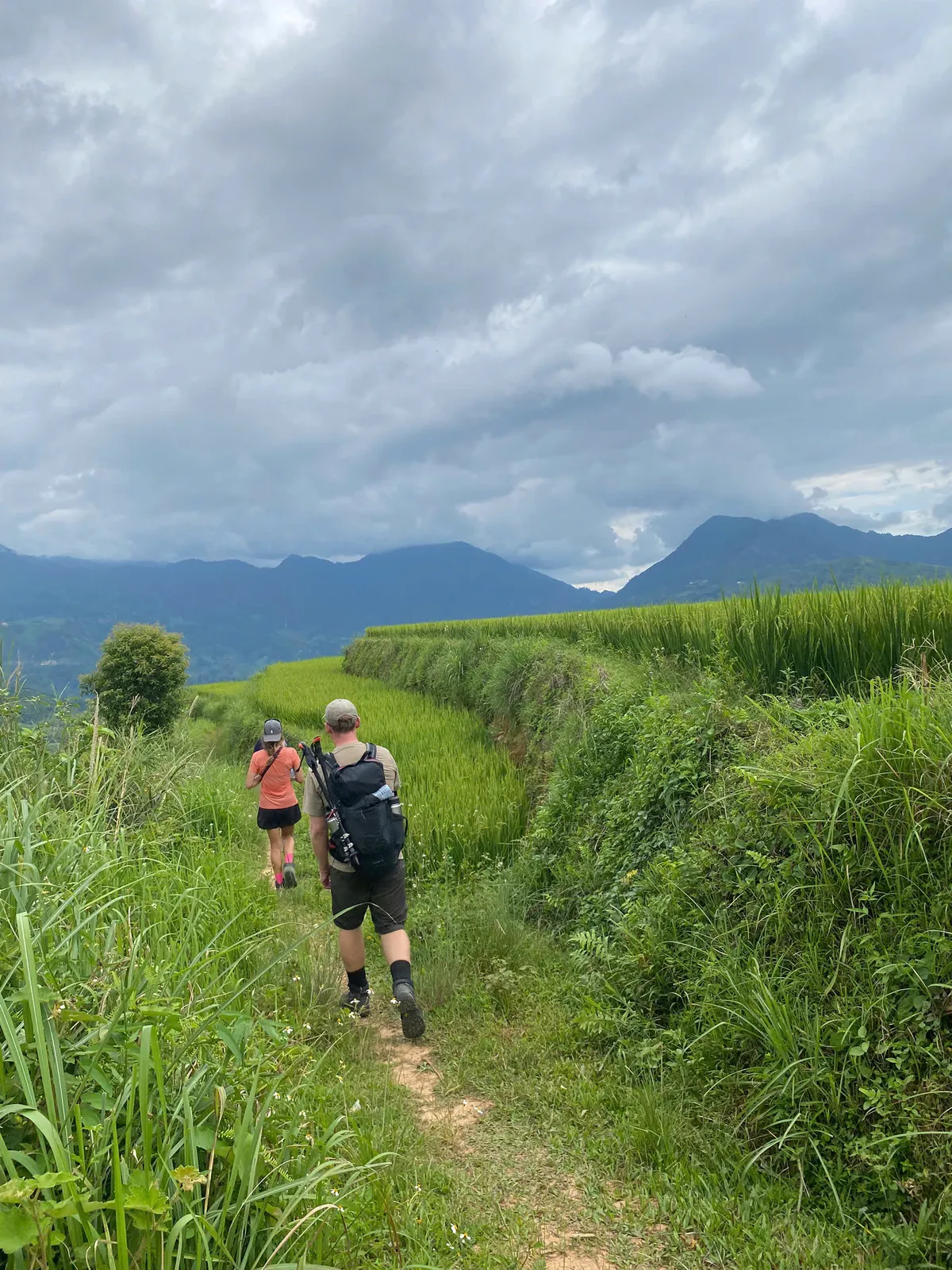
It is a one-day walk, not a summit push. The route descends through layered paddies, crosses the river by bamboo bridge, climbs to a La Chi hamlet for lunch and returns through tea gardens as the valley light changes.
The terraces are not a fixed view. They are a working farming landscape, so the best day follows the farming calendar, weather and the pace of people moving through the fields.
- Hoang Su Phi Rice Terraces guide
The wider terrace landscape and farming calendar.
- The complete guide to trekking Ha Giang
Place Ban Phung within the wider province.
- Plan Your Ha Giang Trek
Compare the route against your walking experience.
- Ban Phung — highest terraces
The one-day Moderate programme.
One valley, one working landscape.
The terrace circuit sits in La Chi country above the Chay. Stilt houses, farm paths, irrigation channels and the hilltop hamlet belong to the same agricultural system; lunch is in a family home, not a restaurant stop.
The morning route moves through rice terraces towards the river. After the crossing, the climb reaches the hamlet on stone steps and compacted earth, while the afternoon return follows gentler tea-garden contours and passes a Tay schoolyard.
That mix makes Ban Phung distinct. You see rice and tea on the same hillside, but the route remains close enough to one community to understand how paths, fields and household work meet.
- Hoang Su Phi programmes
Compare routes, difficulty and seasons at this collection hub.
- Ban Phung — highest terraces
Route details, inclusions and current availability.
- Homestay etiquette
Useful context before lunch in a family home.
A moderate day with real terrain.
Ban Phung is a Moderate one-day terrace walk — typically five to six hours between roughly 900 and 1,300 metres. We do not publish a confirmed kilometre figure on the programme page until the operator reconfirms the sold circuit. The morning descent and the climb from the Chay river are the sections that ask most from knees and legs.
Stone steps and dirt paths can stay slippery after rain. The bamboo bridge is checked before each crossing; if water is high, the guide uses a contour route that still reaches the hilltop hamlet for lunch.
Choose Ban Phung if you have one clear day, want terrace country to be the focus and are comfortable with sustained uneven walking. Choose Nam Hong for a homestay and ridge rhythm, or Ban Luoc for a longer multi-valley crossing.
- Wear shoes with grip; wet stone and terrace paths need secure footing.
- Carry water, a sun hat, sunscreen and a light rain shell in every season.
- Treat the guide’s route changes after rain as part of walking safely in a working valley.
- Bring a camera only if it fits inside a daypack while you walk; hands are useful on steep steps.
- Ban Phung — highest terraces
A one-day Moderate terrace circuit.
- Nam Hong to Ho Thau
A two-day Moderate route with a homestay night.
- Ban Luoc long traverse
A three-day Demanding route through wider terrace country.
- Packing for Ha Giang
Footwear, layers and daypack guidance.
Plan for the fields, not a fixed colour.
May and June bring flooded planting terraces and seedlings. The water reflects morning light between the walls, while rain and warmer afternoons make the route slower and more humid.
From June to August, terraces deepen into green. The route can still walk, but paths stay muddy after rain and the Chay crossing may be adjusted. This is a working wet season, not a quieter version of harvest.
By mid-September, many terraces turn gold. September and October bring the usual harvest window, with generally drier paths and side-light on the western walls during the afternoon return. Higher plots may change after lower paddies, so timing varies across the valley.
Planting and green season vs harvest season
| Planting and green (May – August) | Harvest (mid-September – October) | |
|---|---|---|
| Terraces | Flooded water, seedlings and deepening green | Golden fields, cut straw and active harvest work |
| Walking | Muddier paths and possible rain-led route changes | Usually firmer ground, with continued care on stone steps |
| Photography | Morning reflections, mist and saturated slopes | Side-light across western walls in the afternoon |
| Responsible pace | Keep clear of wet walls and irrigation channels | Give way to farmers carrying baskets or harvest loads |
Terraces
Planting and green (May – August)
Flooded water, seedlings and deepening green
Harvest (mid-September – October)
Golden fields, cut straw and active harvest work
Walking
Planting and green (May – August)
Muddier paths and possible rain-led route changes
Harvest (mid-September – October)
Usually firmer ground, with continued care on stone steps
Photography
Planting and green (May – August)
Morning reflections, mist and saturated slopes
Harvest (mid-September – October)
Side-light across western walls in the afternoon
Responsible pace
Planting and green (May – August)
Keep clear of wet walls and irrigation channels
Harvest (mid-September – October)
Give way to farmers carrying baskets or harvest loads
- Best time to trek Ha Giang
Compare the seasonal conditions across the region.
- Golden rice season in Hoang Su Phi
Harvest deep-dive — when terraces turn and which products fit.
- Hoang Su Phi Rice Terraces guide
See the wider district farming calendar.
Work with the light, and stay out of the crop.
Sunrise light belongs to the approach and the morning descent, when the valley is cooler and planting water can still hold a reflection. The route is not built around a fixed sunrise viewpoint, so photograph from the safe path positions the guide identifies.
Sunset is less useful than the late-afternoon return. Around 16:00 in harvest weeks, side-light reaches the western terrace walls through the tea gardens. Keep moving with the group rather than holding the path for a single frame.
The most useful photography rule is simple: never step on planted rows, terrace wall caps or irrigation channels. Ask before photographing people in the hamlet, and let work continue without directing or delaying anyone.
- Keep a small camera or phone accessible, but pack it away on steep or wet steps.
- Use a wider view to show the scale of terraces, river and hamlet together.
- Wait for clear, safe ground before stopping; do not step aside onto field edges.
- Photograph people only with permission, especially during planting, harvest or meals.
The field comes before the photograph.
Follow the guide’s line and give farmers the right of way. Terrace walls and irrigation channels carry water and support crops, so they are not shortcuts or places to pose.
The hosted lunch is part of a family home. Leave shoes where the host indicates, ask before taking photographs and treat the kitchen and household routines as everyday life rather than a staged experience.
The programme includes local guidance and community contributions. The most respectful exchange is to walk carefully, listen to the people who live here and allow the day to follow the farm’s conditions.
- Homestay etiquette
A practical guide to family-home customs.
- Ha Giang trekking permits
Read the current travel guidance before you go.
Common questions.
Is Ban Phung suitable for a first trek in Hoang Su Phi?
For most walkers, yes. It is a Moderate one-day terrace route with a clear walking objective and no overnight gear. You should still be comfortable with uneven ground, a steep descent and the climb from the river.
When are Ban Phung’s terraces golden?
The usual harvest window is mid-September through October. Higher plots can change later than lower paddies, so dates show a progression rather than one guaranteed day.
Can I photograph the terraces at sunrise and sunset?
Morning light suits the approach and descent; late-afternoon side-light reaches the western walls on the return through tea gardens. Photograph from safe path positions without entering fields or delaying the group.
What happens if it rains?
The route can walk in light rain, but stone steps become slippery and the guide may reverse the loop or skip the bamboo bridge if the Chay river is high. The hilltop lunch remains part of the adjusted plan.
How does Ban Phung compare with Nam Hong and Ban Luoc?
Ban Phung is a focused one-day Moderate terrace circuit. Nam Hong adds a Moderate homestay and ridge rhythm over two days, while Ban Luoc is a three-day Demanding crossing through wider Hoang Su Phi country.
Choose the season, then the day.
Choose Ban Phung when one day inside La Chi terrace country is the right shape for your trip. Use the seasonal guide to decide whether planting water, green slopes or harvest light fits your dates.
Send your dates and walking experience. We will help match the terrace day to your arrival plan and the conditions of the season.
- View Ban Phung — highest terraces
The full one-day programme.
- Hoang Su Phi programmes
Compare routes, difficulty and seasons at this collection hub.
- Enquire about a departure
Share your dates and walking experience with the team.
Published by Ha Giang Trekking — field knowledge from local trail guides on the routes described, checked against programme schedules and operating notes.
Journal pages are for route research and planning. Dates, prices, day-by-day schedules and enquiry sit on programme and tour pages.
Articles are published under Ha Giang Trekking. Named writer and guide bylines will be added when verified bios and consent are on file.
Operational details on programme and tour pages are published only after being checked against current operating information.
Compare published routes and open the programme or journey page when you are ready to enquire.
- Hoang Su Phi — compare terrace programmes
Compare difficulty, seasons and walking style before you enquire.
- Ban Phung — highest terraces (1 day)
Ban Phung — highest terraces (1 day) — dates, pricing and enquiry.
- Hoang Su Phi Rice Terraces tour
Hoang Su Phi Rice Terraces tour — full itinerary and enquiry.
- Ban Phung trekking — fitness, safety and route choice
Day-by-day walking detail and pacing for Ban Phung.
- Hoang Su Phi Rice Terraces: A Complete Guide for Trekkers
Landscape, seasons and routes around Hoang Su Phi.
- Nam Hong: A Trekker's Guide to Red Dao Villages
Neighbouring walking country linked to Ban Phung.
- Ban Luoc: A Trekker's Guide to Valleys, Rice Terraces and Red Dao Homestays
Neighbouring walking country linked to Ban Phung.