Day 2 — the Quan Ba forest ridge
Six to seven hours between valleys, Twin Mountains views, and what makes this the demanding day of the trek.
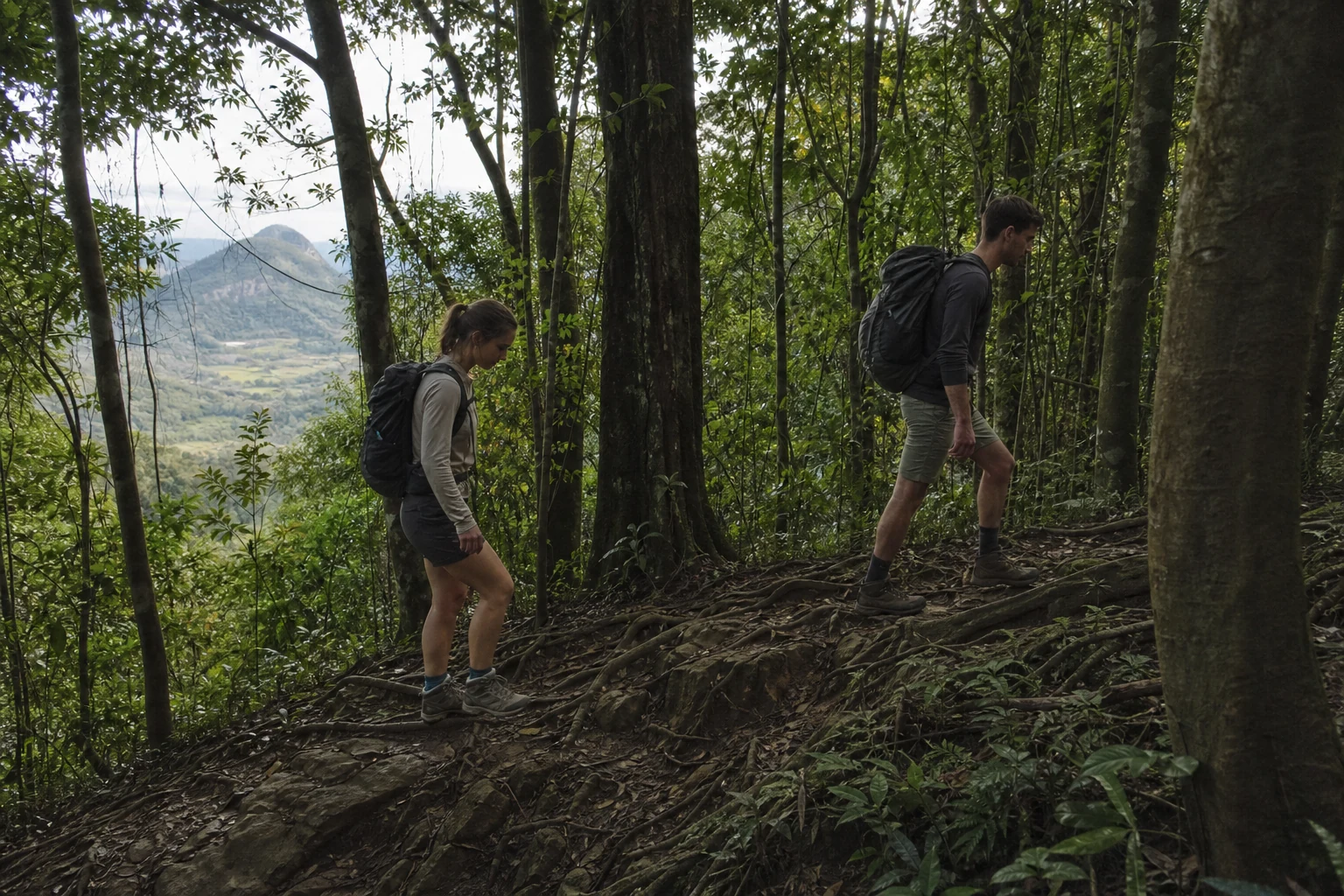
The Quan Ba forest ridge.
Day 2 of Nam Dam to Lung Tam is the long day — fifteen kilometres, six to seven hours walking, five hundred metres climb and six hundred metres descent on uneven terrain. Climb out of Dao valley onto forested ridge with views back to Quan Ba Twin Mountains when cloud sits above 1,400 m, then drop through corn and cassava into White Hmong hamlet for Night 2 homestay.
We start at first light. Main bag travels by motorbike; you carry daypack with water, layers, lunch provisions and headlamp backup. Tell us at enquiry if you have knee concerns — pace adjusts to slowest walker.
Moderate difficulty here means sustained distance, not rope work — comfortable with six to seven hours on farm and forest paths after a gentle Day 1.
Guides based in each valley run these routes weekly in season — they know which bridge to skip after rain, which household hosts lunch rotation, and when flagpole or cooperative crowds peak. That local judgment is part of the product, not an upsell. Fitness labels on the hub are conservative: Moderate means full days on uneven farm paths with homestay nights, not alpine technical climbing. Easy still means five or six hours walking for Du Gia. Some routes can be adapted for families and older travellers when distance, terrain and pacing are matched to the group.
- Nam Dam to Lung Tam (3 days)
Full programme page with day-by-day schedule, pricing and enquiry via Contact.
- Village treks programme hub
Compare routes, difficulty and seasons at this collection hub.
Day 2 hour outline.
- 06:00 · Breakfast · fill water before departure
- 06:30 · Climb out of Dao valley
- 09:00 – 12:00 · Forest ridge traverse · Twin Mountains views
- 12:30 · Packed lunch on ridge or in forest clearing
- 15:00 · Descent into Hmong fields
- 17:00 · Arrival Night 2 homestay
No water for first three hours on ridge — guide field note repeated because dehydrated guests slow the group. Trekking poles help on descent after lunch.
English lead guide and local Hmong guide on Hmong territory after valley divide.
- Nam Dam to Lung Tam (3 days)
Full programme page with day-by-day schedule, pricing and enquiry via Contact.
Twin Mountains from the ridge.
Co Tien — Twin Mountains — Quan Ba icon visible from Day 2 forest ridge when cloud base above 1,400 m. Not a flagpole summit moment — glimpses between trees and open crests, better some afternoons than morning depending on mist.
Photography stops on lee side of crests when wind rises — guides avoid highest exposed point for long breaks. Terrace layers below Quan Ba valley visible when air clears.
Overcast does not cancel the day — forest ridge still connects valleys; views are bonus not contract.
- Nam Dam to Lung Tam (3 days)
Full programme page with day-by-day schedule, pricing and enquiry via Contact.
Water, lunch on trail.
Fill bottles at homestay before 06:00 — first three hours ridge without reliable water. Lunch packed from homestay or prepared overnight — eat fully before descent strains knees.
Snacks and fruit included in programme — carry in daypack top pocket for mid-morning ridge. Tell dietary needs at booking for packed lunch content.
Day 2 is why twenty-five to thirty litre daypack recommended on programme page — water volume plus layers.
- Nam Dam to Lung Tam (3 days)
Full programme page with day-by-day schedule, pricing and enquiry via Contact.
Who Day 2 suits.
Comfortable walking six to seven hours on uneven terrain with five hundred metre climb and six hundred metre descent — previous one-day trekking helps. Nam Dam Day 2 is the filter day for three-day booking — Day 1 gentle, Day 3 moderate descent to Lung Tam.
Guests in fifties complete with trekking poles and conservative pacing. Ban Luoc Day 2 is a comparable Demanding 15 km village-to-village day — Nam Dam Day 2 is the Moderate programme's hardest single day among village treks.
Tell us knee or ankle history at booking — guides adjust descent line and rest stops.
- Nam Dam to Lung Tam (3 days)
Full programme page with day-by-day schedule, pricing and enquiry via Contact.
Forest ridge character.
Forest ridge path is working route between valleys — not boardwalk tourism trail. Roots, mud after rain, occasional blowdown detour. No scrambling but sustained attention for hours.
May through August green rains — earlier start replaces midday ridge exposure in heat waves. September through April firmer paths and clearer views statistically.
Phone signal absent much of ridge — guide emergency protocol standard.
- Nam Dam to Lung Tam (3 days)
Full programme page with day-by-day schedule, pricing and enquiry via Contact.
Night 2 Hmong hamlet.
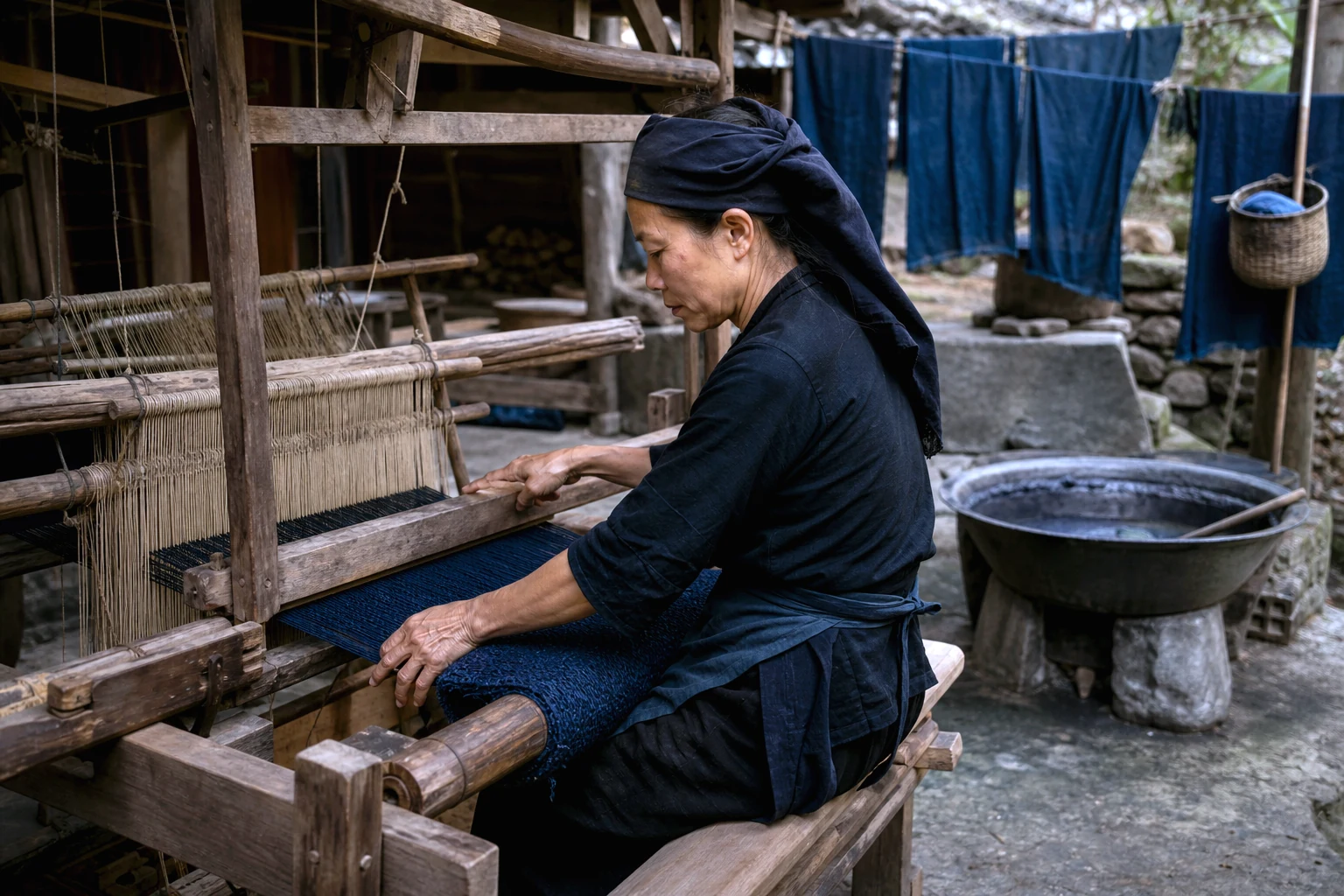
Descent ends in small White Hmong hamlet — corn storage beside house, indigo cloth drying, smaller and higher than Nam Dam valley. Welcome tea, earlier dinner because everyone is tired from ridge.
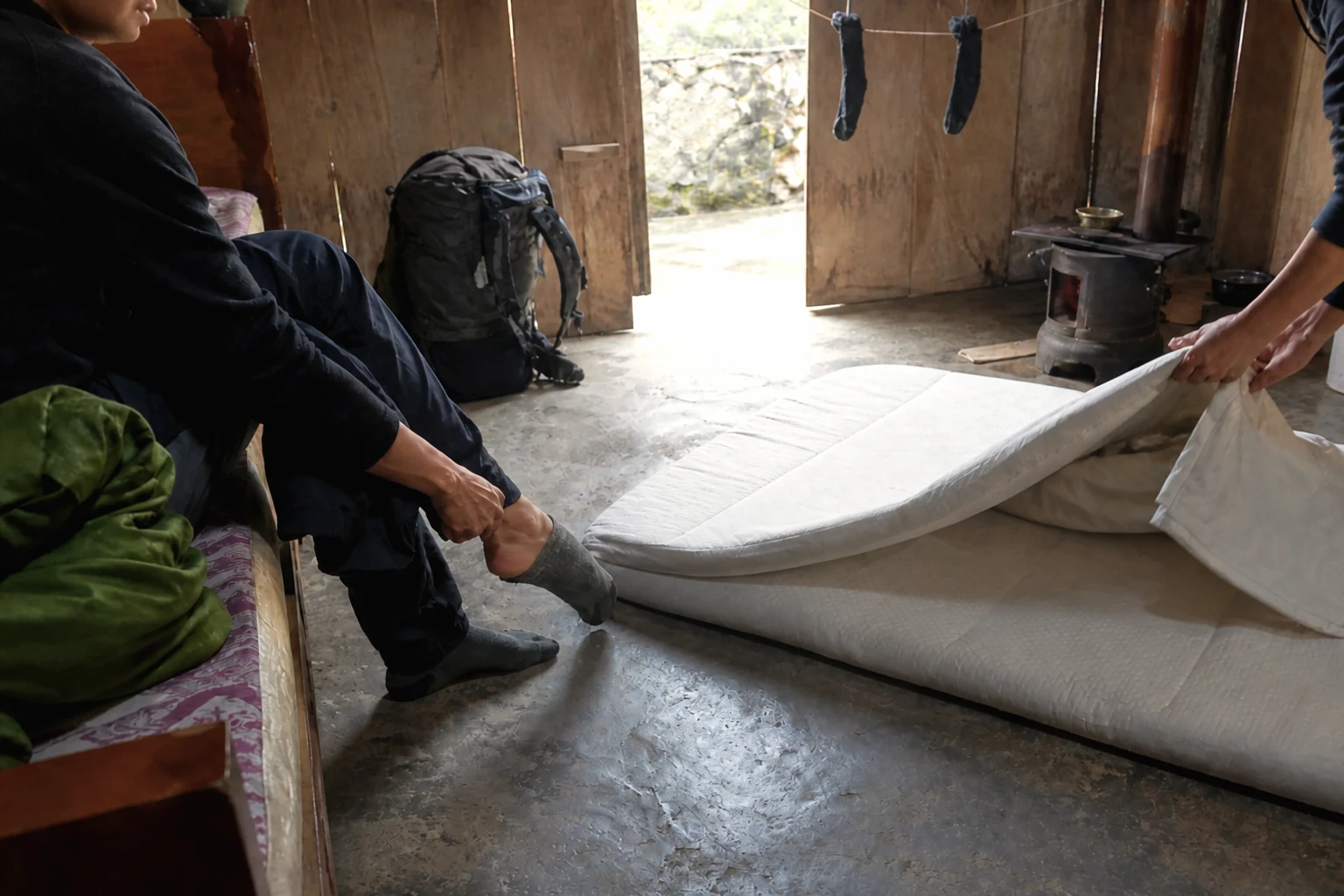
Main bag should meet you before dinner — label bag clearly at Nam Dam morning collection. Shared room, bedding, squat toilet nearby.
Contrast Night 1 Dao herbal bath culture with Night 2 simpler household rhythm — read Hmong homestay night article for detail.
- Night 2 White Hmong homestay
After the long ridge.
Guide adjustments on Day 2.
Heavy overnight rain may slow descent and delay homestay arrival — rarely cancels unless landslide risk on known section. Morning fog on ridge does not stop traverse if path firm underfoot.
Heat waves in May — earlier start, longer lunch shade stop, more water checks. Cold rain in November — layer management and pole use on slick descent.
We monitor weather daily — guest safety overrides schedule photography.
- Nam Dam to Lung Tam (3 days)
Full programme page with day-by-day schedule, pricing and enquiry via Contact.
Day 2 vs Lo Lo ridge Day 1.
Nam Dam Day 2 fifteen kilometres six to seven hours with major descent into new valley — Lo Lo Day 1 eleven kilometres five hours plateau contour. Both Moderate — Nam Dam adds valley-to-valley forest connect Quan Ba geography.
Lo Lo offers buckwheat and border sky — Nam Dam offers Twin Mountains and indigo destination Day 3. Choose by craft interest versus plateau iconography.
Hoang Su Phi ridge programmes are terrace-west — different district, Demanding options available there not in village treks hub.
- Lo Lo Chai to Then Pa (2 days)
Northern plateau with Lo Lo culture — choose if border atmosphere over weaving.
- Nam Dam to Lung Tam (3 days)
Full programme page with day-by-day schedule, pricing and enquiry via Contact.
- Village treks programme hub
Compare routes, difficulty and seasons at this collection hub.
Descent technique after ridge.
Six hundred metre descent strains knees — poles shorten step impact; zigzag when guide sets line rather than straight fall-line shortcuts. Heel strike on wet roots risks slide — flat foot placement patience.
Corn field margins after forest exit — narrow between walls; give way to farmers carrying loads uphill. Pack lunch debris packed out — ridge has no bin service.
Arrival Hmong hamlet 17:00 target — slow last kilometre still beats sprained ankle from rushing.
- Nam Dam to Lung Tam (3 days)
Full programme page with day-by-day schedule, pricing and enquiry via Contact.
Pace for mixed fitness groups.
Slowest walker sets ridge pace — faster guests enjoy photography at regroup crests, not ahead alone. Guide front and local Hmong guide rear common formation on long Day 2.
Split groups rare and safety risk — tell guide at Nam Dam dinner if member feels unwell before 06:00 start. Turning back whole group for one knee twinge is last resort — honest briefing prevents this.
Private departures two to eight trekkers — larger groups need extra guide notice at booking for ridge day.
- Nam Dam to Lung Tam (3 days)
Full programme page with day-by-day schedule, pricing and enquiry via Contact.
Common questions.
Hardest day of the trek?
Yes — Day 2 length and descent filter guests. Days 1 and 3 moderate.
Trekking poles?
Recommended for descent — we lend if stock available; bring if you use at home.
Can Day 2 shorten?
Only for injury or unsafe weather — no casual shortcut skipping Hmong homestay without rebooking logistics.
Published by Ha Giang Trekking — field knowledge from local trail guides on the routes described, checked against programme schedules and operating notes.
Journal pages are for route research and planning. Dates, prices, day-by-day schedules and enquiry sit on programme and tour pages.
Articles are published under Ha Giang Trekking. Named writer and guide bylines will be added when verified bios and consent are on file.
Operational details on programme and tour pages are published only after being checked against current operating information.
Compare published routes and open the programme or journey page when you are ready to enquire.
- Village treks — compare valley routes
Compare difficulty, seasons and walking style before you enquire.
- Nam Dam to Lung Tam (3 days)
Nam Dam to Lung Tam (3 days) — dates, pricing and enquiry.
- Nam Dam to Lung Tam — fitness, season, booking
Main walking guide for Nam Dam.
- Quan Ba trekking guide: Twin Mountains, Dao villages and valley crossings
Landscape, seasons and routes around Quan Ba.
- Hidden Valleys of Ha Giang: Where to Walk Beyond the Main Routes
Neighbouring walking country linked to Nam Dam.
- Quan Ba trekking guide: Twin Mountains, Dao villages and valley crossings
Neighbouring walking country linked to Nam Dam.
Ready to walk with local guides?
Dates, pricing and the day-by-day itinerary are on the programme page. Enquire about a departure when you are ready — we usually reply within 24 hours with availability, a clear price and what to pack.
Nam Dam to Lung Tam (3 days) — dates, pricing and itinerary