A night in the Tay Con Linh ridge shelter
Bunks, sleeping bags, wood stove, and what cold feels like at 2,100 m in shoulder season.
Cao Bo cloud forest 2D1N.
This field note supports the operating Tay Con Linh cloud-forest programme — Cao Bo → Thuong Son on the southern massif. It does not reach the 2,428 m summit marker (see Tay Con Linh from Tung San for that corridor).
- Tay Con Linh — cloud forest (2 days)
Cao Bo → Thuong Son — southern corridor, lower viewpoint (not the 2,428 m marker).
- Tay Con Linh trekking guide
Primary route chooser — two operating 2D1N corridors and retired 3-day context.
A night in the ridge shelter.
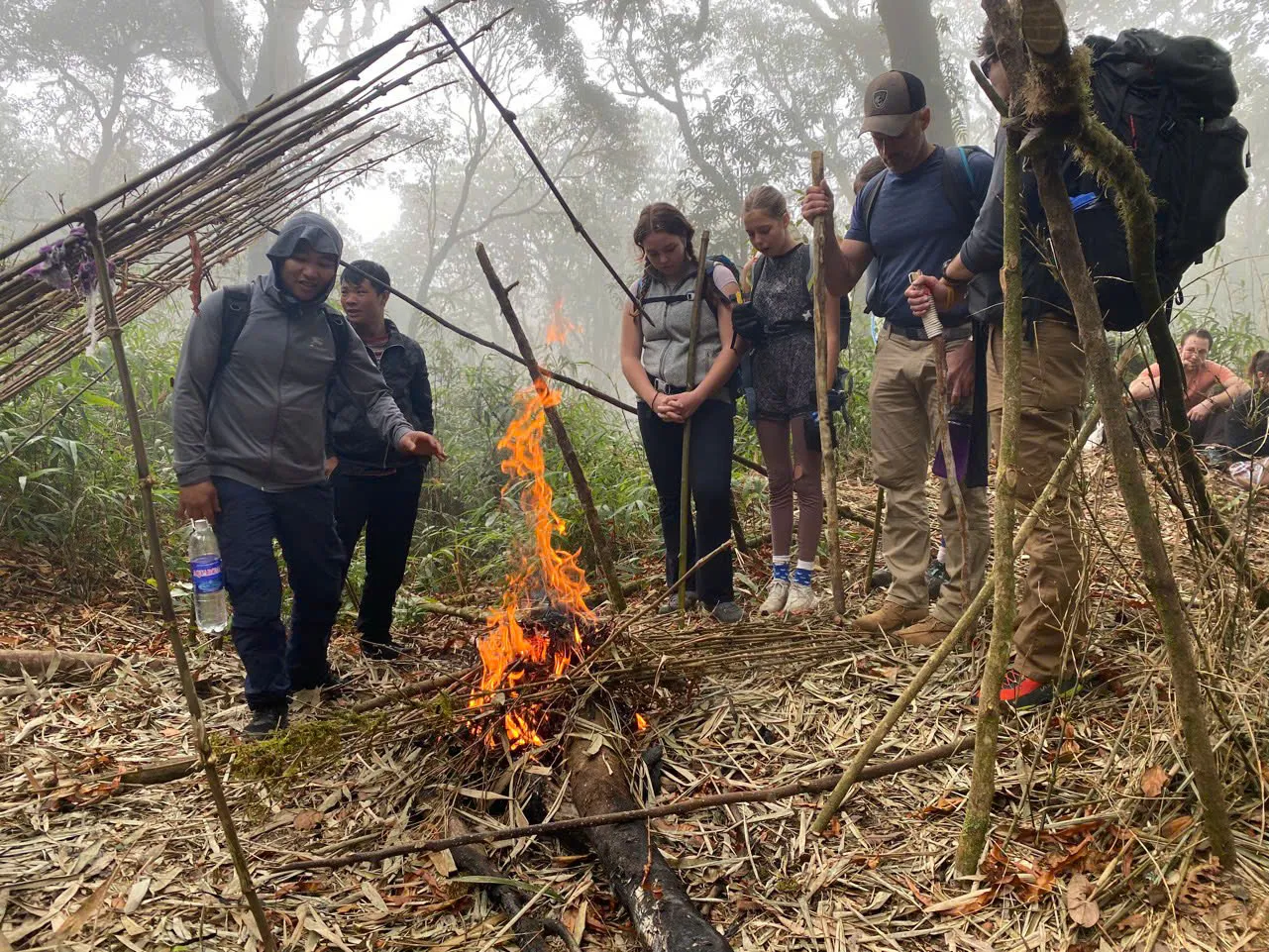
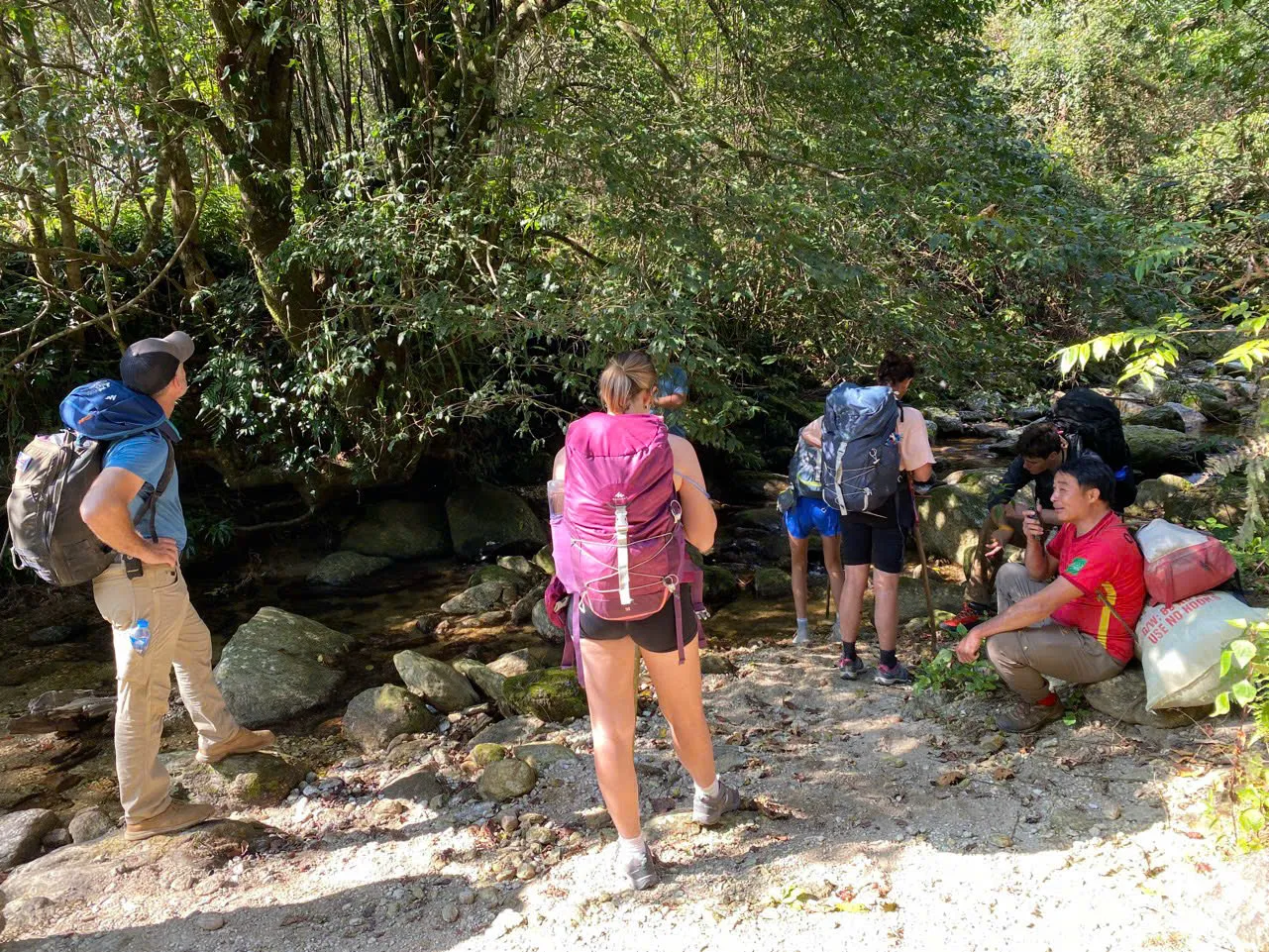
The wooden ridge shelter on the Tay Con Linh cloud-forest route sits near 2,100 m — above the cloud line on many clear evenings, exposed to wind on others. It is not a lodge. Shared bunks, sleeping bags and mats provided, squat toilet outside, wood stove for cooking and warmth, no phone signal. You arrive on Day 1 mid-afternoon and leave before dawn on Day 2 for the sunrise viewpoint walk.
Shelter nights are part of why we run this route instead of compressing the massif into a single day from Hoang Su Phi. You feel the mountain cool after dusk, wake acclimatised to thin air, and read weather from the ridge before the pre-dawn walk — advantages a same-day daylight climb from town cannot offer.
The same shelter model appears on the Kieu Lieu Ti traverse — Night 1 near the summit approach, Night 2 on the Tay Con Linh side after the long spine day. Bunk layout, sleeping bag rating and cold-management advice apply across both programmes.
- Tay Con Linh — cloud forest (2 days)
Cao Bo → Thuong Son — southern corridor, lower viewpoint (not the 2,428 m marker).
- Kieu Lieu Ti — three-day traverse
Three days across the upper spine from Ta Su Choong to Cao Bo.
Trekking operations on this route are currently unavailable, and we are not accepting bookings for it at present.
- Ridge & Cloud programmes
Compare routes, difficulty and seasons at this collection hub.
What the shelter is.
One main room with wooden bunks stacked two high along the walls. Sleeping bags rated to zero degrees Celsius, foam mats and pillows provided — you do not carry a bag on this route. Maximum group size six trekkers plus guides; the room feels full at capacity but not crowded.
Squat toilet in a small outbuilding — headlamp essential after dark. No shower; hot wash may be available in a basin if water was heated on the stove. Gas cooker supplements the wood stove for boiling water and evening meal prep.
Pack one spare dry base layer and socks in a waterproof stuff sack inside your daypack. Condensation and sweat from Day 1 climb mean the layer you wore uphill may not be the layer you want at the shelter.
- Tay Con Linh — cloud forest (2 days)
Cao Bo → Thuong Son — southern corridor, lower viewpoint (not the 2,428 m marker).
Arrival to lights out.
- 16:00 · Arrive, settle bunk, hot wash if available
- 16:30 · Layer up — fleece and insulated jacket on
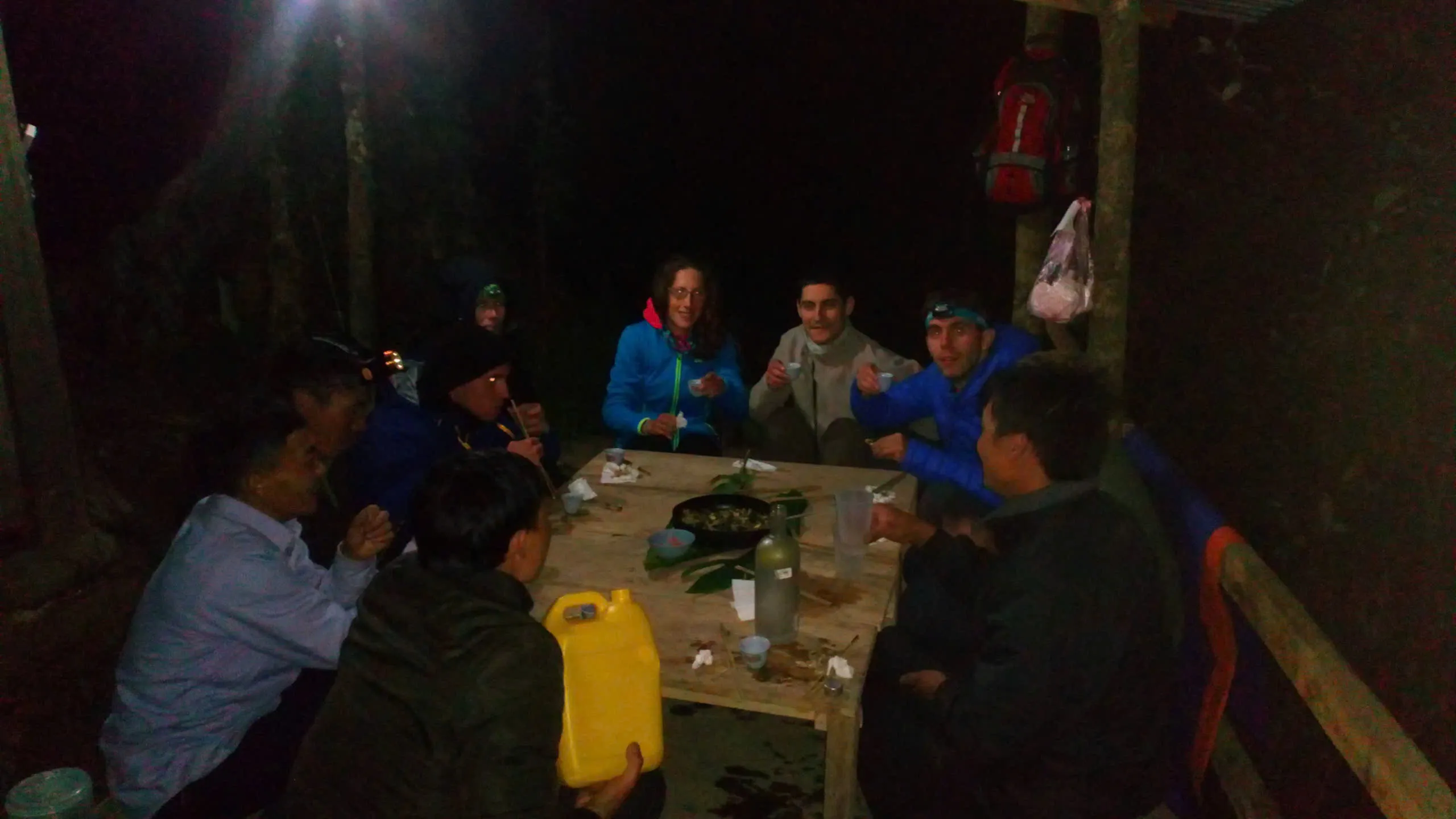
- 18:30 · Early dinner around the stove
- 21:00 · Lights out — Day 2 alarm ~04:30
Guides prepare dinner on the stove — hot soup, rice, mountain greens, ginger tea. Alcohol is not part of the shelter routine; dehydration at altitude hurts sleep quality and the pre-dawn start.
Evening conversation is quiet by design. Other groups may share the shelter in peak weeks — respect bunk allocation and keep headlamp beams angled down. Shoes stay by the door; wet boots near the stove if safe.
- Tay Con Linh — cloud forest (2 days)
Cao Bo → Thuong Son — southern corridor, lower viewpoint (not the 2,428 m marker).
What cold feels like.
From November through February, inside temperatures can approach freezing despite the stove. Wear thermals inside the sleeping bag if you run cold. A warm hat helps more than an extra blanket — most heat loss is from the head.
The wood stove heats the centre of the room; corner bunks feel colder. Guides often rotate bunk assignments so no one sleeps the same corner two nights on the Kieu Lieu traverse. On the cloud-forest route you have one night — choose the bunk your guide assigns.
Common mistake: sleeping in damp base layers from the climb. Change into dry thermals before entering the bag even if it feels like effort. Wet fabric against skin pulls heat all night.
- Two nights above the cloud line
Managing cold across two consecutive shelter nights on Kieu Lieu Ti.
Sleep at 2,100 m.
Altitude affects sleep even below summit height. You may wake once or twice — normal at 2,100 m. Pre-dawn start means total sleep is six to seven hours if you respect lights out.
Earplugs help if snoring or wind on the roof bothers you. Eye mask optional — guides use red light when moving before the group alarm.
- Pre-dawn on the upper ridge
What happens when you leave the shelter before dawn.
No phone signal.
There is no mobile coverage at the shelter. Your guide carries emergency contact protocol and satellite or radio where required by permit conditions. Tell family you will be unreachable from mid-afternoon Day 1 until the descent on Day 2.
Do not rely on messaging apps for weather checks — your guide reads ridge wind and hamlet smoke the evening before and at 04:00. Town forecasts for Ha Giang city are a poor guide for 2,100 m.
Camera batteries drain faster in cold — store spares in an inner pocket overnight, not in the daypack by the door.
- Tay Con Linh — cloud forest (2 days)
Cao Bo → Thuong Son — southern corridor, lower viewpoint (not the 2,428 m marker).
Shared bunk etiquette.
Shelter nights are communal by necessity — guides, porters on traverse routes, occasionally another small group in peak weeks. Keep gear compact on your bunk, not spread across the floor. Quiet voices after twenty-one hundred.
This is working mountain infrastructure maintained by Dao and Nung communities with forest-use rights — not a tourist hostel with ensuite rooms. Respect matches what you would show in a village homestay: shoes off inside, ask before photographing people at dinner.
If you have never shared a bunk room, the cloud-forest route is a gentle introduction compared with Kieu Lieu Ti's two consecutive nights. One night is enough to learn the rhythm without cumulative sleep debt.
- Shelter life on Tay Con Linh (Hoang Su Phi route)
Chieu Lau Thi 2402m Lodge on the Ta Su Choong cloud-sea programme — lodge accommodation, different access from Cao Bo.
Shelter-night essentials.
- Thermal base layer + spare dry socks
- Warm hat, gloves, fleece, insulated jacket
- Headlamp with spare batteries
- Small toiletry kit — wet wipes useful
- Earplugs optional
Sleeping bag, mat and pillow are provided. You do not need a liner unless you prefer one for comfort. Pack tomorrow's summit layers at the top of your bag — fumbling in pre-dawn dark wastes time and wakes others.
- Packing for trekking in Ha Giang
Layering, footwear and daypack sizing for northern Vietnam.
Shelter vs village homestay.
Hoang Su Phi terrace routes end days in Red Dao or La Chi homestays — wood-fired bath, long table, children and pigs below the stilt house. Ridge shelters trade cultural immersion for altitude and summit access. You are here for cloud and spine, not indigo dye demonstrations.
The cloud-forest route balances both: one shelter night, then Red Dao village descent and hosted lunch on Day 2. Kieu Lieu Ti is two shelter nights with no village between — full mountain immersion until Cao Bo on Day 3.
Choose shelter nights if summit dawn justifies simpler accommodation. Choose homestay routes if ethnic village life is the primary goal. Many guests walk Nam Hong or Ban Luoc first, rest, then climb Tay Con Linh.
- Tay Con Linh — cloud forest (2 days)
Cao Bo → Thuong Son — southern corridor, lower viewpoint (not the 2,428 m marker).
- Kieu Lieu Ti — three-day traverse
Three days across the upper spine from Ta Su Choong to Cao Bo.
Trekking operations on this route are currently unavailable, and we are not accepting bookings for it at present.
- Ridge & Cloud programmes
Compare routes, difficulty and seasons at this collection hub.
Dinner at altitude.
Evening meal at the shelter is functional, not fine dining — hot soup, rice, mountain greens, ginger tea prepared on the wood stove and gas cooker. Portion size is generous because Day 2 asks for early movement and long descent; eat even if altitude dulls appetite.
Dietary restrictions need advance notice at booking — plant-based guests can be accommodated with extra tofu and greens if we know before departure. Last-minute requests on the mountain depend on what porters carried.
Breakfast after the viewpoint walk is simpler than dinner but hot — sticky rice, eggs, tea. The stove that warmed the room overnight may still be cooling; do not expect espresso or fresh bread at 2,100 m.
- Tay Con Linh — cloud forest (2 days)
Cao Bo → Thuong Son — southern corridor, lower viewpoint (not the 2,428 m marker).
Pre-dawn departure prep.
Lay out summit layers on the bunk foot the night before — insulated jacket, gloves, hat, headlamp with fresh batteries checked. Pre-dawn dressing in a shared room requires red light discipline; white beams wake everyone and ruin night vision.
Guides boil water before the group alarm — hot tea in cupped hands beats cold fingers on camera buttons at the viewpoint. Use the squat toilet before leaving; no facilities on the twenty-minute ridge walk.
If wind scoured cloud overnight, add windproof shell over fleece even for a short walk — the viewpoint is exposed enough to chill stationary bodies in minutes.
Shared shelter means your alarm is everyone's alarm — pack quietly, avoid rustling plastic at 04:30, and help carry communal trash down on Day 2 when guides ask.
- Pre-dawn on the upper ridge
What the viewpoint walk feels like after this shelter night.
Common questions.
How basic is the shelter?
Very simple — wooden bunks, shared room, squat toilet outside, wood stove. Sleeping bags rated to 0 °C provided.
Can I charge devices?
No electricity at the shelter. Charge everything in Ha Giang city the night before.
Are there blankets beyond the sleeping bag?
The provided bag is rated for cold nights. Add thermals inside if you run cold — do not rely on extra blankets.
Is the shelter the same on Kieu Lieu Ti?
Same model — wooden bunks, sleeping bags, stove. Night 1 is near the summit approach; Night 2 is on the Tay Con Linh side after the spine traverse.
Published by Ha Giang Trekking — field knowledge from local trail guides on the routes described, checked against programme schedules and operating notes.
Journal pages are for route research and planning. Dates, prices, day-by-day schedules and enquiry sit on programme and tour pages.
Articles are published under Ha Giang Trekking. Named writer and guide bylines will be added when verified bios and consent are on file.
Operational details on programme and tour pages are published only after being checked against current operating information.
Compare published routes and open the programme or journey page when you are ready to enquire.
- Ridge & Cloud — compare summit programmes
Compare difficulty, seasons and walking style before you enquire.
- Tay Con Linh cloud forest (2 days)
Tay Con Linh cloud forest (2 days) — dates, pricing and enquiry.
- Tay Con Linh from Tung San (2 days)
Tay Con Linh from Tung San (2 days) — dates, pricing and enquiry.
- Tay Con Linh Summit
Trekking operations on this route are currently unavailable, and we are not accepting bookings for it at present.
Trekking operations on this route are currently unavailable, and we are not accepting bookings for it at present.
- Tay Con Linh: A Complete Guide for Trekkers
Main walking guide for Tay Con Linh.
- Hoang Su Phi Rice Terraces: A Complete Guide for Trekkers
Landscape, seasons and routes around Hoang Su Phi.
- Chieu Lau Thi: A Complete Guide for Trekkers
Neighbouring walking country linked to Tay Con Linh.
Ready to walk with local guides?
Dates, pricing and the day-by-day itinerary are on the programme page. Enquire about a departure when you are ready — we usually reply within 24 hours with availability, a clear price and what to pack.
Tay Con Linh — cloud forest (2 days) — dates, pricing and itinerary