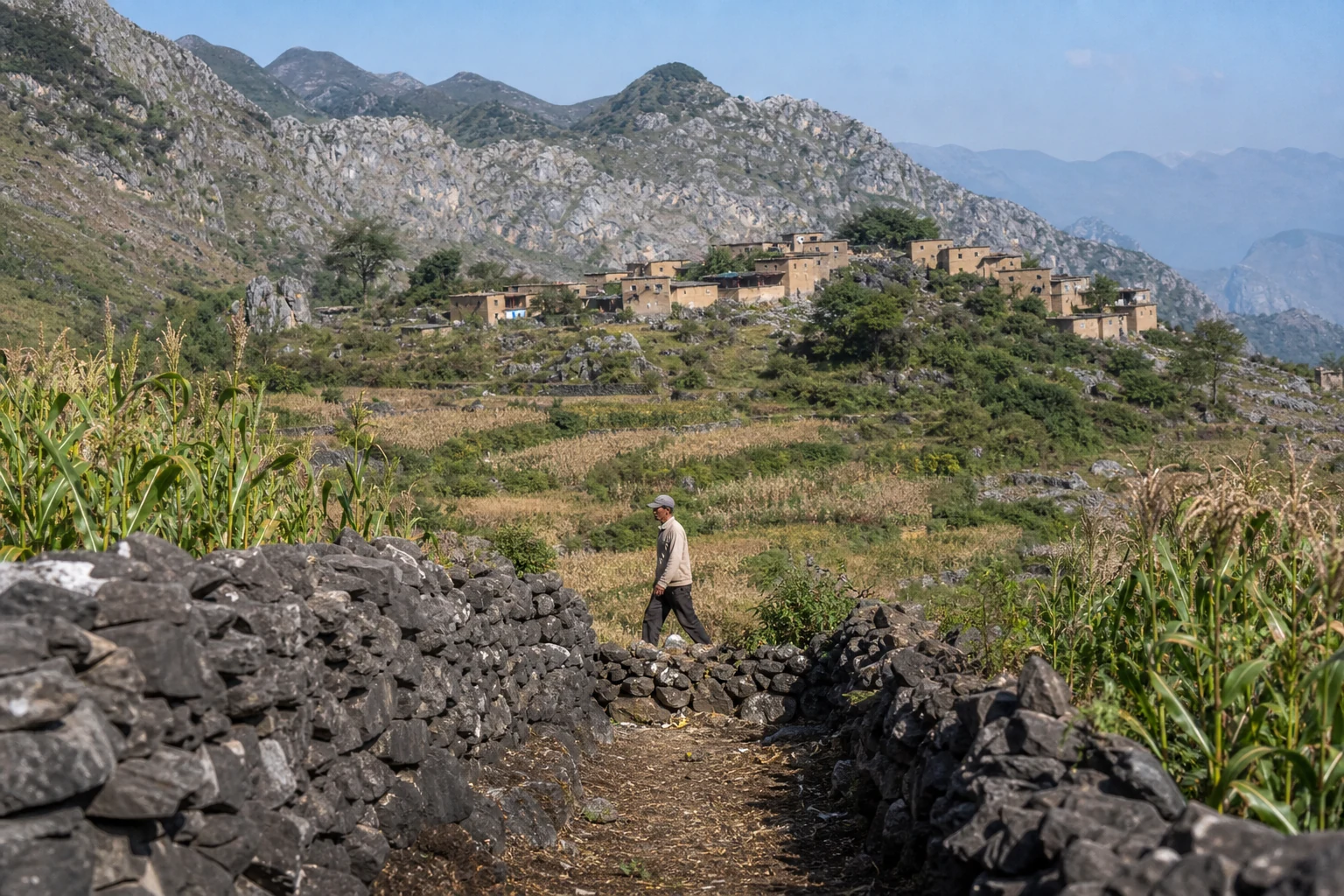
Arriving in Lo Lo Chai on foot
Morning start in Lo Lo Chai on the sold route, mud-walled houses from inside, and how walking pace differs from a flagpole coach stop.
Arriving in Lo Lo Chai on foot.
Lo Lo Chai receives day visitors from the Lung Cu flagpole road — coach groups, motorbike stops, short walks to mud-walled houses for photographs. On the sold Lo Lo Chai to Then Pa programme, Day 1 starts in the village around 08:00 — coffee, briefing, then a slow walk through mud-walled houses before the Ma Lung ridge. Visiting Lo Lo Chai at walking pace in the evening is a separate intent some travellers ask about: you see the village when families are home, quieter than mid-morning coach traffic. Night 1 on that programme is a White Hmong ridge homestay, not a universal Lo Lo house standard and not the same as every Lo Lo night.
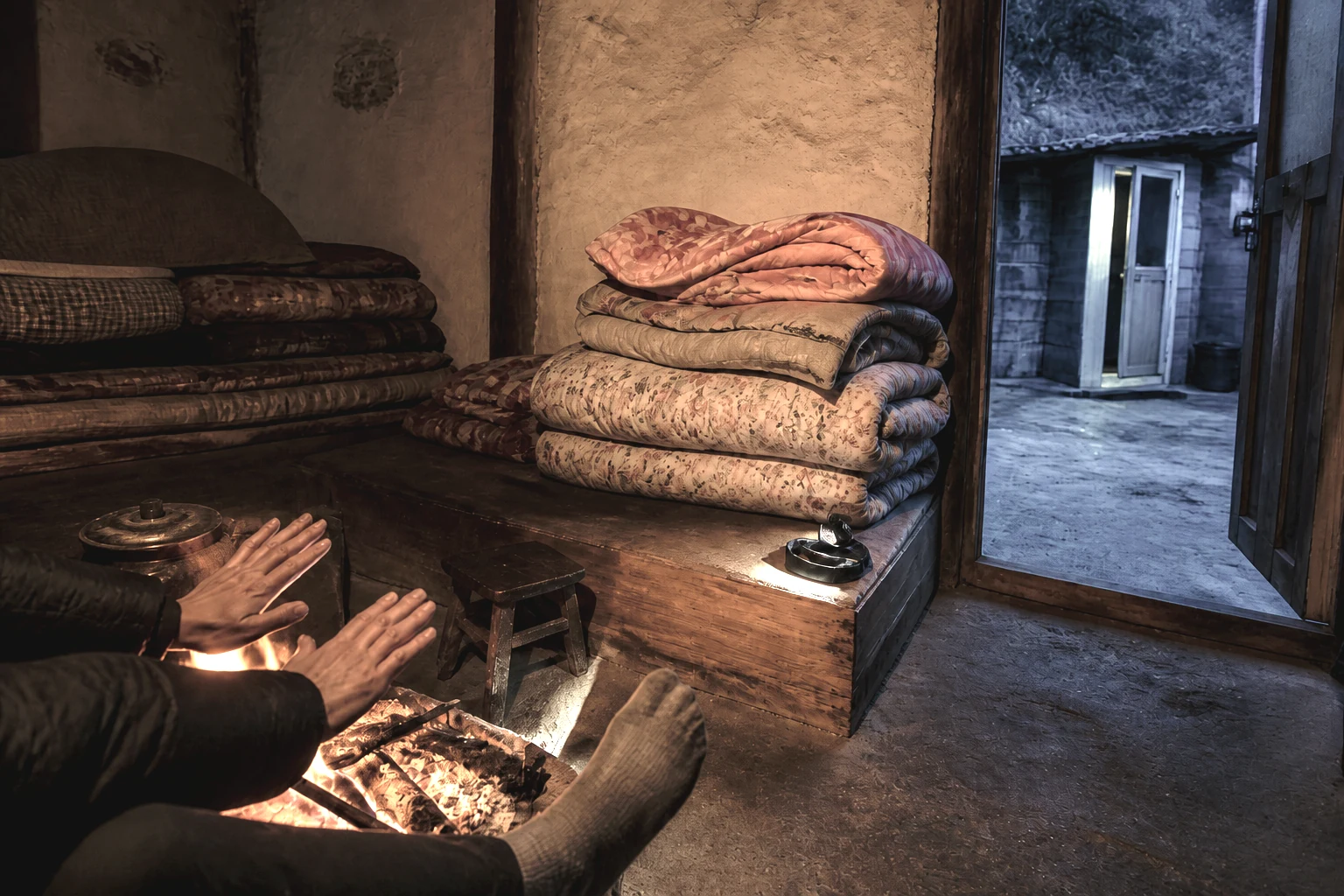
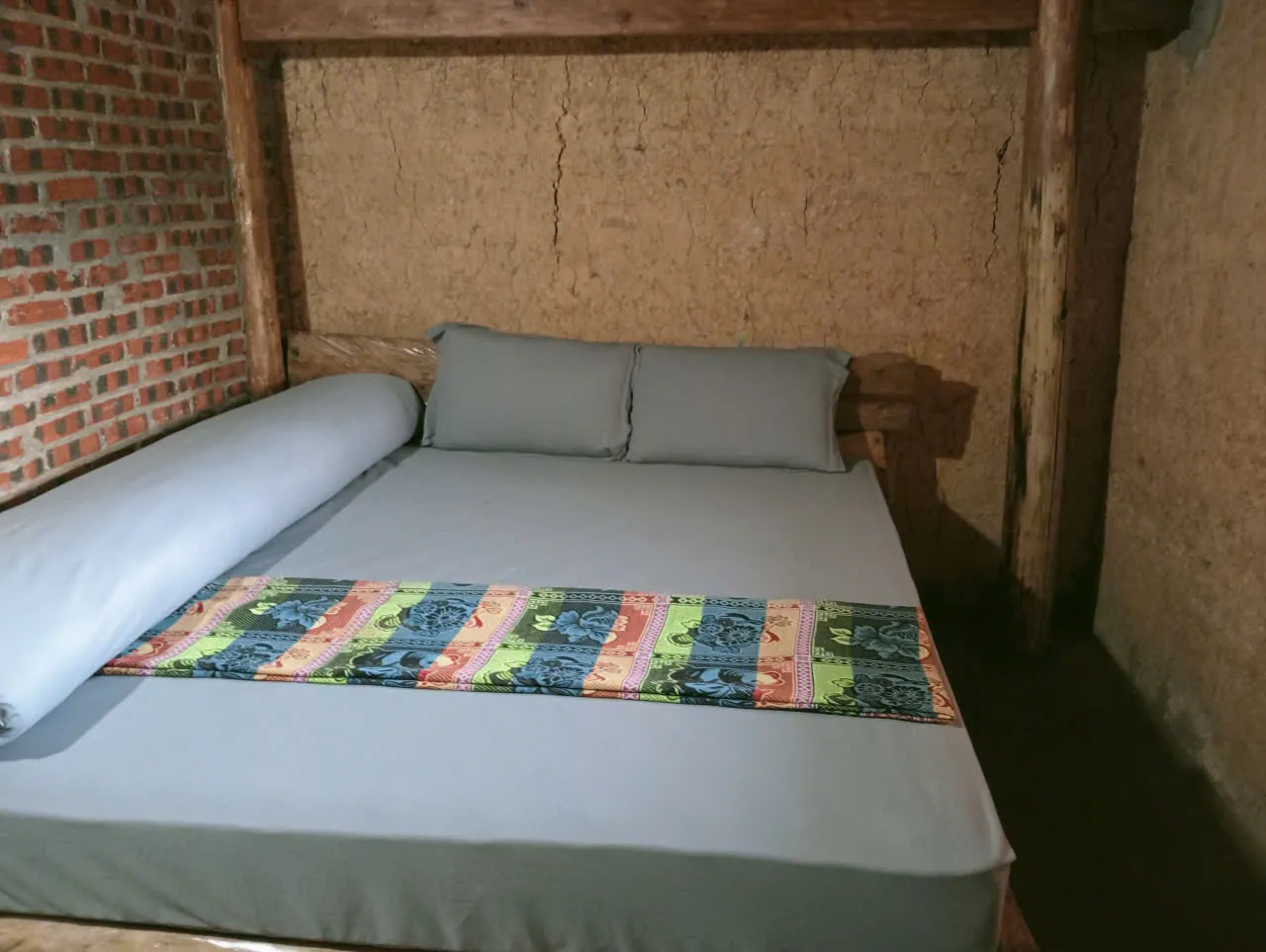
The houses are mud-walled with heavy wooden frames — cool in summer, cold in winter. You sleep on a mattress on the floor with full bedding and mosquito net; the kitchen is wood-smoke and close. Evening is short: dinner with the family, tea, early bed before the long ridge day tomorrow.
Choose this route if northern plateau atmosphere matters more than terraces or summit dawn. Choose Du Gia for an easier single day without overnight gear. Choose Nam Dam for Dao herbal culture and indigo weaving over three days.
The village treks hub at /village-treks compares Du Gia, Lo Lo Chai and Nam Dam with difficulty, distance and season tables — read it alongside this article before you enquire. Programme pages carry price, inclusions and booking forms; journal authority articles carry field detail guides use on trail. Links between stories are intentional: homestay etiquette, packing for Ha Giang and best-time articles apply across routes even when landscape differs. Tell us your wider itinerary when booking — we sequence dates and homestay allocation honestly rather than overbooking community beds in October harvest overlap.
Guides based in each valley run these routes weekly in season — they know which bridge to skip after rain, which household hosts lunch rotation, and when flagpole or cooperative crowds peak. That local judgment is part of the product, not an upsell. Fitness labels on the hub are conservative: Moderate means full days on uneven farm paths with homestay nights, not alpine technical climbing. Easy still means five or six hours walking for Du Gia. Some routes can be adapted for families and older travellers when distance, terrain and pacing are matched to the group.
When you enquire, tell us dietary needs, knee history and whether you prefer photography stops or steady pacing — guides brief host families and set realistic ridge intervals before Day 1 starts. Community homestay beds in October fill early; deposit confirms allocation rather than holding a calendar date verbally. The programme price includes insurance, permits and community contributions listed on the village trek programme page — transfers from Ha Giang city and hotels before or after remain your arrangement unless we quote them separately.
- Lo Lo Chai to Then Pa (2 days)
Full programme page with day-by-day schedule, pricing and enquiry via Contact.
- Village treks programme hub
Compare routes, difficulty and seasons at this collection hub.
Visit, Then Pa trek, or start toward Dong Van.
Visiting Lo Lo Chai at walking pace is this evening article — quieter than flagpole coach traffic, household rhythm, not a motorbike photo stop.
The current published trek is Lo Lo Chai to Then Pa: two days toward Then Pa and Lung Cu. Night 1 is a White Hmong ridge homestay — not every Lo Lo night uses one house standard.
Lo Lo Chai can also be a walking start toward Dong Van on a different limestone corridor: Khia Lia / Khe Lia, Thai Phin Tung and Ha De are progression points on that line, not extra village pages. Lung Cu stays a sibling of Lo Lo Chai — it is not inserted into the Dong Van walking day. That corridor is Day 5 of the Private Hoang Su Phi to Dong Van Hiking Journey, not this Then Pa programme.
Village connectors on the plateau mix concrete, mud and dry-stone walls — after rain they can turn slick while still being ordinary walking infrastructure, not a separate “trail attraction”.
- Lo Lo Chai to Then Pa (2 days)
Full programme page with day-by-day schedule, pricing and enquiry via Contact.
- Dong Van Karst Plateau guide
Lo Lo Chai as a start toward Dong Van.
- Ha Giang without a motorbike
- Meo Vac trekking guide
- Ma Pi Leng on foot
- Private Hoang Su Phi to Dong Van Hiking Journey
Published 7-day product using Lo Lo Chai as a start toward Dong Van.
Day 1 starts in Lo Lo Chai.
On the published two-day programme, Day 1 walking begins in Lo Lo Chai around 08:00 — coffee and briefing, pack check, then a slow walk through the village before climbing behind the church onto the Ma Lung ridge. Homestay Night 1 is White Hmong on the border plateau, not Lo Lo Chai itself; guides typically target ridge homestay arrival around 16:30, not a Lo Lo Chai dusk check-in.
Independent evening visits are different: some travellers reach Chai village in the late afternoon to skip the flagpole coach rush and see household rhythm before dark — that timing is optional field advice, not how the sold 2D1N day starts.
Photography of Lo Lo elders at doorways often waits for a spoken greeting first — your guide translates introductions. Festival and mourning households may decline cameras entirely.
- Lo Lo Chai to Then Pa (2 days)
Full programme page with day-by-day schedule, pricing and enquiry via Contact.
Mud-walled Lo Lo houses.
Lo Lo architecture in Chai village is distinct from Hmong or Tay house styles — thick mud walls, heavy timber frames, low doorways, hearth as the warm centre in cold months. The language is a isolate that fascinates linguists; for guests the experience is sensory — smoke, tea, children practising script at the table when school is in session.
Cool in summer means the house feels comfortable on warm afternoons; cold in winter means thermals essential from November through February — nights can drop below 5 °C at homestay altitude even when Lo Lo Chai afternoon was mild.
You are not visiting a museum village — satellite dishes and school uniforms sit beside traditional walls. Respect ordinary domestic life; ask before entering courtyards that look private.
Dry-stone walls around homesteads are common on the northern plateau — they sit directly on the karst and mark gardens and livestock space, not a decorative fence for tourists.
- Cold nights on the northern plateau
What to pack for homestay nights Oct – Mar.
Walking in vs flagpole coach stop.
The Lung Cu flagpole road delivers hundreds of day visitors to viewpoints near Chai village — parking fills by mid-morning, coaches turn around by afternoon. Our route inverts that flow: walk through Chai at walking pace, sleep Hmong homestay on the ridge, descend Then Pa on Day 2 and climb flagpole steps before 10:00 when coach groups from Dong Van arrive.
Guide field note: Day 2 flagpole timing targets 09:30 from Then Pa — common mistake is arriving after 10:00 when steps crowd with day-trippers.
Is Lo Lo Chai very touristy? The village sees day visitors — our route uses quieter hours, hosted meals, no coach groups on the ridge night.
- Lo Lo Chai to Then Pa (2 days)
Full programme page with day-by-day schedule, pricing and enquiry via Contact.
- Village treks programme hub
Compare routes, difficulty and seasons at this collection hub.
Dinner, tea and early bed.
Evening at Lo Lo Chai or the first ridge approach ends early — family dinner around 19:00 when hosted in village context, sticky rice, corn, mountain greens, smoked pork, rice wine in small cups. Declining alcohol is normal; one sip enough before tomorrow's ridge.
Tea after dinner; conversation through the guide. Toilets may be outside the main house — headlamp essential from first night. Shoes off indoors; modest sleepwear for shared accommodation on Night 1 Hmong homestay.
Early bed is practical — Day 1 ridge is eleven kilometres; Day 2 starts before coach crowds. Earplugs help in shared rooms.
- Homestay etiquette
Shoes, gifts and quiet hours.
- Eating with Hmong hosts
Table customs on Night 1.
White Hmong Night 1.
Night 1 homestay is White Hmong on the Ma Lung ridge — shared room, mattress, bedding, mosquito net, wood-fired hot water when available, squat toilet outside. Up to six guests in one room is normal. Main bag travels by motorbike; carry daypack with warm layer and toiletries.
The Hmong homestay differs from Lo Lo Chai architecture — corn storage beside the house, indigo cloth drying, open ridge views toward the border plateau. Welcome tea on arrival around 16:30; hot wash before dinner.
From November to February pack thermals, warm hat, socks — we provide extra blankets; hearth is warmest place after dinner.
- Lo Lo Chai to Then Pa (2 days)
Full programme page with day-by-day schedule, pricing and enquiry via Contact.
Photography in Lo Lo Chai.
Dusk light on mud walls is the classic frame — shoot before dinner when hosts are still in courtyard work. Morning departure through the village offers quieter lanes if you overnight nearby before Day 1.
Border infrastructure photography is sensitive elsewhere on the route — ask guide before cameras near checkpoints on Day 2.
- Lo Lo Chai practical guide
Full packing and booking advice.
What Day 1 ridge brings.
Tomorrow crosses the Ma Lung ridge through Hmong fields — eleven kilometres, five hours walking, picnic lunch on the ridge, buckwheat in October and November, mustard flowers in February. Stone paths turn slick after rain — broken-in shoes with grip essential.
Views open north toward the Chinese border — wide plateau sky and working farms. Rest stops at water points families use, not the windiest crest. Arrival at the White Hmong homestay around 16:30 follows the Day 1 ridge schedule — not a Lo Lo Chai dusk arrival.
Read the ridge article for hour-by-hour detail — this evening is for rest, not route planning on your phone; patchy signal in Chai village.
- The ridge from Lo Lo Chai to Then Pa
Day 1 and Day 2 trail detail.
Passport and plateau entry.
Foreign travellers need Ha Giang province entry permit for the northern plateau — we include permit guidance in booking confirmation; bring passport. Then Pa and Lung Cu sit inside the open zone for foreign travellers — no special border permit beyond ordinary plateau paperwork.
Passport may be checked at the flagpole area on Day 2 — carry it in daypack, not main bag on motorbike transfer. Do not walk toward military installations or unmarked border paths — stay with the group.
- Walking near Lung Cu
Permits and etiquette near the border zone.
Lo Lo household rhythm.
Lo Lo families maintain mud-walled houses and a language isolate — children may study Vietnamese at school while elders speak Lo Lo at home. Do not ask hosts to perform language for recordings without explicit consent.
Evening chores continue around guests — pig feeding, firewood, indigo thread preparation if season aligns. Sitting quietly with tea while household works is participation, not boredom.
Homestay in Chai context may be hosted Lo Lo family before ridge climb or integrated village walk depending week — guide confirms at briefing; cultural respect same either way.
- Lo Lo Chai to Then Pa (2 days)
Full programme page with day-by-day schedule, pricing and enquiry via Contact.
Pack check before ridge tomorrow.
Daypack ready tonight — warm layer top of pack, headlamp batteries checked, water bottle empty for morning fill. Main bag labelled for motorbike transfer to Night 1 Hmong homestay while you walk ridge tomorrow.
Modest sleepwear for shared room — long sleeves in cold months. Toiletries in dry bag — squat toilet outside. Phone charged for photos Day 1 ridge; power bank optional.
Sleep early — 08:00 departure through village after breakfast; no late night in Dong Van town if you drove in same day.
- Lo Lo Chai practical guide
Full two-day kit list.
Common questions.
Do we sleep in Lo Lo Chai?
On the published Then Pa programme, Day 1 begins and walks through Lo Lo Chai; Night 1 homestay is White Hmong on the ridge. That is not a universal Lo Lo accommodation pattern. A different corridor can start in Lo Lo Chai and walk toward Dong Van — that is not this programme.
Are independent evening visits quieter than coach hours?
Often quieter than mid-morning flagpole coach traffic — but that is optional visit timing, not the sold programme start around 08:00 in Lo Lo Chai. You still share paths with locals — not a private village hire.
Lo Lo language?
Hosts speak Lo Lo and Vietnamese; your guide translates. Do not ask guests to perform language for cameras.
Published by Ha Giang Trekking — field knowledge from local trail guides on the routes described, checked against programme schedules and operating notes.
Journal pages are for route research and planning. Dates, prices, day-by-day schedules and enquiry sit on programme and tour pages.
Articles are published under Ha Giang Trekking. Named writer and guide bylines will be added when verified bios and consent are on file.
Operational details on programme and tour pages are published only after being checked against current operating information.
Compare published routes and open the programme or journey page when you are ready to enquire.
- Village treks — compare valley routes
Compare difficulty, seasons and walking style before you enquire.
- Lo Lo Chai to Then Pa (2 days)
Lo Lo Chai to Then Pa (2 days) — dates, pricing and enquiry.
- Private Hoang Su Phi to Dong Van Hiking Journey
Private Hoang Su Phi to Dong Van Hiking Journey — full itinerary and enquiry.
- Lung Cu Northern Frontier
Lung Cu Northern Frontier — full itinerary and enquiry.
- Lo Lo Chai to Then Pa — booking and fitness
Main walking guide for Lo Lo Chai.
- Dong Van Karst Plateau: A Practical Guide for Trekkers
Landscape, seasons and routes around Dong Van Karst Plateau.
- Lung Cu: Vietnam's Northern Frontier for Trekkers
Neighbouring walking country linked to Lo Lo Chai.
- Dong Van Karst Plateau: A Practical Guide for Trekkers
Neighbouring walking country linked to Lo Lo Chai.
- Meo Vac trekking guide: villages, markets and Ma Pi Leng access
Neighbouring walking country linked to Lo Lo Chai.
Ready to walk with local guides?
Dates, pricing and the day-by-day itinerary are on the programme page. Enquire about a departure when you are ready — we usually reply within 24 hours with availability, a clear price and what to pack.
Lo Lo Chai to Then Pa (2 days) — dates, pricing and itinerary