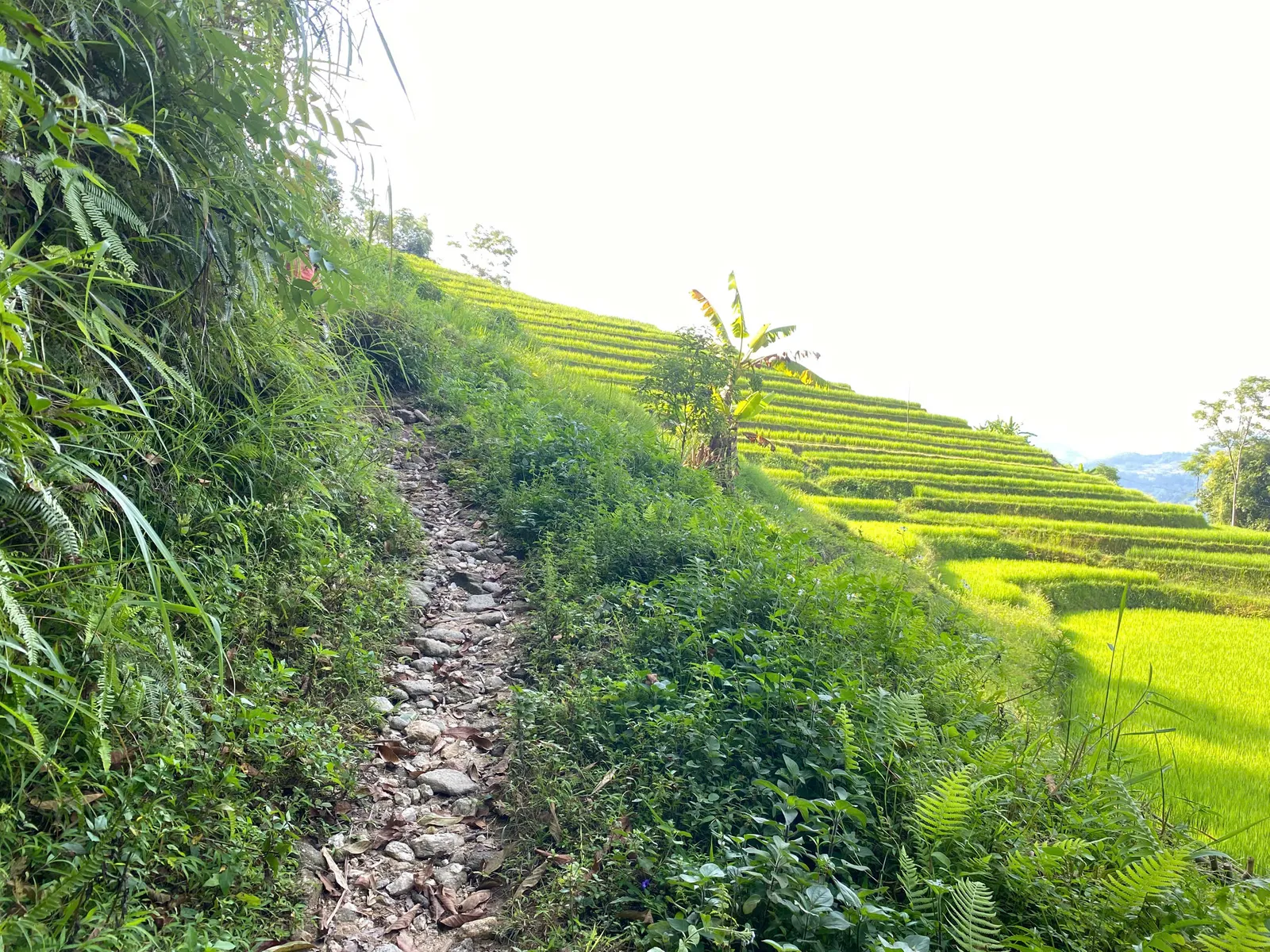
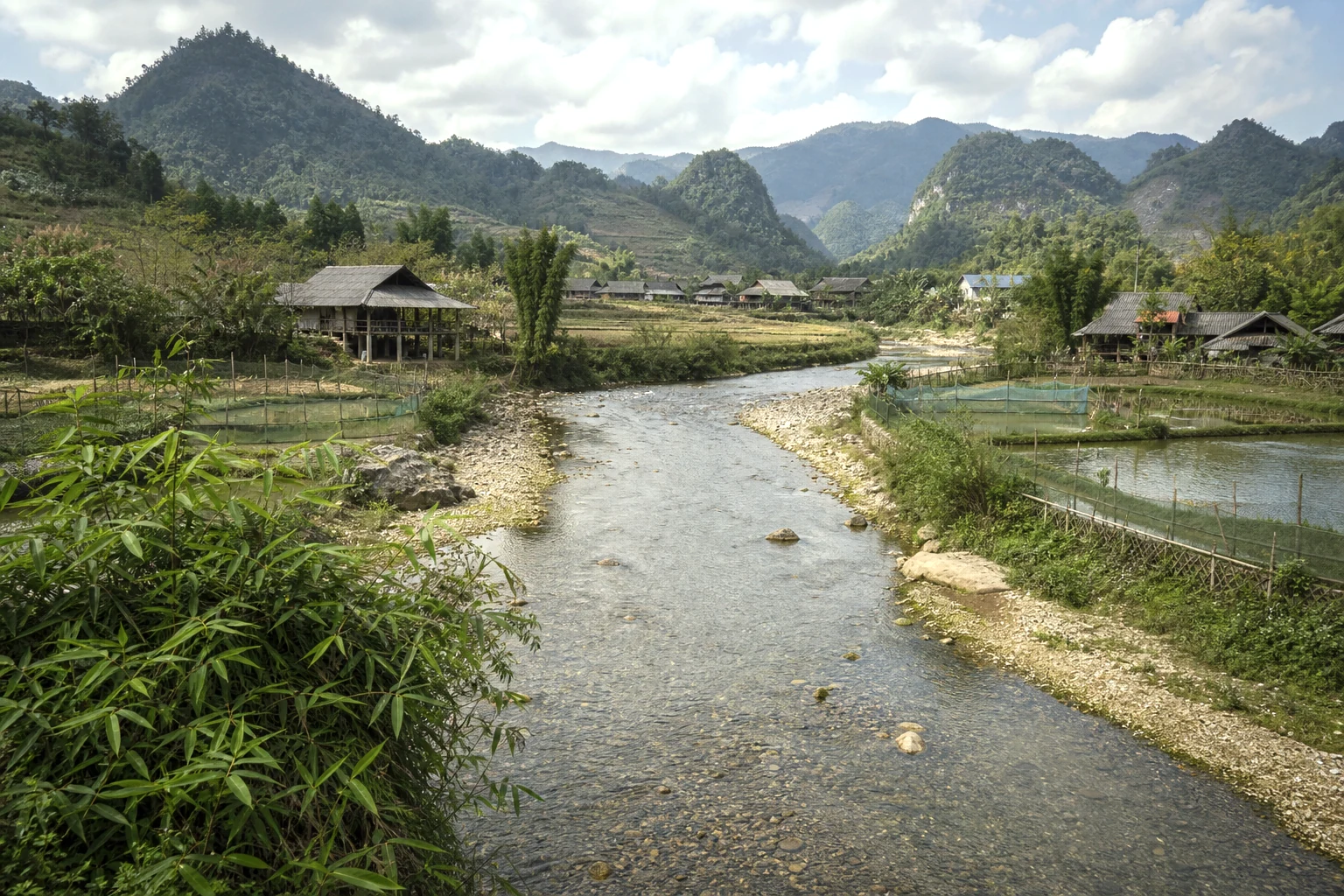
How guides read weather on the Nam Hong ridge
When viewpoints get skipped, how hamlet contacts beat town forecasts, and typical guide adjustments.
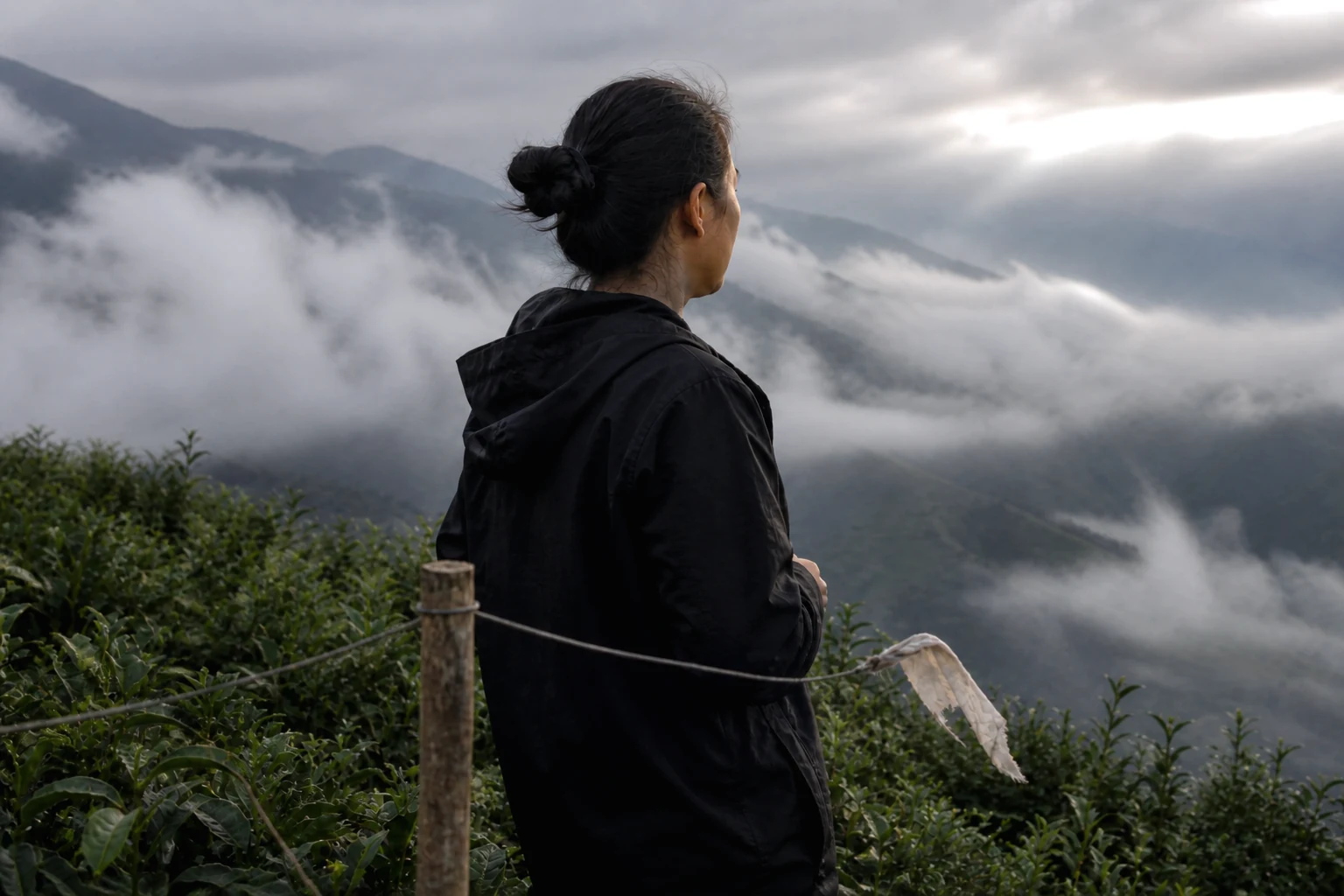
How guides read weather on the ridge.
The published Nam Hong schedule assumes fair weather and a fit group. On trail, the Red Dao lead guide and English-speaking lead coordinate — slower pace, skipped viewpoint, or earlier lunch are outcomes guests see; hamlet contacts and crest-line wind inform decisions guests do not.
Hoang Su Phi town forecasts understate ridge wind and overstate valley rain. Your guide checks with homestay contacts the evening before Day 2. A dry town morning can still mean cloud locked on the Nam Pien ridge by afternoon.
Trust the local guide on visibility calls — they walk these ridges weekly and know which crests funnel wind without views.
- Nam Hong to Ho Thau (2 days)
Full programme page with day-by-day schedule, pricing and enquiry via Contact.
- Hoang Su Phi programme hub
Compare routes, difficulty and seasons at this collection hub.
Afternoon ridge calls.
Light rain overnight still means full descent to Ho Thau on Day 2 — but sunrise viewpoint may be skipped if forest is slick. Afternoon cloud on Day 1 ridge still means homestay arrival — extended ridge photography stops are what get cut first.
Guest fatigue on Day 1 may bring earlier homestay arrival — homestay dinner and bath are never skipped for extra kilometres. Heat waves in May and June may shift to an earlier Day 1 start to avoid midday ridge crossing.
Wind picks up after 15:00 — guides rest on lee sides, not exposed crests. If cloud rolls from Ho Thau side, pace slows; route unchanged.
- Nam Hong to Ho Thau (2 days)
Full programme page with day-by-day schedule, pricing and enquiry via Contact.
Viewpoint decisions.
Day 2 alarm roughly 05:30 unless overnight rain prioritises forest safety over cloud photography. Guides read stars through stilt-house gaps at bedtime — visible stars usually mean on-schedule wake-up.
If rain fell overnight, slippery cardamom matters more than a grey horizon — viewpoint skipped, breakfast unchanged, descent pace conservative.
Clear valleys still justify the short uphill walk — westward terrace view when cloud sea does not form.
- Cloud morning and Day 2
Full dawn-to-pickup arc.
Hamlet contacts vs town apps.
- Overnight rain → slower cardamom descent, viewpoint may be skipped
- Strong afternoon wind on ridge → earlier homestay arrival if cloud closed in
- Hamlet contacts inform evening forecasts — town apps misread valley fog
- June–August daily rain → timing adjustments, not automatic cancellation
March through May and September through November are reliable windows. Best months for harvest terraces below the path: September–November.
No phone signal at homestay — guide carries emergency protocol. Weather decisions are made guide-to-guide and guide-to-host, not from tourist apps alone.
- Best time to trek Ha Giang
Province-wide seasonal patterns.
Typical guide adjustments.
Still walk the route: full descent to Ho Thau after light overnight rain; homestay arrival on cloudy Day 1 afternoons; earlier Day 1 starts in heat waves. May skip or shorten: sunrise viewpoint when forest is slick; extended ridge photography when pace slips; extra ridge kilometres before dark when guests are fatigued.
The route does not change for light cloud — only pace, stops and wake-up time adjust. Severe weather is rare in the published seasons; safety calls stay with the lead guide.
English-speaking lead explains adjustments at breakfast or on trail — ask if unsure why pace changed.
- Nam Hong to Ho Thau (2 days)
Full programme page with day-by-day schedule, pricing and enquiry via Contact.
What guests should do.
Report blisters, knee pain or dizziness early — pace adjusts to the slowest walker when disclosed. Do not push for ridge photo stops when guides are watching the clock toward homestay arrival.
Pack rain shell accessible, not at bottom of daypack. Two litres water capacity in hot weeks. Tell us knee or back history at booking — prevention beats on-trail negotiation.
Declining rice wine at dinner is normal — dehydration affects next morning's descent judgment.
- Tea hills and ridge walking
Day 1 terrain where afternoon wind builds.
When weather is most predictable.
November frost possible above 1,500 m — pack warm layer for homestay and dawn viewpoint. July and August monitored for slippery stone — Tay Con Linh summits do not run in storm season; Nam Hong may still run with adjustments.
Allow two clear calendar days in September and October — homestay allocation tightest when harvest groups overlap.
- Nam Hong to Ho Thau (2 days)
Full programme page with day-by-day schedule, pricing and enquiry via Contact.
- Hoang Su Phi programme hub
Compare routes, difficulty and seasons at this collection hub.
Visibility and cloud.
Twenty-metre visibility on afternoon ridge does not cancel the walk — pace slows, homestay time holds. Extended photography when cloud closed in is the adjustment guests notice most.
Clear town morning plus afternoon ridge cloud is normal — valley fog rises while town stays bright. Trust hamlet evening reports over phone weather apps.
Wind without view still moves you forward — crests that funnel wind without scenery are why rest stops sit on lee sides.
- Nam Hong to Ho Thau (2 days)
Full programme page with day-by-day schedule, pricing and enquiry via Contact.
Heat waves and monsoon.
May and June heat waves trigger earlier Day 1 starts — midday ridge crossing avoided when possible. Daily rain June through August still allows walking with shell layers and timing shifts; Tay Con Linh summits do not run in storm season, but Nam Hong ridge may proceed when forest descent remains safe.
November frost above 1,500 m — pack hat and gloves for dawn viewpoint even if Day 1 felt warm. Woodsmoke and clear mornings in cold months reward walkers who pack one more layer than town suggests.
Harvest September through October tightens homestay beds — weather is usually stable but booking lead time matters as much as cloud forecasts.
- Nam Hong to Ho Thau (2 days)
Full programme page with day-by-day schedule, pricing and enquiry via Contact.
- Hoang Su Phi programme hub
Compare routes, difficulty and seasons at this collection hub.
Guide communication on trail.
English-speaking lead translates terrain and household questions; Red Dao lead sets line and pace. If you do not understand why the group paused, ask — often it is cloud movement, wind on a crest, or a household dog ahead on the path.
Adjustments are communicated at breakfast or water stops, not as surprises at road pickup. If you hoped for extended photography on Day 1 ridge, negotiate at morning briefing when guides can plan homestay arrival honestly.
Emergency protocol exists for injury and severe weather — non-emergency discomfort should surface early so pace adjusts before the forest descent on Day 2.
- Nam Hong to Ho Thau (2 days)
Full programme page with day-by-day schedule, pricing and enquiry via Contact.
When plans change fully.
Cancellations are rare in published seasons — adjustments are normal. Storms threatening safety are the threshold for full reroute or delay; your guide carries emergency contact protocol.
Patchy signal at Nam Hong trailhead; none at homestay. Decisions are made with local knowledge, not tourist weather widgets.
Travel insurance covering trekking to 2,000 m is on the practical checklist — standard for this route's elevation.
- Nam Hong to Ho Thau (2 days)
Full programme page with day-by-day schedule, pricing and enquiry via Contact.
Limits of prediction.
Multi-day ridge forecasts from town or phone apps misread valley fog — reliable windows are same-day and overnight from hamlet contacts your guide phones after dinner.
Storms threatening safety are rare in published seasons; timing adjustments are normal. Cancellation threshold is guide-led, not guest frustration with mist.
March through May flower weeks add pollen and haze — not rain, but reduced long terrace visibility afternoon.
- Nam Hong to Ho Thau (2 days)
Full programme page with day-by-day schedule, pricing and enquiry via Contact.
Fatigue signals.
Quiet walker on afternoon ridge Day 1 often needs water, not encouragement to speed up. Guides watch pace and conversation together.
Knee pain disclosed at breakfast Day 2 triggers slower forest descent — not route change. Ankle history from booking note is reviewed at dinner Day 1.
Trust skip of viewpoint when rain fell — it is forest safety, not stinginess about cloud.
- Nam Hong to Ho Thau (2 days)
Full programme page with day-by-day schedule, pricing and enquiry via Contact.
Midday heat May–June.
Heat waves shift Day 1 start earlier — ridge before lunch, homestay before hottest hours. Midday ridge crossing avoided when guides can schedule around it.
Shell layer still needed for afternoon wind even when morning felt hot — evaporative cooling on crests.
Water capacity two litres minimum in these months — guides carry extra but personal bottle should be full at briefing.
- Nam Hong to Ho Thau (2 days)
Full programme page with day-by-day schedule, pricing and enquiry via Contact.
October booking pressure.
Harvest October overlaps terrace day walks and both Nam Hong and Ban Luoc homestay networks — two to four weeks lead time is realistic, not conservative.
Homestay allocation in Nam Pien is the bottleneck, not van seats — send dates early when fixed.
Small groups of two to four ease host kitchen load and ridge interval — worth stating preference when enquiring.
- Nam Hong to Ho Thau (2 days)
Full programme page with day-by-day schedule, pricing and enquiry via Contact.
- Hoang Su Phi programme hub
Compare routes, difficulty and seasons at this collection hub.
Ridge names matter.
Guides name crests and hamlets as pace references — when guide says Ho Thau side cloud, that is direction and weather, not metaphor.
Lee side rest stops are geographic choices learned from childhood walking — not random shade breaks.
Trust local lead when English-speaking guide concurs — disagreement between guides is rare and resolved before guests notice.
- Nam Hong to Ho Thau (2 days)
Full programme page with day-by-day schedule, pricing and enquiry via Contact.
Rain gear on ridge.
Shell in hip pocket or pack top — afternoon ridge wind often arrives before visible rain. Pack cover for daypack during forest descent after overnight rain.
Wet boots at homestay dry slowly overnight — spare socks matter more than spare shirt for 05:30 start comfort.
Guide may shorten viewpoint, not issue rain gear — come prepared from town.
- Nam Hong to Ho Thau (2 days)
Full programme page with day-by-day schedule, pricing and enquiry via Contact.
Common questions.
Do you cancel for rain?
Daily rain in summer usually means timing adjustments, not cancellation. Safety-threatening storms are different — we contact you.
Can I insist on the sunrise viewpoint?
Guide has final call on slick forest safety. Most clear mornings include the walk.
How far ahead is weather known?
Reliable same-day and overnight from hamlet contacts; multi-day forecasts are indicative only.
What wind speed stops the ridge walk?
No fixed number — experience on these crests determines when cloud and wind close views without safe footing.
Published by Ha Giang Trekking — field knowledge from local trail guides on the routes described, checked against programme schedules and operating notes.
Journal pages are for route research and planning. Dates, prices, day-by-day schedules and enquiry sit on programme and tour pages.
Articles are published under Ha Giang Trekking. Named writer and guide bylines will be added when verified bios and consent are on file.
Operational details on programme and tour pages are published only after being checked against current operating information.
Ready to walk with local guides?
Dates, pricing and the day-by-day itinerary are on the programme page. Enquire about a departure when you are ready — we usually reply within 24 hours with availability, a clear price and what to pack.
Nam Hong to Ho Thau (2 days) — dates, pricing and itinerary