Tay, Hmong and Dao in a single Du Gia walk
What changes between hamlets on the forest path — language, crops, house style and the pace of the day.
Tay, Hmong and Dao in one Du Gia walk.
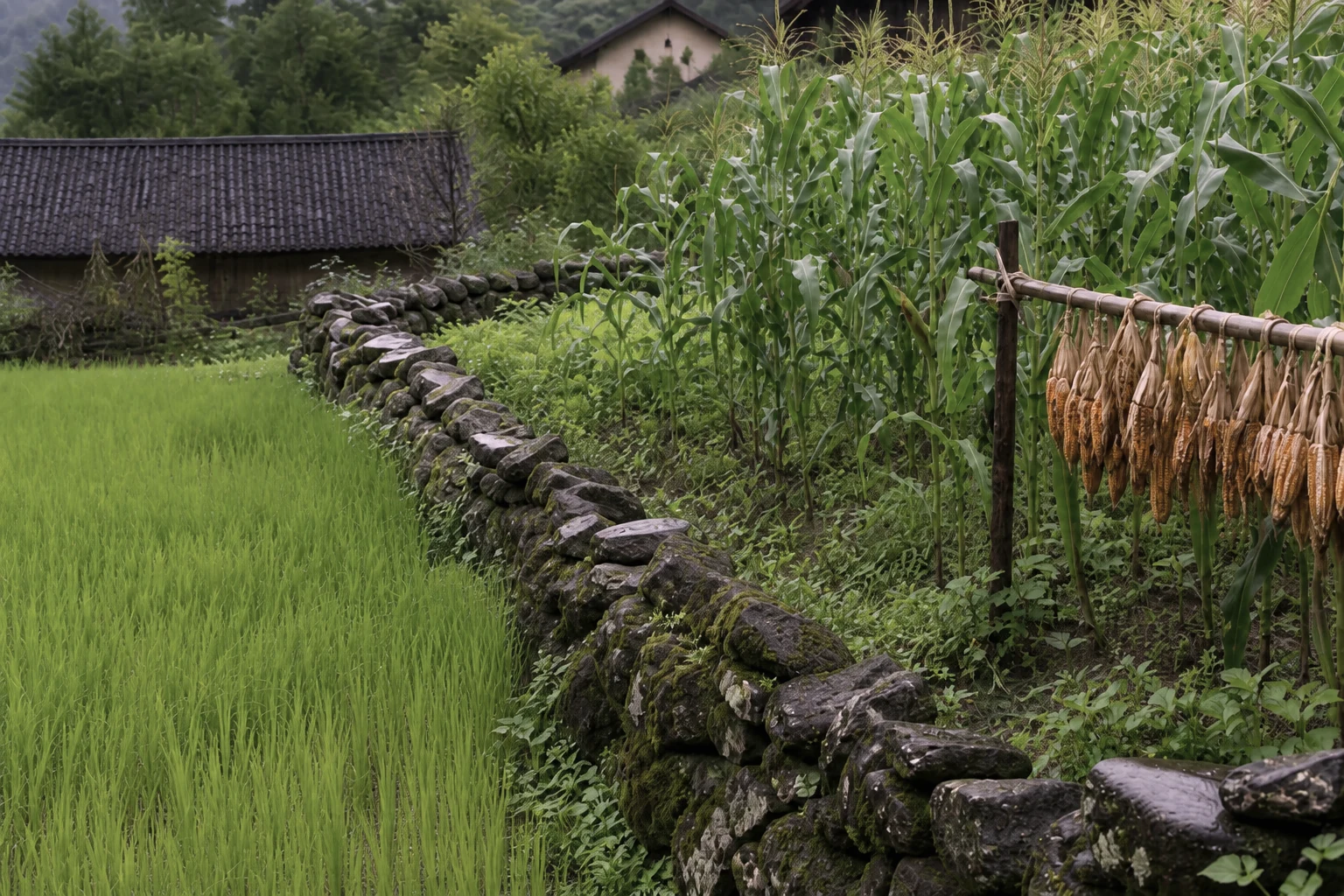
Ha Giang holds more than twenty ethnic groups; Du Gia concentrates three of them into a single day's walking distance. The Tay village at Du Gia centre runs on rice and river fish at the valley floor — stilt houses, fish ponds, irrigation channels the whole commune maintains together. An hour upstream the path enters Hmong country: steep corn slopes, different dress, a harder climb on stone paths that turn slick after rain.
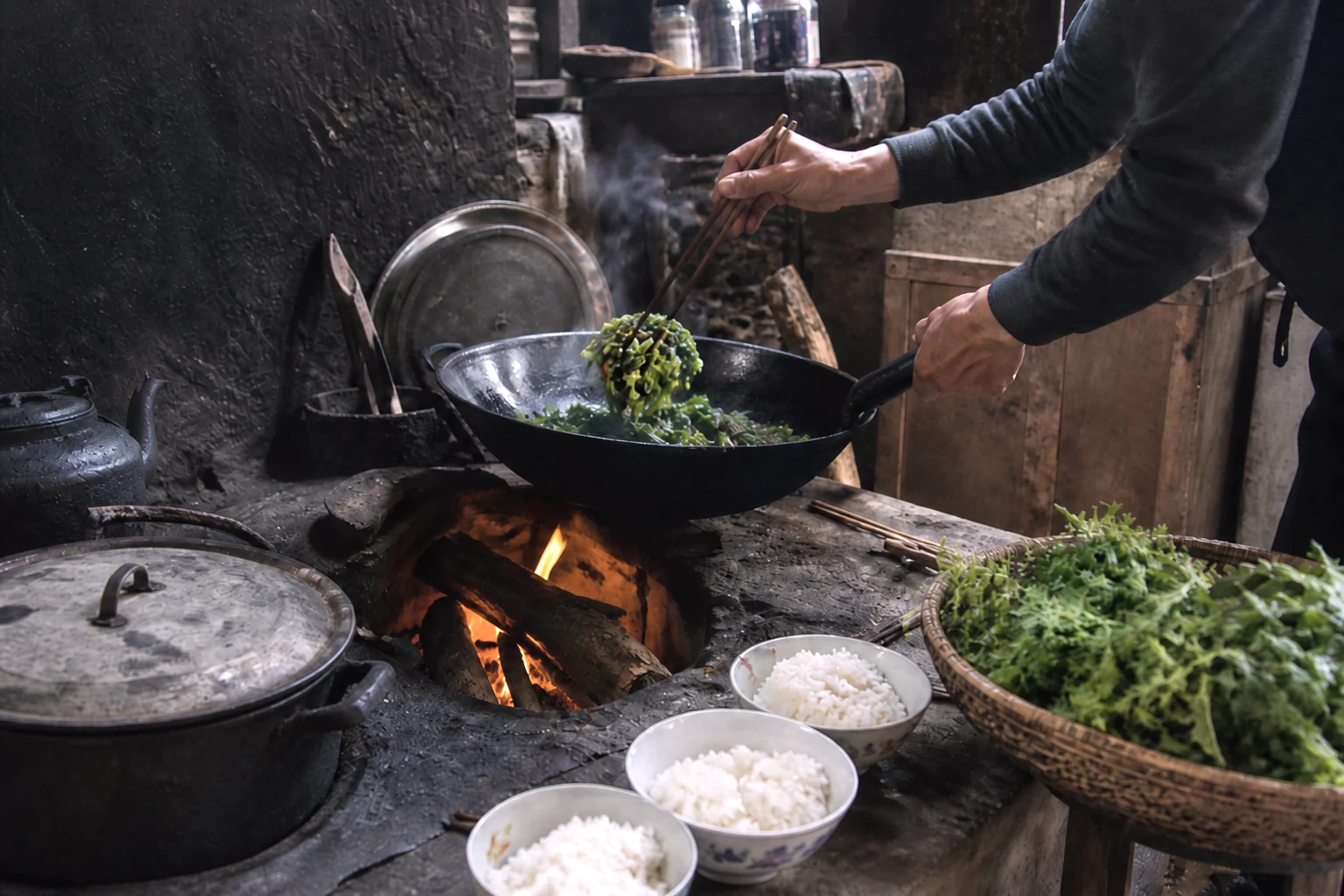
The Dao hamlet on the forest ridge grows mixed vegetables and keeps a quieter household rhythm — herbal plots beside the stilt house, drying racks for roots and leaves, a kitchen that hosts lunch when your group arrives at midday. Your guide translates between all three communities not as performance but because lunch is hosted in whichever village you reach when hunger and path align.
The ethnic mix is the point of the walk. You are not visiting a single minority village — you are crossing the boundaries where farming patterns, language and house styles change on the ground.
The village treks hub at /village-treks compares Du Gia, Lo Lo Chai and Nam Dam with difficulty, distance and season tables — read it alongside this article before you enquire. Programme pages carry price, inclusions and booking forms; journal authority articles carry field detail guides use on trail. Links between stories are intentional: homestay etiquette, packing for Ha Giang and best-time articles apply across routes even when landscape differs. Tell us your wider itinerary when booking — we sequence dates and homestay allocation honestly rather than overbooking community beds in October harvest overlap.
Guides based in each valley run these routes weekly in season — they know which bridge to skip after rain, which household hosts lunch rotation, and when flagpole or cooperative crowds peak. That local judgment is part of the product, not an upsell. Fitness labels on the hub are conservative: Moderate means full days on uneven farm paths with homestay nights, not alpine technical climbing. Easy still means five or six hours walking for Du Gia. Some routes can be adapted for families and older travellers when distance, terrain and pacing are matched to the group.
When you enquire, tell us dietary needs, knee history and whether you prefer photography stops or steady pacing — guides brief host families and set realistic ridge intervals before Day 1 starts. Community homestay beds in October fill early; deposit confirms allocation rather than holding a calendar date verbally. The programme price includes insurance, permits and community contributions listed on the village trek programme page — transfers from Ha Giang city and hotels before or after remain your arrangement unless we quote them separately.
- Du Gia — forest villages (1 day)
Full programme page with day schedule, pricing and enquiry via Contact.
- Village treks programme hub
Compare routes, difficulty and seasons at this collection hub.
The Tay valley floor.
Morning departure walks out through the Tay centre of Du Gia — working village paths past the schoolyard, tea at a neighbour's if your guide knows the household, irrigation channels that feed both rice and fish ponds. Tay families here farm the valley floor where water is reliable; house style is stilt construction with open kitchens and pig pens below.
The pace is deliberately slow in the first hour — guides want you to read the valley before the climb into Hmong fields. Photography of children at the schoolyard waits for teacher or parent permission; your guide handles introductions.
Du Gia town market mornings are a useful introduction if your dates align — trade still happens on foot between communes even when tourists arrive by motorbike from Yen Minh.
- Du Gia — forest villages (1 day)
Full programme page with day schedule, pricing and enquiry via Contact.
Upstream into Hmong fields.
After the river crossings the path climbs through Hmong corn and cassava — steeper slopes, different house clusters, women in embroidered dress on market days. Corn is the staple crop here where rice terraces cannot reach; the climb is the morning's hardest section but still within Easy difficulty if you walk regularly at home.
Your local Hmong or Dao guide leads on this section — the English-speaking lead guide translates terrain questions and keeps the group interval tight. Rest stops happen at shade and water points the families use, not at the windiest crest.
Ask before photographing people at work in the fields — a spoken greeting first is expected. Harvest weeks in September and October mean more activity on the slopes; planting season in May and June shows different labour rhythms.
- Walking the Du Gia valley
Full day schedule and fitness notes.
The Dao ridge hamlet.
The Dao hamlet sits above the Hmong slopes on a forest ridge — mixed vegetables, herbal gardens beside stilt houses, a household rhythm quieter than the valley floor. Lunch is hosted here when the morning walk lands at the right hour — typically 11:30 to 12:30 arrival after the climb.
Dao communities in Du Gia maintain herbal knowledge alongside farming — not the same scale as Dao Cham in Nam Dam, but the same respect for plants beside the path. Your guide explains which leaves are kitchen herbs and which are medicine when hosts invite you into the garden.
House style shifts again — heavier wooden frames, different shrine calendar, indigo cloth less prominent than in Red Dao country west of here. Eat what is offered at lunch; dietary requests should have been confirmed at booking so the kitchen can prepare tofu or extra greens.
- A slow lunch in the Du Gia valley
Host kitchen etiquette and meal pacing.
How boundaries feel on foot.
Ethnic geography in Du Gia is distance, not border posts — you cross from Tay to Hmong to Dao by following the river and ridge, not by visiting a cultural centre. Language changes between hamlets; your guide translates greetings and lunch invitations. House style, crop mix and path maintenance shift within a few kilometres.
This is why one day works here and would feel rushed in a larger district — the communities live close enough that a single circuit respects each without reducing anyone to a photo stop.
- Du Gia — forest villages (1 day)
Full programme page with day schedule, pricing and enquiry via Contact.
Local and lead guide roles.
The programme includes an English-speaking trekking guide based in Du Gia plus a local Hmong or Dao village guide on the trail. The local guide leads on farm paths and translates at field edges; the lead guide holds safety, pace and dietary communication with the lunch host.
Guides who grew up in the valley know which footbridge to skip after rain and which household is hosting lunch that week — community rotation, not a fixed restaurant. Tell us at booking about photography preferences, children's pace, or vegetarian requirements so both guides arrive prepared.
Tips are at your discretion — shared between lead guide, local guide and host family contribution is common practice when guests ask how to thank the village.
- Du Gia — forest villages (1 day)
Full programme page with day schedule, pricing and enquiry via Contact.
Photography across three communities.
The three-hamlet arc offers distinct frames — valley rice and fish ponds, Hmong corn slopes, Dao ridge herbs and stilt kitchens. Afternoon light on the river contour is often the best landscape hour if morning was hazy.
Festival and mourning households may decline photography entirely — your guide signals without embarrassing guests.
- Du Gia practical guide
Full packing and photography advice.
Day walk vs homestay routes.
Three villages in one day gives breadth — ethnic variety without overnight gear. Lo Lo Chai and Nam Dam programmes trade breadth for depth: homestay nights, longer ridge days, colder evenings. Du Gia suits guests who have one clear calendar day or want an easy introduction before committing to multi-day village treks.
Nam Dam Night 1 is Dao Cham herbal culture over two hours of gentle walking — different depth, different valley. Lo Lo Chai Night 1 is mud-walled Lo Lo houses at the northern edge — different landscape entirely.
Many guests walk Du Gia first, then book Lo Lo Chai or Nam Dam on a return trip — we sequence dates when you enquire.
- Lo Lo Chai to Then Pa (2 days)
Two-day northern plateau walk with homestay — choose if overnight culture matters more than an easy day.
- Nam Dam to Lung Tam (3 days)
Three-day Quan Ba crossing with Dao herbal homestay and Lung Tam indigo cooperative.
- Du Gia — forest villages (1 day)
Full programme page with day schedule, pricing and enquiry via Contact.
- Village treks programme hub
Compare routes, difficulty and seasons at this collection hub.
Common mistakes on this circuit.
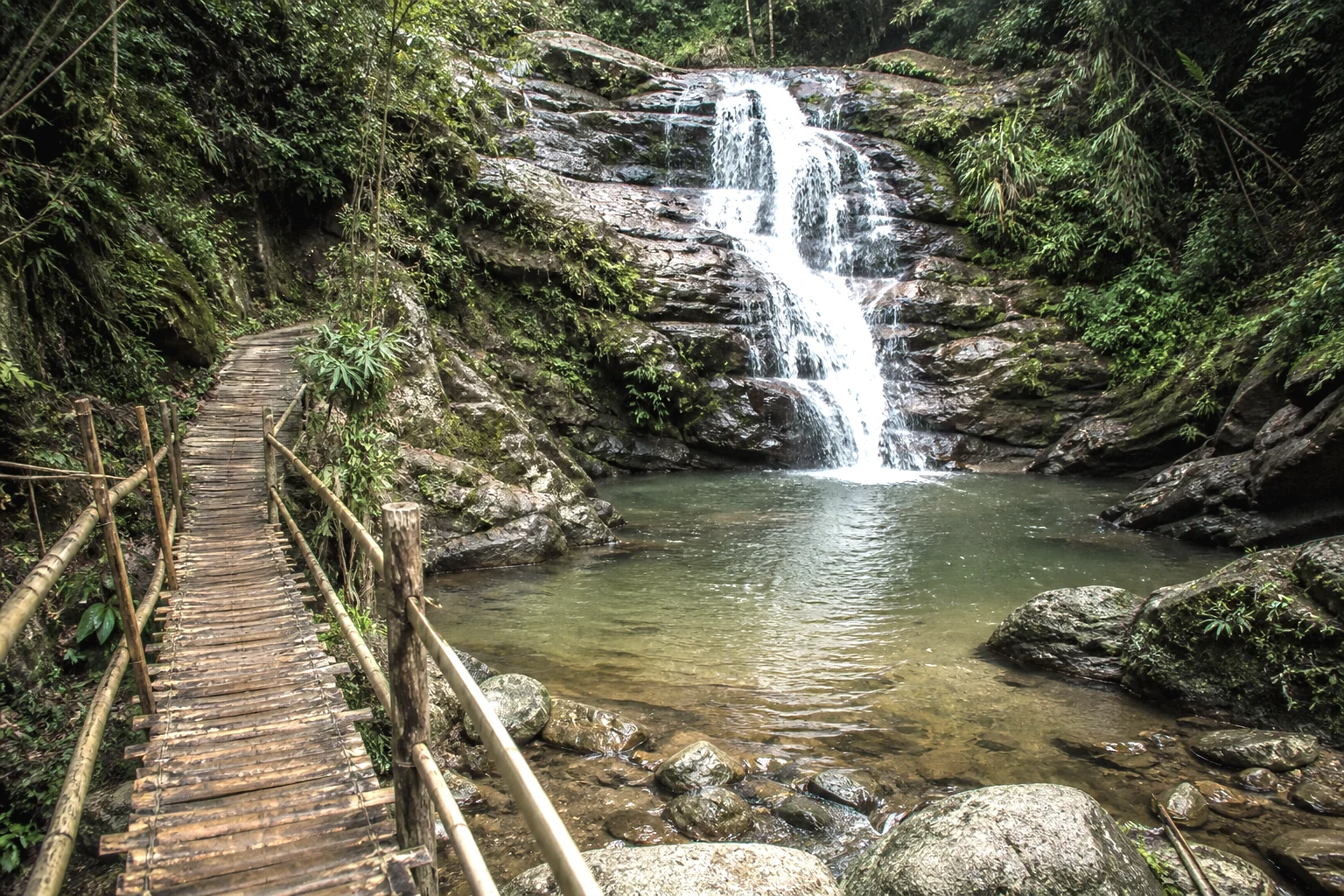
Wearing sandals for river sections — trail shoes with grip matter on wet bridges and muddy bamboo paths. Packing a heavy camera bag without a proper daypack — fifteen to twenty litres with water and rain shell is the right size.
Assuming Du Gia is flat — Easy here still means five to six hours with a moderate climb to the Dao hamlet. Underestimating drive time from Ha Giang city — plan a valley or town night before trekking day.
- Du Gia — forest villages (1 day)
Full programme page with day schedule, pricing and enquiry via Contact.
Greetings and language shifts.
Tay, Hmong and Dao households may greet in different languages — your guide translates every introduction at field edges and at the lunch table. Learn one Tay thank-you if you wish; do not perform minority language for social media without host comfort.
Children may follow foreigners briefly on village paths — smile and wave; guide sets boundaries if play becomes path blocking. Elders deserve spoken greeting before portraits — especially Dao ridge hosts whose kitchen you will enter for lunch.
Market vendors in Du Gia centre may speak Vietnamese only — small cash purchases before or after the walk support valley economy without confusing them with trekking programme inclusions.
- Homestay etiquette
Table and photography norms at lunch hosts.
Schoolyards and working paths.
Morning paths pass schoolyards when term is in session — ask teacher permission before photographing children. Irrigation channels beside Tay rice are communal maintenance — stepping on wall crests for photos can damage water control; guides redirect to safe viewpoints.
Hmong corn slopes show seasonal labour — planting, weeding, harvest — each month different activity level. Dao ridge gardens mix kitchen vegetables and herbal plants — hosts may invite you to taste mint or shiso; ask before picking.
These are working paths used daily for pigs, firewood and market trips — not wilderness trail etiquette. Yield to loaded motorbikes on wider sections; single-file on narrow bamboo corridor.
- Du Gia — forest villages (1 day)
Full programme page with day schedule, pricing and enquiry via Contact.
Common questions.
Do we enter all three hamlets?
Yes — Tay centre morning, Hmong fields mid-morning, Dao ridge for lunch. Exact path may adjust in wet weather but all three communities remain on the circuit.
Is lunch always in the Dao hamlet?
Usually — the ridge hamlet is timed for midday. Occasionally a Tay or Hmong host hosts instead when community schedules require — same meal style, same slow pace.
Can children manage the Hmong climb?
Confident walkers from about ten complete the route regularly. Tell us at booking if you need a shorter upper loop.
Published by Ha Giang Trekking — field knowledge from local trail guides on the routes described, checked against programme schedules and operating notes.
Journal pages are for route research and planning. Dates, prices, day-by-day schedules and enquiry sit on programme and tour pages.
Articles are published under Ha Giang Trekking. Named writer and guide bylines will be added when verified bios and consent are on file.
Operational details on programme and tour pages are published only after being checked against current operating information.
Compare published routes and open the programme or journey page when you are ready to enquire.
- Village treks — compare valley routes
Compare difficulty, seasons and walking style before you enquire.
- Du Gia forest villages (1 day)
Du Gia forest villages (1 day) — dates, pricing and enquiry.
- Hidden Valleys Slow Trek
Hidden Valleys Slow Trek — full itinerary and enquiry.
- Hidden Valleys of Ha Giang: Where to Walk Beyond the Main Routes
Main walking guide for Du Gia.
- Yen Minh trekking guide: southern valleys, forests and Du Gia walks
Landscape, seasons and routes around Yen Minh.
- Nam Dam to Lung Tam — fitness, season, booking
Neighbouring walking country linked to Du Gia.
- Yen Minh trekking guide: southern valleys, forests and Du Gia walks
Neighbouring walking country linked to Du Gia.
- Quan Ba trekking guide: Twin Mountains, Dao villages and valley crossings
Neighbouring walking country linked to Du Gia.
Ready to walk with local guides?
Dates, pricing and the day-by-day itinerary are on the programme page. Enquire about a departure when you are ready — we usually reply within 24 hours with availability, a clear price and what to pack.
Du Gia — forest villages (1 day) — dates, pricing and itinerary