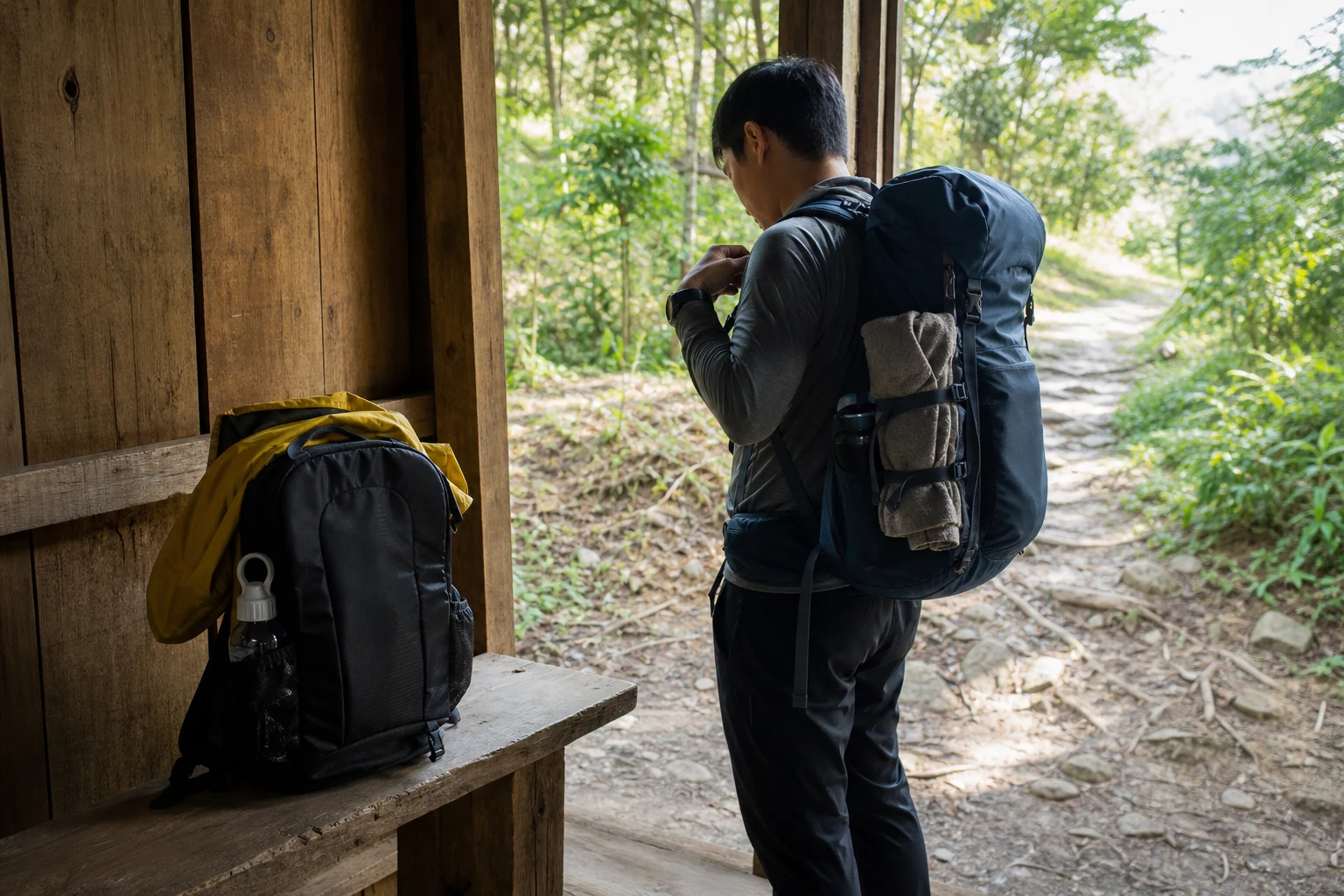
Photography on the Chieu Lau Thi ridge
Exposure settings for cloud sea, cold batteries at dawn, and framing the summit crest without blocking the group.
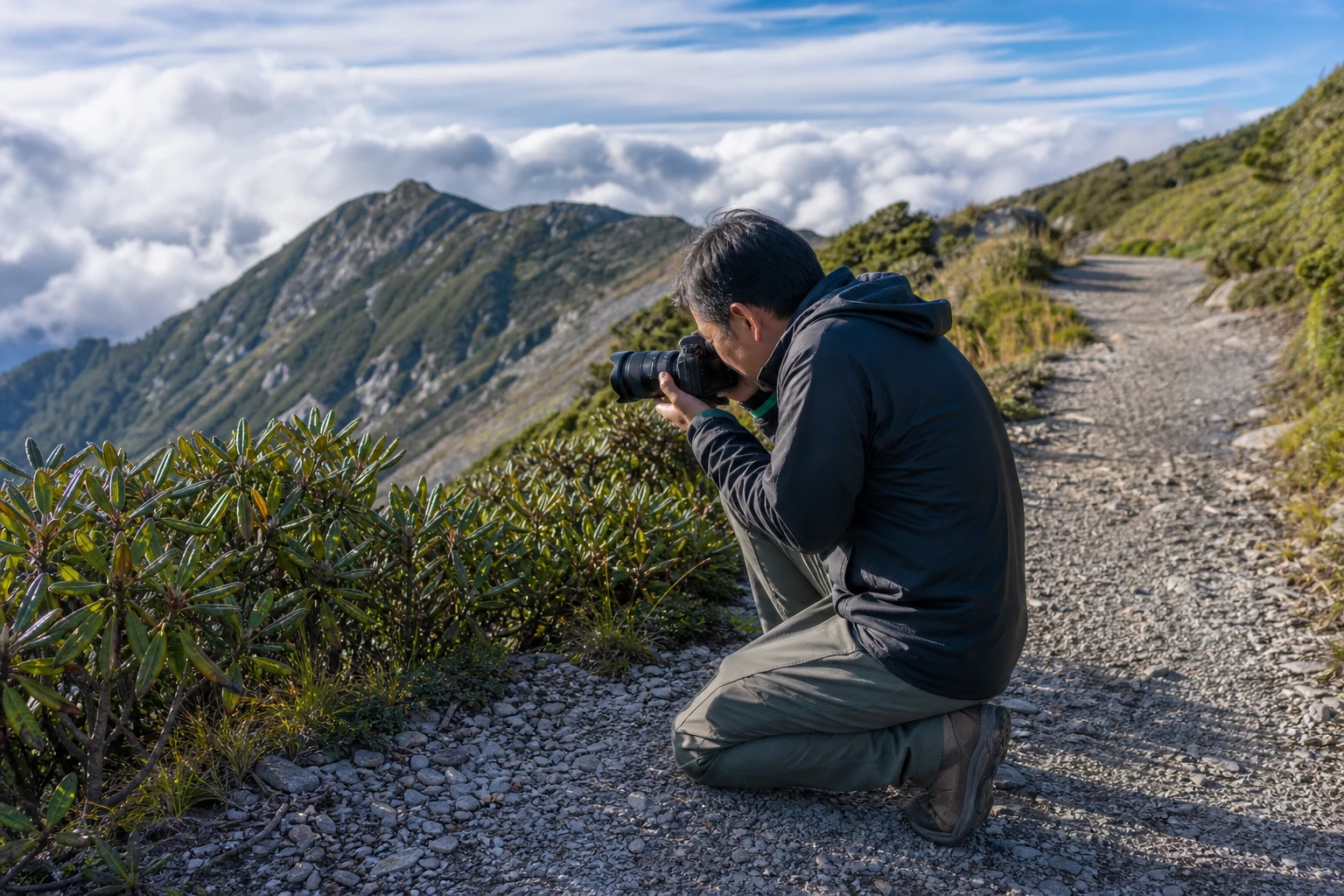
Photography at 2,402 m.
The two-day cloud-sea programme puts you on the 2,402 m summit ridge at first light after a short walk from the lodge. The one-day sunrise ridge reaches the same crest after a daylight climb from town — around midday on the published indicative schedule. Cloud sea on the eastern face when valley inversions align is the view both walks are built around — but it is never guaranteed.
On the two-day walk, reach the ridge fifteen to twenty minutes before sunrise to catch colour in the cloud deck. Cloud moves fast — a sea that fills the valley at 06:10 may drain through a saddle by 06:25. A morning with no cloud sea is not a failed trip — alpenglow and westward terrace country still reward the climb.
Your guide marks safe standing lines on the eastern side; drops are real. Do not step toward cliff edges for a frame against guide advice. Both programmes run October through April; June through September is storm season on Tay Con Linh.
Gallery captions on the programme pages describe the ridge above a cloud-filled eastern valley, karst peaks in good light, and cardamom understory on descent — the same scenes you are framing on the spine.
- Chieu Lau Thi — cloud sea (2 days)
Two-day walk from Ta Su Choong with lodge night at Chieu Lau Thi 2402m Lodge and pre-dawn summit at 2,402 m.
- Chieu Lau Thi — sunrise ridge (1 day)
Single demanding day — morning departure after breakfast, daylight ascent to the ridge, back in town by late afternoon.
Settings and framing.
When the deck fills, eastern karst peaks appear as dark islands above white. Partial fill is common — one valley white, the next still showing forest green below you. A full deck reflects pink and orange for minutes at sunrise.
Partial vs full inversion.
Photographers who insist on 'all white' sometimes miss a partial inversion that is more readable on camera. A thin layer may glow without hiding the valley floor. Westward, Tay Con Linh's lower slopes may stay clear while the east is cloud-filled — shoot terrace country and cloud deck in the same morning if you pivot after first light.
Ten minutes after sun clears the eastern rim on the one-day route, shift to west terraces if the sky is clear. Some photographers prefer a clear morning for west-facing terrace layers over a white eastern deck.
The ridge is narrow enough to see both sides — cloud-filled valleys east toward China, and on clear mornings the terrace country of Hoang Su Phi west below Tay Con Linh.
Batteries and cold.
Cold drains batteries fast at 2,402 m. Keep spares in an inner pocket — not in your daypack. Camera with spare battery is on the what-to-bring list for the one-day route; the same applies on the two-day walk.
Thermal base layer under your shell for the hour before sun hits the eastern face. Gloves on before you stop moving on the ridge — wind at 2,402 m pulls heat faster than the ascent generated it.
Headlamp with spare batteries is required for the pre-dawn walk from the lodge. Save photography effort for the ridge; the one-day daylight climb is not a photography window — wait for the crest.
- Packing for trekking in Ha Giang
Layering, footwear and daypack sizing for northern Vietnam.
Waiting before colour.
You may reach the spine twenty to forty minutes before colour appears in the cloud deck — cold and stationary. Layer before you stop moving. Sit on pack or rock, not bare spine — rock conducts cold.
Guides often gather the group on the lee side of an outcrop. Clear mornings feel colder than cloudy ones — radiative heat loss is faster on bare rock.
On the two-day route, breakfast stays in the pack until the group descends to a safe flat after sunrise. On the one-day route, a hot meal on the spine is served when conditions allow after the daylight climb — not as a first-light breakfast.
Framing without blocking.
At the summit, the group spreads along marked standing lines rather than clustering on the highest knob. Do not pass your guide in cloud — the world shrinks to ten metres of beam.
Tripods are awkward on the narrow spine — brace against rock or shoot handheld. On the two-day walk, set up on the lee side before first light; on the one-day climb, use the midday pause on the crest rather than shooting while still moving.
Pack out all wrappers. There is no bin on the summit — everything returns in the guide's carry bag.
Respect the line behind you on the one-day route — six guests maximum, all tired on the crest after a daylight climb. Step aside between bursts rather than blocking the lee-side outcrop where the group gathers.
Cloud-sea programme gallery caption describes the 2,402 m ridge above a cloud-filled eastern valley — the frame the two-day walk targets at first light, and the one-day walk still hopes to see if midday inversions hold.
Light under cardamom.
The eastern descent runs under mature cardamom — shaded, green and softer underfoot than the ascent stone. Light here is diffuse by midday; photography improves if you pause on the lower stream sections where sun pierces the canopy.
The one-day climb is for walking, not photography — save effort for the ridge and greener light under cardamom on the way down. Cardamom is harvested on a multi-year cycle — do not pick; the crop belongs to foothill communes.
Do not photograph while walking on rooty sections — ankle rolls are common when quads are spent.
Gallery caption on the cloud-sea programme describes cardamom understory on the Day 2 descent as damp, shaded and slower underfoot — the same conditions one-day guests walk through on the afternoon eastern path.
West terraces and partial fill.
Westward, Tay Con Linh's lower slopes may stay clear while the east is cloud-filled — you can shoot terrace country and cloud deck in the same visit if you pivot after the eastern frames. On the two-day walk that often means ten minutes after sunrise; on the one-day climb it is the midday pause on the crest.
Some photographers prefer a clear morning for west-facing terrace layers over a white eastern deck. When valleys stay clear, alpenglow on eastern karst and long westward views still reward the early start on either programme.
On the two-day route, breakfast may wait until after sunrise on the ridge; on the one-day route, the hot meal arrives when conditions allow after the daylight climb. Eat before photographing if you are prone to cold hands — holding a bowl warms fingers faster than pocket heat packs.
Camera kit at altitude.
Camera with spare battery is on the what-to-bring list for both programmes. Keep spares in an inner pocket — ridge air drains lithium quickly during the stationary wait before colour appears in the cloud deck. Thermal base layer under your shell for the hour before sun hits the eastern face.
Tripods are awkward on the narrow spine — brace against rock or shoot handheld. Set up on the lee side before light on the one-day route; adjusting legs on the spine wastes the best minutes when pink deck can fade to flat white within thirty seconds.
Pack out all wrappers from the ridge — there is no bin on the summit. Do not step toward cliff edges for a frame against guide advice. Your guide marks safe standing lines on the eastern side before guests unpack cameras.
- Packing for trekking in Ha Giang
Layering, footwear and daypack sizing for northern Vietnam.
Light through the season.
October and November offer dry cold mornings with the best cloud-sea probability on both programmes. December and January bring the strongest inversions and the coldest pre-dawn hours — batteries drain faster and gloves matter more during the ridge wait.
March and April add rhododendron on the ascent and warmer mist that may burn cloud decks faster after 07:00 — photographers who want pink deck colour should prioritize earlier arrival on the spine in those months.
Neither programme runs June through September. A clear shoulder-season morning without cloud still rewards the climb with alpenglow, westward terrace layers and eastern karst — partial inversions are often the most photogenic frames.
- Best time to trek Ha Giang
Month-by-month conditions across the province.
Common questions.
What lens should I bring?
Wide for the cloud sea; short telephoto for karst peaks emerging from white. A phone works for thin cloud if you expose for the bright deck.
Can I use a tripod on the ridge?
Awkward on the narrow spine. Brace against rock or shoot handheld. Set up on the lee side before light arrives.
What if there is no cloud?
Alpenglow, westward terrace views and karst eastward still reward the climb. Partial inversions are often more photogenic than full white.
How do I protect batteries?
Keep spares in an inner pocket. Cold ridge air drains lithium quickly — especially during the stationary wait before sunrise.
More dawn reading.
Sunrise photography on Tay Con Linh covers the one-day route in more detail — first-light bursts and phone exposure in mist. Understanding the cloud sea explains inversion weather.
Book the two-day cloud-sea programme if you want evening at the lodge to read weather before dawn.
Packing for Ha Giang covers layering for cold ridge mornings — thermal base layer, insulated jacket and spare batteries in an inner pocket. Best time to trek Ha Giang explains October through April as the operating window for both Chieu Lau Thi programmes.
- Sunrise photography on Tay Con Linh
First light on the one-day sunrise ridge.
- Chieu Lau Thi — cloud sea (2 days)
Two-day walk from Ta Su Choong with lodge night at Chieu Lau Thi 2402m Lodge and pre-dawn summit at 2,402 m.
Published by Ha Giang Trekking — field knowledge from local trail guides on the routes described, checked against programme schedules and operating notes.
Journal pages are for route research and planning. Dates, prices, day-by-day schedules and enquiry sit on programme and tour pages.
Articles are published under Ha Giang Trekking. Named writer and guide bylines will be added when verified bios and consent are on file.
Operational details on programme and tour pages are published only after being checked against current operating information.
Compare published routes and open the programme or journey page when you are ready to enquire.
- Ridge & Cloud — compare summit programmes
Compare difficulty, seasons and walking style before you enquire.
- Chieu Lau Thi — cloud sea (2 days)
Chieu Lau Thi — cloud sea (2 days) — dates, pricing and enquiry.
- Chieu Lau Thi — sunrise ridge (1 day)
Chieu Lau Thi — sunrise ridge (1 day) — dates, pricing and enquiry.
- Kieu Lieu Ti three-day traverse
Trekking operations on this route are currently unavailable, and we are not accepting bookings for it at present.
Trekking operations on this route are currently unavailable, and we are not accepting bookings for it at present.
- Chieu Lau Thi: A Complete Guide for Trekkers
Main walking guide for Chieu Lau Thi.
- Hoang Su Phi Rice Terraces: A Complete Guide for Trekkers
Landscape, seasons and routes around Hoang Su Phi.
- Tay Con Linh: A Complete Guide for Trekkers
Neighbouring walking country linked to Chieu Lau Thi.
Ready to walk with local guides?
Dates, pricing and the day-by-day itinerary are on the programme page. Enquire about a departure when you are ready — we usually reply within 24 hours with availability, a clear price and what to pack.
Chieu Lau Thi — cloud sea (2 days) — dates, pricing and itinerary